Cornish Rex Cat: The Delightful and Elegant Curly-Coated Feline
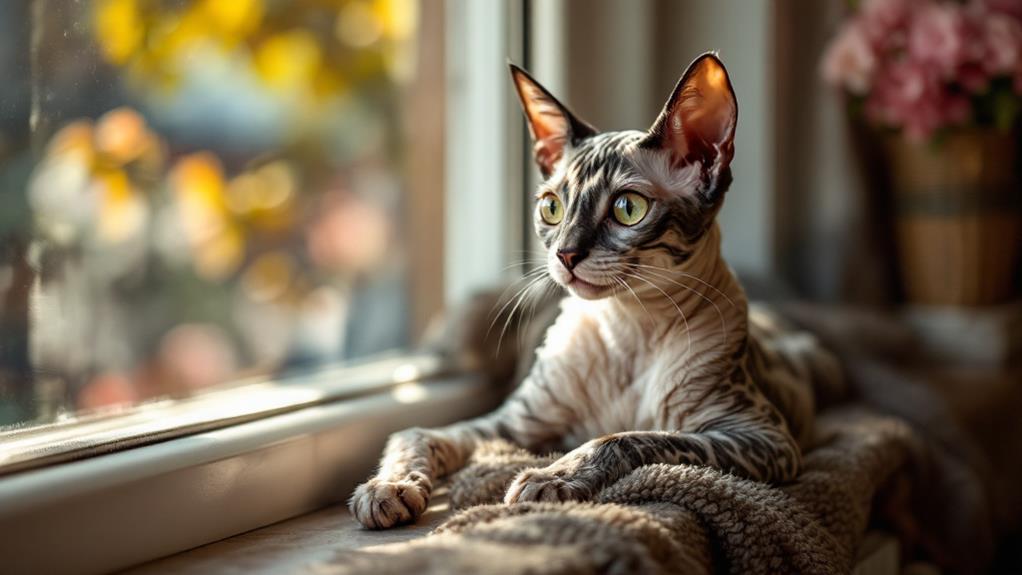
Uncover the Cornish Rex, a delightful and elegant cat with a unique curly coat. This breed started in 1950 with Kallibunker in Cornwall, England. Their short, soft down hair makes them ideal for allergy sufferers. These felines are slender and athletic, packed with energy and a playful, affectionate nature. They'll charm you with their attention-seeking behavior, craving social interaction and play. Despite their low grooming needs, ascertain you monitor their diet closely to prevent obesity. Regular vet visits are crucial for their robust health. With more insights, you'll delve into what makes the Cornish Rex a truly special companion.
Breed Characteristics
The Cornish Rex cat is truly one of a kind with its unique, short, curly coat made entirely of down hair, which means minimal shedding and suitability for allergy sufferers. If you're considering this breed, you'll be captivated by their playful personality and affectionate nature. Cornish Rex cats are known for forming strong bonds with their humans, always enthusiastic to engage and interact. Their sociable demeanor makes them excellent companions not just for you but for other pets in your household as well.
One of the standout breed characteristics is their slender body. With long limbs, a narrow waist, and an arched back, they present a svelte figure that's both elegant and athletic. Despite their delicate appearance, these cats are bundles of energy, requiring regular exercise and mental stimulation. Engaging them in interactive play sessions keeps their agile minds and bodies sharp.
Their affectionate nature is another trait that defines the Cornish Rex. They thrive on attention and love being involved in your daily activities. If you're looking for a cat that's not only unique in appearance but also rich in personality, this breed ticks all the boxes, offering endless companionship and delight.
Unique Physical Traits
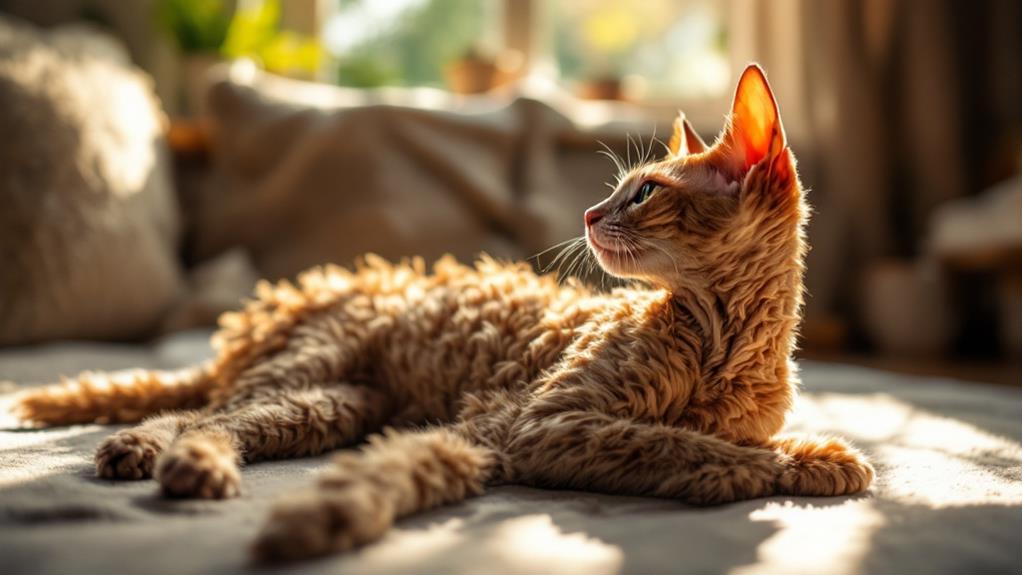
A marvel of feline elegance, the Cornish Rex boasts a coat like no other, composed entirely of soft down hair that forms gentle waves and curls. This unique coat lacks the typical guard and awn layers found in most cat breeds, giving the Cornish Rex its distinctive appearance. The absence of these layers not only results in a soft, wavy texture but also makes the coat low-shedding, which could be a boon for allergy sufferers.
Beyond its coat, the Cornish Rex's slender, athletic build is similarly striking. With long, delicate legs and a slender torso, this breed exudes grace and agility. Its prominent Roman nose and large, high-set ears further improve its unique appearance, making the Cornish Rex a true standout among feline companions. Those ears aren't just for show—they provide excellent hearing capabilities, adding to the cat's alertness and curiosity.
Additionally, the Cornish Rex's whiskers are particularly delicate and sensitive, requiring gentle handling during play or exploration. This sensitivity adds another layer to their unique character, making them a breed that's not only visually engaging but also distinctively tactile in their interactions with you.
Care and Grooming
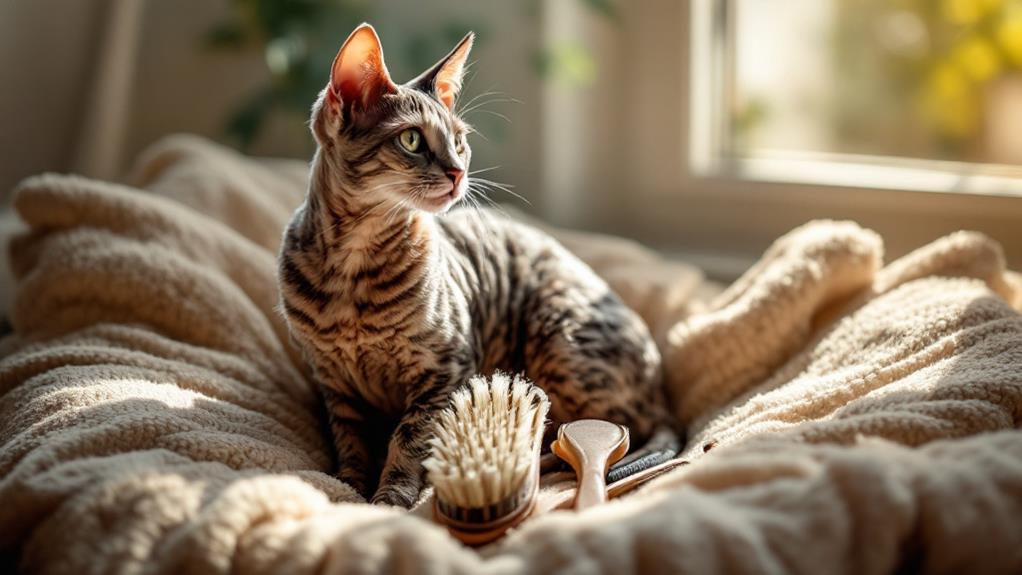
Caring for a Cornish Rex is invigoratingly straightforward due to its unique coat, which sheds minimally and requires less maintenance. As a Cornish Rex kitten matures, you'll find that grooming is a simpler task compared to other breeds. Their curly coat consists of only down hair, reducing shedding and making your cleaning efforts more efficient. To maintain their coat's softness and prevent greasiness, occasional bathing is advantageous. Although their grooming needs are low, gentle brushing is recommended to check the coat's condition and improve its natural curls.
Pay special attention to their sensitive whiskers, as their fine structure makes them prone to damage. Handle them with care during grooming sessions to avoid any breakage. Regularly clean their ears to prevent wax buildup, a crucial aspect of their care needs. Despite their minimal grooming requirements, monitoring their skin for sunburn is significant. The absence of guard hairs makes them vulnerable to sun exposure and cold temperatures. Always verify they have a comfortable environment to prevent health issues related to extreme weather conditions. By addressing these aspects, you'll keep your Cornish Rex healthy and their grooming routine effortless.
Health Considerations
When considering the health of your Cornish Rex, know that they're generally robust, but regular vet visits are crucial for maintaining their well-being. While Cornish Rex cats often enjoy good health, it's vital to be aware of potential issues. One such health consideration is congenital hypotrichosis, a genetic disorder that causes thinning fur. This condition requires special skin care to keep your cat comfortable and healthy.
Their unique coat, made solely of down hair, means Cornish Rex cats need sun protection to prevent sunburn. If your cat spends time in the sun, consider using pet-safe sunscreen or limiting their exposure to direct sunlight. Their sensitivity to temperature extremes also makes indoor living the best option for them, as it protects them from harsh weather conditions that could lead to health complications.
Providing a high-quality diet is another key aspect of their care. Cornish Rex cats have a significant appetite due to their active nature. Without careful management, this could lead to obesity and related health issues. By keeping these health considerations in mind, you can help guarantee your Cornish Rex enjoys a long, happy, and healthy life.
Diet and Nutrition

To keep your Cornish Rex cat healthy and energetic, you need to focus on providing a balanced, high-quality diet. This delightful breed possesses an active metabolism and a playful nature, making a nutrient-rich diet vital for their overall health. Opt for high-quality cat food, rich in protein, to maintain their muscle mass and energy levels. This guarantees that your feline friend can continue to engage in their favorite activities without any hindrance.
Scheduled meals are key for maintaining a balanced diet and effective weight management. Cornish Rex cats are known for their significant appetites and can easily overeat if food is left out. By controlling meal times, you prevent unnecessary weight gain and keep them in peak health. It's significant to regularly monitor their food intake to confirm they're getting the right amount of nutrition without overindulging.
Occasionally, you can introduce fruits and vegetables as treats, but always seek veterinary approval initially to verify safety and suitability. These treats should complement the main diet rather than replace it. By adhering to these dietary guidelines, you'll support your Cornish Rex's lively and energetic lifestyle while maintaining their health.
Exercise and Play
Guaranteeing your Cornish Rex cat stays fit and joyful goes beyond a nutritious diet; it also involves plenty of exercise and play. These highly energetic felines require daily physical and mental stimulation. Engaging them in interactive play not only keeps them healthy but also satisfies their playful nature. Here are some ideas to keep your Cornish Rex entertained:
- Interactive Toys: Feather wands and laser pointers are fantastic for capturing your cat's attention and providing the vital exercise they crave. These toys encourage pouncing, chasing, and jumping, all crucial for burning energy.
- Fetch Games: Your Cornish Rex will likely enjoy playing fetch. This simple game is a great way to keep them active while also strengthening your bond through shared attention and affection.
- Cat Trees: With a natural love for climbing, cat trees offer your feline a perfect outlet for both exercise and discovery. They provide vertical space that satisfies their curiosity and keeps them engaged.
- Puzzle Toys: These toys challenge their intelligence and curiosity, guaranteeing they stay mentally stimulated. They're perfect for a Cornish Rex, as solving puzzles can be incredibly rewarding for them.
Always guarantee a safe environment by removing hazards, allowing your Cornish Rex to investigate freely.
Adoption and Purchase
If you're contemplating bringing a Cornish Rex into your home, exploring both adoption and purchase options can lead to finding the perfect feline companion. Adoption offers a wonderful opportunity to give a cat a loving new start. Shelters and breed-specific rescues often have Cornish Rex cats looking for homes. By adopting, you provide a second chance to a cat in need, and you might even save on costs compared to purchasing.
On the other hand, purchasing a Cornish Rex from reputable breeders guarantees you get a kitten with known lineage and health screenings. It's vital to thoroughly research breeders and ask about the health history of their cats. This helps guarantee the long-term well-being of your new pet. The cost of purchasing a Cornish Rex typically ranges from $800 to $1,200, reflecting their unique traits and breeding requirements.
Regardless of if you choose adoption or purchase, make sure to reflect on the long-term care and financial responsibilities involved. Connecting with local cat clubs can provide valuable resources and support as you welcome a Cornish Rex into your life. This decision involves commitment, but with the right preparation, it can be deeply rewarding.
Pros and Cons
Considering a Cornish Rex? This breed's unique appearance, thanks to a genetic mutation, gives them a stunning curly coat that sheds minimally, making them ideal for allergy sufferers. Their affectionate nature means they thrive on social interaction, making them wonderful family companions. However, it's essential to weigh both the pros and cons before bringing one into your home.
Pros:
1. Low Shedding: The Cornish Rex's curly coat results in minimal shedding, which is great if you're seeking a low-shedding pet.
2. Affectionate Companions: They're sociable and love interacting with humans and other pets, enhancing the family dynamic.
Cons:
3. Attention-Demanding: Known for being needy, they require significant social interaction to remain emotionally healthy. If you're often away, this might be a challenge.
4. Genetic Skin Disorders: Due to their genetic mutation, they can be prone to skin issues like congenital hypotrichosis, needing regular skin care.
Their active nature also demands careful dietary management. With a large appetite, Cornish Rex cats can quickly gain weight, leading to obesity if their food intake isn't properly monitored. Consider these factors carefully as you decide if this delightful breed is the right fit for your lifestyle.
Breed History and Origin
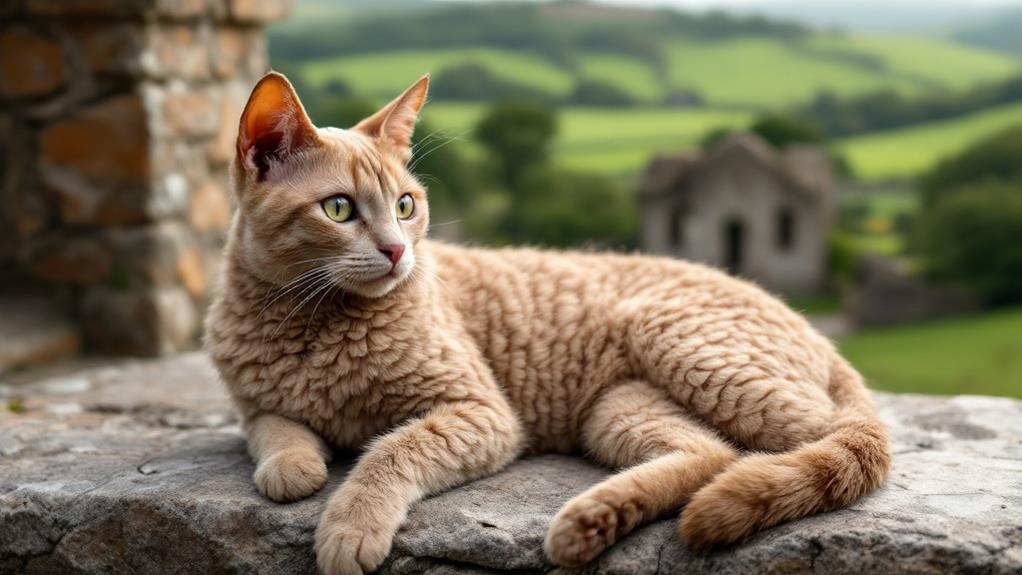
While weighing the pros and cons of bringing a Cornish Rex into your home, you might wonder about the breed's fascinating beginnings. The Cornish Rex's expedition began in 1950 in Cornwall, England, when a curly-coated kitten named Kallibunker captured the attention of breeder Nina Ennismore. This unique feline was the result of a spontaneous genetic mutation, giving it the distinctive curly coat that would become the hallmark of the breed.
To establish the Cornish Rex as a recognized breed, Ennismore initially cross-bred Kallibunker with Burmese, Siamese, and British Shorthairs. This not only improved the breed's genetic diversity but also refined its characteristics. These efforts were vital in developing the Cornish Rex's elegant appearance and playful temperament that many adore today.