Common Myths About Dog Baths: What’s True and What’s Not
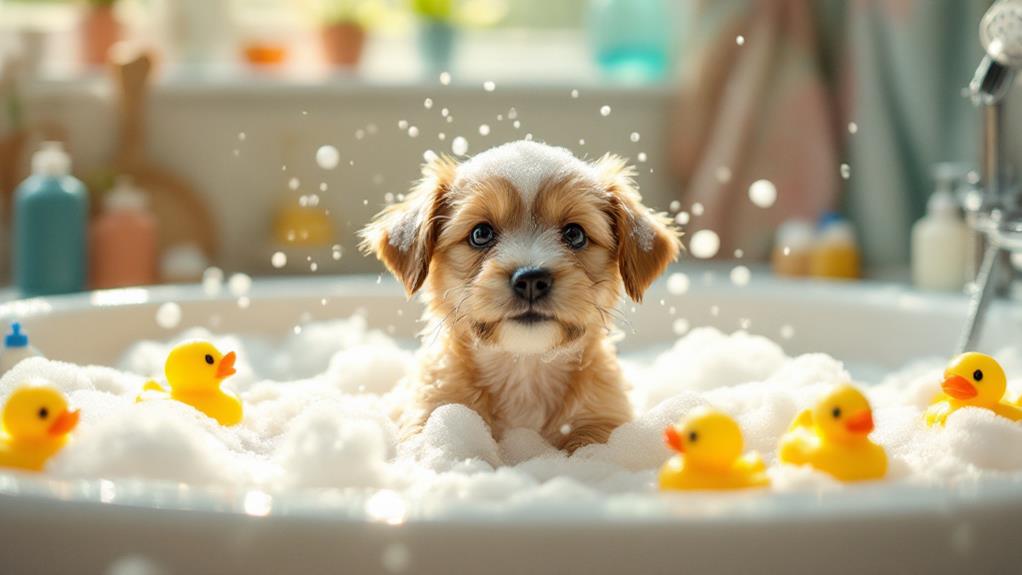
You've probably heard that dogs dislike baths, but it's usually discomfort from past experiences or unfamiliarity, not the bath itself. People often think dogs clean themselves, like cats, but they can't reach those tricky spots. Regular baths are vital for maintaining their skin health. It's also a myth that all dogs get stressed after a bath; many actually find it relaxing with proper techniques. Forget about using your shampoo—it's not suitable for their pH levels and can irritate their skin. Bath frequency varies by breed and needs, so understanding these specifics will keep your pet happy and healthy. Curious for more?
Dogs and Bathing Discomfort
Many dog owners believe their pets inherently dislike baths, but that's not always true. In reality, dogs need regular bathing to maintain a healthy coat and skin. The idea that all dogs experience bathing discomfort is one of the common dog grooming myths. Some dogs might initially feel uneasy due to unfamiliarity or past negative experiences. However, you can change this perception with positive reinforcement. By rewarding your dog with treats or praise during and after the bath, they'll start associating bath time with positive experiences.
To further reduce discomfort, it is important to use dog-specific shampoos and lukewarm water. Human shampoos can be harsh on a dog's skin, causing irritation, which could lead to a negative perception of baths. Dog-specific shampoos are formulated to be gentle and soothing, helping to create a pleasant experience for your furry friend. Maintaining a consistent bathing schedule is also vital. This not only helps keep your dog clean but also reduces anxiety associated with the bath. As dirt and odor are less likely to build up, your dog will be more comfortable and content during their grooming routine.
Stress After a Bath
It's a common misconception that dogs feel stressed after a bath, but many actually experience relief and comfort from their refreshed, lighter coat. When you engage in regular dog grooming, you're not just maintaining their appearance; you're contributing to their overall health. A well-groomed, healthy dog often feels more relaxed, which can notably reduce any stress after a bath.
The act of pet grooming, when done correctly, can even strengthen the bond between you and your furry friend. By using proper bathing techniques, you can transform bath time into a calming experience. This routine promotes positive associations, making future baths less intimidating for your dog. When your dog knows what to expect and feels secure, the anxiety that can sometimes accompany baths diminishes.
It's essential to note that stress may arise if baths are infrequent or uncomfortable. As a result, regular bathing is vital for maintaining hygiene and health. A clean coat and skin can contribute to your dog's sense of comfort and ease. So, next time you're preparing for bath time, keep in mind that a consistent, gentle approach is key to ensuring your dog feels at peace, not stressed, after their bath.
Bathing Frequency Concerns
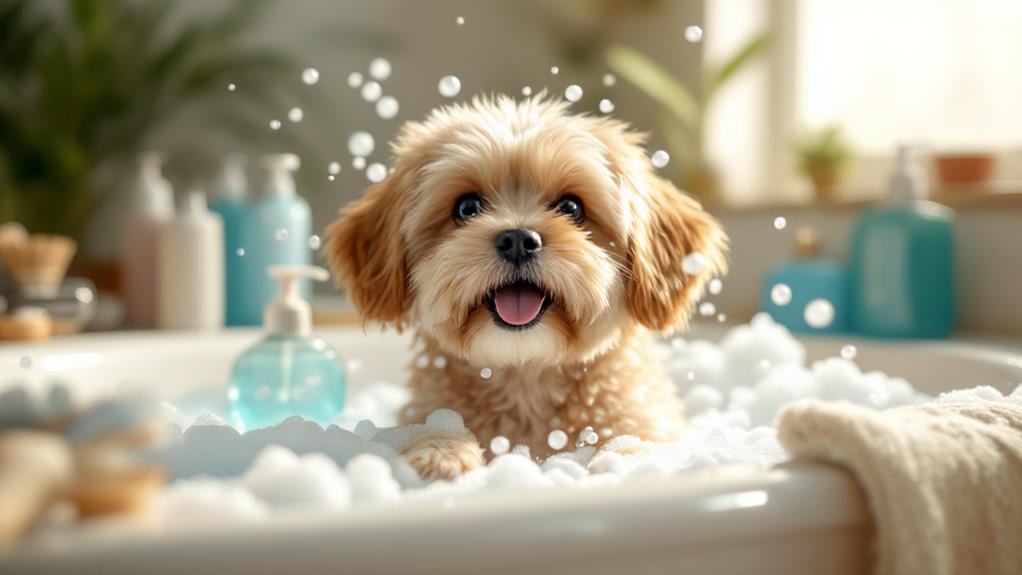
While a stress-free bath can greatly benefit your dog's well-being, determining the right bathing frequency is just as vital. One of the common myths is that all dogs need frequent baths to stay clean and healthy. In reality, the ideal bathing frequency is typically once every 18 to 20 days, but this can vary based on several factors. For instance, if your dog has skin issues or allergies, you may need to bathe them more often to help manage these health problems effectively.
Active dogs that enjoy playing outside or getting dirty might require more frequent baths than the general recommendation to maintain cleanliness and prevent skin irritation. Seasonal changes also play a role; during warmer months, when dogs are more likely to be outside, increased bathing may be necessary.
It's important to pay attention to visual cues. If you notice noticeable dirt, an unpleasant odor, or signs of skin irritation, it's time for a bath, regardless of the regular schedule. Understanding your dog's specific needs helps you avoid overbathing, which can strip their skin of natural oils, leading to dryness or other skin problems. Remember, dogs also need a balanced approach to bathing for ideal skin health.
Human Shampoo Misuse
Contrary to what some pet owners might think, using human shampoo on your dog can do more harm than good. Human shampoos are formulated for the pH levels of human skin, which differ greatly from those of dogs. This mismatch can lead to irritation and dryness in your dog's skin and fur. Stripping vital oils from their coat, human shampoos result in a lack of natural moisture, causing potential skin issues for your furry friend.
Many human shampoos also contain fragrances and harsh chemicals, which can be harmful or irritating to a dog's sensitive skin. These components are not suitable for maintaining the health of your dog's skin and fur, leading to discomfort and potential long-term issues. When grooming your dog, it's important to choose high-quality pet shampoos specifically designed for canine needs.
Professional groomers and veterinarians consistently recommend using dog-specific shampoos. These are formulated to maintain the health of canine skin and coat, ensuring your pet remains comfortable and clean. Studies have shown that using appropriate pet shampoos reduces the risk of skin problems and improves general hygiene. So, for the sake of your dog's well-being, stick to high-quality pet shampoos when grooming your dog.
Bathing Needs for Coat Types
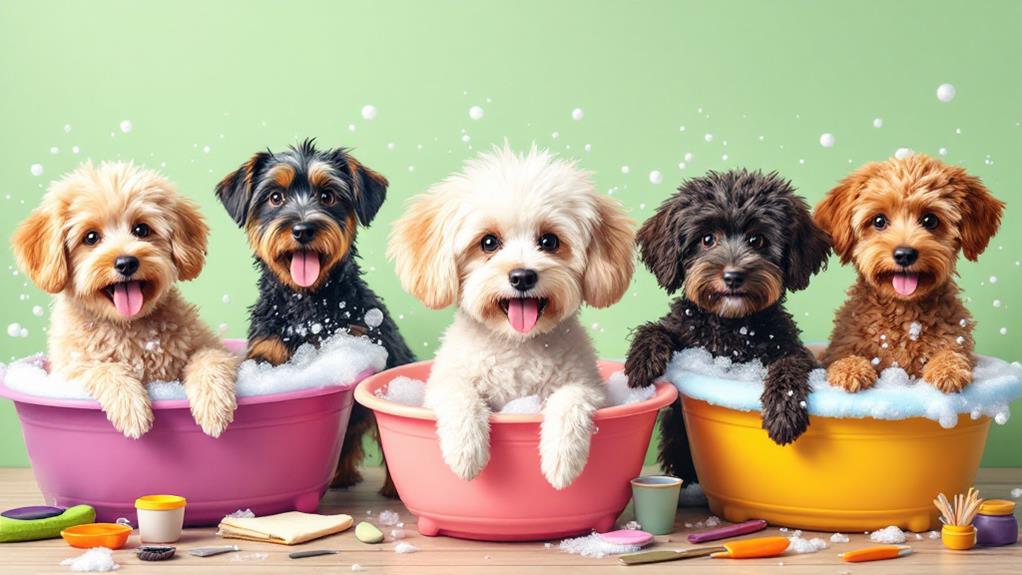
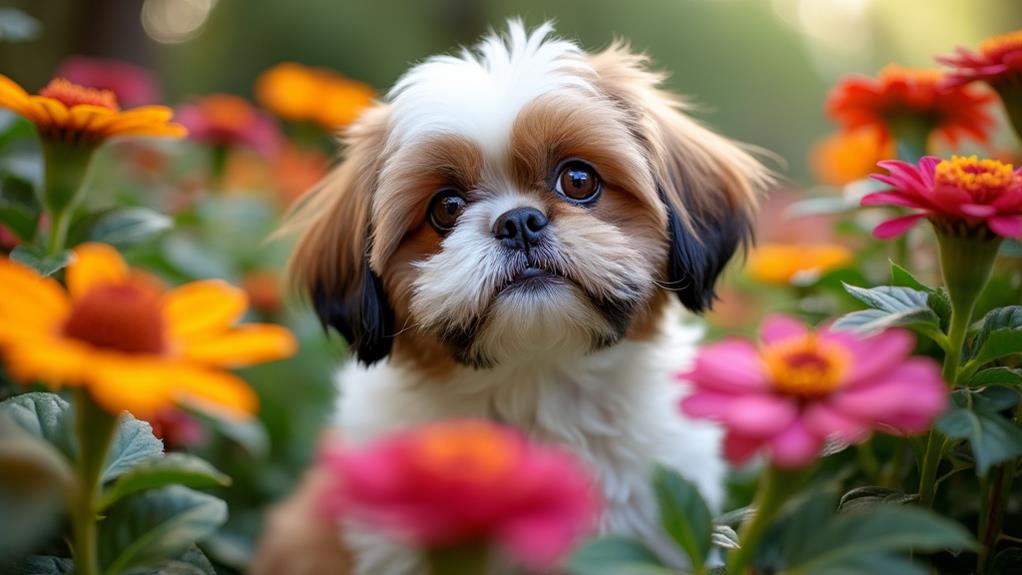
Understanding your dog's coat type is crucial for determining their bathing needs. Different coat types dictate how often you should bathe your furry friend. Long-haired breeds, like Golden Retrievers or Shih Tzus, typically require baths every 4-6 weeks. Their longer fur can trap dirt and debris more easily, requiring regular washing to maintain cleanliness. On the other hand, short-haired dogs, such as Beagles or Boxers, might only need a bath every 6-8 weeks, depending on their activity levels and how dirty they get.
Smooth-coated dogs, despite their short fur, still need regular baths. It's a common myth that they require less frequent bathing. In reality, baths help eliminate hidden bacteria and maintain their hygiene. Dogs with curly or dense coats, like Poodles, benefit from more frequent baths to prevent matting. These coat types can trap moisture and dirt close to the skin, leading to potential issues if not properly managed.
Consulting with a professional groomer can help tailor your dog's bathing schedule, especially if your dog has oily skin or specific skin conditions. Always consider your dog's coat type, needs, and lifestyle to guarantee their skin and coat stay healthy.
Essential Oils and Bathing
Using the right shampoos when bathing your dog plays an important role in preserving the vital oils in their skin and coat. These essential oils are critical for maintaining your dog's natural pH balance and keeping their skin healthy. When you opt for quality dog grooming products, you minimize the risk of stripping away these oils, which can lead to skin irritation and dryness. Bathing dogs with harsh shampoos or over-grooming them can disrupt this delicate balance and cause more harm than good.
To guarantee the health of your dog's skin and coat, choose shampoos specifically formulated for dogs. These products clean effectively without removing vital oils. After bathing, consider using a leave-in conditioner to provide extra protection and keep moisture levels balanced. This step can be especially beneficial for dogs with dry or sensitive skin, as it helps maintain a healthy coat.
If your dog has specific skin conditions, consult with your veterinarian. They can recommend the right products that cater to your dog's needs while preserving their essential oils. Remember, a balanced approach to dog grooming not only keeps your dog clean but also maintains their skin's integrity.
Self-cleaning Myth in Dogs
It's a common misconception that dogs can clean themselves effectively without any assistance. Many myths suggest that a dog's grooming habits suffice, but in reality, they miss vital areas that collect dirt and parasites. Unlike cats, dogs don't have the grooming instincts or abilities to reach every spot on their bodies. Their backs and paws, in particular, can harbor debris and require a proper bath for thorough cleaning.
While dogs may lick themselves to remove surface dirt, this doesn't match the deep clean that a bath provides. Licking doesn't eliminate allergens, odors, or skin irritations resulting from environmental exposure or inactivity. These issues can persist if you rely solely on the self-cleaning myth. Regular bathing addresses these concerns and guarantees your dog's hygiene needs are fully met.
Moreover, giving your dog a bath lets you monitor their skin health closely. This hands-on approach helps you spot potential issues, such as rashes or infections, before they escalate. By debunking the self-cleaning myth, you acknowledge the importance of regular baths in your dog's grooming routine, guaranteeing they remain healthy and comfortable. So next time, don't skip the bath; your dog needs it!
Shampoo Variations Explained
Choosing the right shampoo for your dog is fundamental for their skin health and general comfort. Dog shampoos are specifically designed to match the pH levels of canine skin, which is different from human skin. This difference is critical to prevent irritation and maintain a healthy skin barrier. During the grooming process, it's significant to use a shampoo that respects your dog's natural oils, as these oils play an essential role in keeping their coat glossy and skin moisturized.
There are numerous dog shampoos tailored for specific needs. For example, moisturizing shampoos are suitable for dry skin, while those with flea control ingredients target pests. If your dog has sensitive skin, look for shampoos with gentle ingredients like oatmeal or aloe vera. Natural and organic options often avoid harsh chemicals, ensuring your dog's coat and skin remain in ideal condition.
Selecting a shampoo that aligns with your dog's coat type and any existing skin conditions is key. An inappropriate choice can strip natural oils and exacerbate skin issues, impacting their overall health. So, take the time to understand your dog's specific needs and choose wisely for a happier, healthier pet.