Common Mistakes to Avoid When Feeding Your Dog
When feeding your dog, avoid common mistakes like buying more food than your dog can eat before it spoils. Choose appropriately sized bags and store the food in airtight containers to prevent staleness. Keep an eye on expiration dates and limit treats to maintain a balanced diet. Don't fall for marketing buzzwords without checking ingredients, and steer clear of table scraps, as they can disrupt your dog's nutrition. Also, don't overlook potential food allergies and make sure you understand your dog's nutritional needs to avoid health issues. There's more to investigate for ensuring your dog's ideal health.
Buying Excessive Dog Food
Buying excessive dog food can lead to more problems than you might expect. For starters, storing large bags of dog food often results in spoilage before they're fully consumed, especially if you have a smaller dog. This can seriously impact your pet's health when the food turns rancid, leading to nutritional deficiencies and gastrointestinal issues. You might think that buying in bulk saves money, but it can actually result in more waste and potential vet bills.
To guarantee your furry friend's feeding habits remain healthy, purchase dog food in appropriately sized bags that fit their consumption rate. Doing so keeps the food fresh and maintains its nutritional quality. It's tempting to stock up, but smaller, frequent purchases are generally a better approach. This way, you're not risking your pet's health with stale or spoiled food.
Moreover, it's wise to consult your vet about the right quantity and type of food for your dog. A veterinarian can provide guidance tailored to your pet's specific dietary needs and help you avoid over-purchasing. Regularly checking and managing food quantities guarantees your dog gets the best nutrition without unnecessary waste.
Improper Food Storage
Improperly storing your dog's food can quickly lead to spoilage, impacting their health and appetite. One of the common mistakes when feeding your dog is not using proper storage solutions. Without an airtight container, dog food can become stale or even rancid. This not only diminishes its taste but also its nutritional value, which is vital for your dog's well-being.
To prevent this, invest in quality storage solutions like sealed bins. These prevent exposure to moisture and air, which are major culprits in food spoilage. Instead of scooping food directly from the bag—a practice that can introduce contaminants and unwanted moisture—transfer the dog food into a clean, airtight container.
It's also important to store dog food in a cool, dry area. Warm or humid environments can accelerate spoilage, compromising the food quality and potentially leading to health issues for your dog. By maintaining the nutritional integrity of the food, you're ensuring your pet receives the best nourishment.
Ignoring Expiration Dates
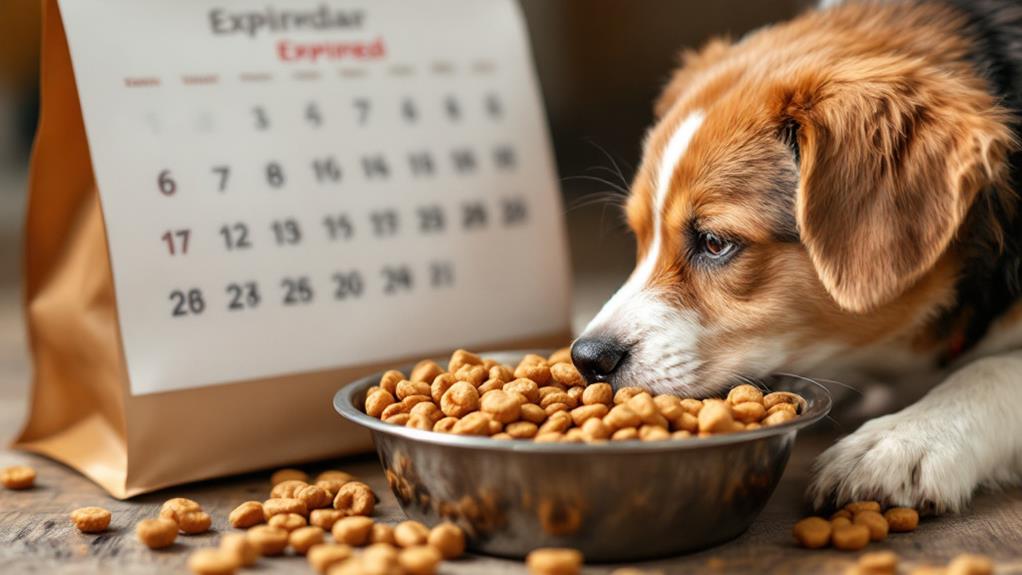
While proper storage is vital to maintaining your dog's food quality, paying attention to expiration dates is likewise significant. Regularly checking these dates guarantees your furry friend receives ideal nutrition, fundamental for a healthy dog. Expired dog food can become stale, leading to decreased appetite and potential nutritional deficiencies. These deficiencies might compromise your dog's health and well-being, making it critical to stay vigilant about expiration dates.
To manage dog food inventory effectively, consider marking expiration dates on a calendar or setting phone reminders. This proactive approach helps you track when to replace food, guaranteeing it stays fresh and nutritious. Buying dog food in smaller quantities can also reduce the risk of exceeding expiration dates, maintaining your dog's nutrition and overall health.
Using food past its expiration date can pose health risks, as it may turn rancid or lose its nutritional value. Feeding your dog such food could lead to digestive issues or more severe health problems. By staying aware of expiration dates, you guarantee your dog receives the best possible nutrition, supporting their health and longevity. Remember, a healthy dog starts with mindful feeding practices.
Overindulging in Treats
In the context of treating your dog, it's easy to overindulge, leading to excessive calorie intake and potential obesity. Many pet owners love rewarding their furry friends with treats, but it's essential to keep in mind that treats should only make up about 10% of your dog's daily diet. Overindulging in treats can quickly turn into a problem, resulting in overweight dogs with health issues.
To prevent this, be mindful of the type and quantity of treats you offer. High-calorie treats can greatly contribute to weight gain, so selecting healthier options is vital. Consider low-calorie alternatives like air-popped popcorn or snap peas. These options can satisfy your dog's cravings without the added calories that contribute to obesity.
When using treats for training, choose those that are both healthy and enticing to reinforce good behavior. Keep an eye on your dog's weight and adjust treat portions as needed to maintain a healthy body condition. Regularly monitoring your dog's weight helps you catch any potential issues early on. By being conscious of treat consumption, you can enjoy rewarding your dog without compromising their health or turning them into overweight dogs.
Falling for Marketing Hype
Steering through the world of dog food marketing can be tricky, with flashy terms and promises that often lack scientific support. It's easy to fall for claims like "human-grade" or "holistic," but these terms often lack legal definitions. As a dog owner, it's essential to critically evaluate these claims to avoid feeding mistakes that might affect your dog's nutrition. Remember, advertising can be misleading and unregulated.
Here are some common marketing pitfalls to watch out for:
- "Human-grade": This term suggests high quality, but without legal standards, it doesn't guarantee superior dog nutrition.
- "Holistic": Often used to imply health benefits, yet it lacks a specific definition in pet food regulation.
- Grain-free fads: Popular due to marketing, but not scientifically proven superior for dogs' health.
- Attractive packaging: Eye-catching designs don't always equate to nutritious content.
- Emotional appeals: Marketing that tugs at your heartstrings might distract from checking the actual ingredients and nutritional content.
Research and compare nutritional content rather than relying solely on appealing slogans. By doing so, you'll ascertain your dog food choices are based on real benefits, not just marketing hype.
Inconsistent Feeding Routine
A consistent feeding routine is vital for your dog's well-being. As a dog owner, maintaining a regular schedule helps regulate digestion and prevents behavioral issues linked to hunger or anxiety. Inconsistent feeding can confuse your dog, leading to overeating or under-eating since they won't know when to expect their next meal. This can cause unnecessary stress and potentially harm their health.
By setting daily alarms for feeding times, you create a predictable routine that contributes to their general happiness. Dogs thrive on routine, and knowing when they'll eat can reduce anxiety and begging behaviors. A consistent feeding routine fosters a relaxed environment, allowing your pet to feel secure and content.
Furthermore, regular meal times support better digestion, improving your dog's general health and energy levels. Inconsistent feeding disrupts this balance, which can lead to digestive issues and unpredictable behavior. As a responsible dog owner, prioritize establishing and sticking to a feeding routine. Your attention to maintaining consistency will help guarantee your dog remains happy, healthy, and well-adjusted. Remember, a predictable schedule is not just about feeding; it's a cornerstone of your dog's general well-being and quality of life.
Feeding Table Scraps
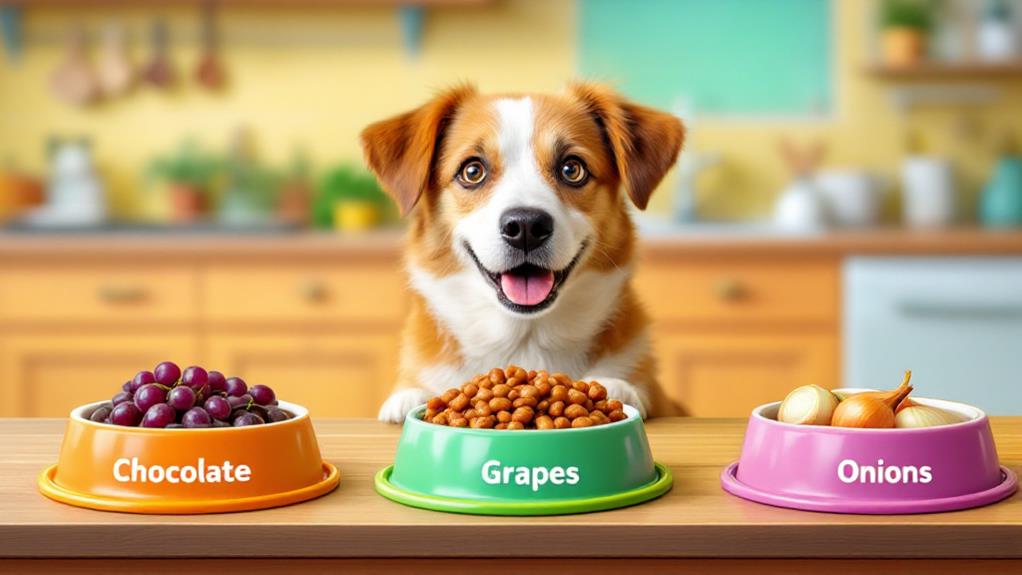
Feeding table scraps to your dog might seem like a generous gesture, but it can lead to a host of problems. While it's tempting to share your meal, not all human food is safe for dogs. Some common table scraps can cause severe digestive issues or even toxic reactions. Foods like chocolate, grapes, onions, and garlic are particularly harmful and should never be fed to your dog. These foods can upset their stomachs or worse, cause serious health issues.
Feeding table scraps can also disrupt a dog's balanced diet. These scraps often lack the vital nutrients that commercial dog food provides, leading to nutritional deficiencies. Furthermore, feeding your dog from the table can encourage picky eating habits, making them less inclined to eat their proper dog food.
To avoid these pitfalls:
- Consult with a veterinarian to identify safe treat options.
- Stick to a consistent feeding schedule with appropriate dog food.
- Avoid sharing meals that contain harmful ingredients.
- Make certain your dog's diet remains rich in vital nutrients.
- Keep in mind that moderation is key when treating your dog.
Ultimately, maintaining a balanced diet is fundamental for your dog's health and happiness.
Overlooking Food Allergies
Your dog's health can be considerably impacted by food allergies, even though they're relatively rare, accounting for only about 5% of all allergy cases. Ignoring these allergies is a common mistake that can lead to significant discomfort for your pet. Symptoms like excessive scratching, gastrointestinal issues, and skin irritations should be red flags. You need to monitor your dog's behavior and health closely to catch these signs early.
One of the common mistakes in a dog's diet is not consulting a veterinarian when you suspect food allergies. Veterinarians can guide you through proper testing and suggest necessary dietary changes. They know how vital it is to identify specific allergens and tailor a diet that suits your dog's individual needs.
Reading ingredient labels is another important step in managing food allergies. It helps you spot potential allergens and avoid cross-contamination risks during food manufacturing. However, don't eliminate ingredients from your dog's diet without medical advice, as this could lead to new allergies. Always aim for a balanced diet and stay informed about what goes into your dog's meals. By being proactive, you can guarantee your furry friend stays healthy and happy.
Misunderstanding Nutritional Needs
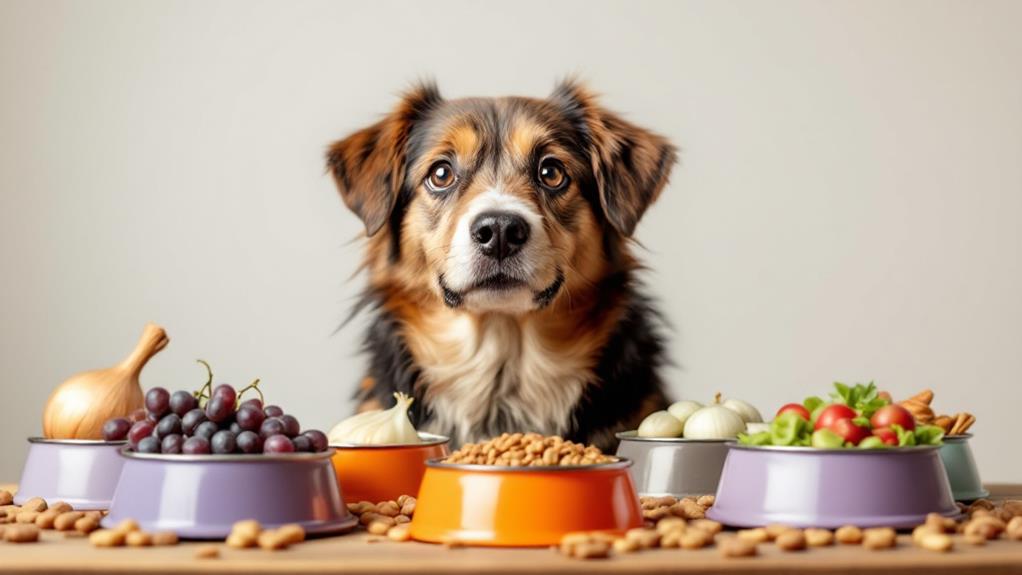
Grasping your dog's nutritional needs isn't just about filling their bowl; it's about understanding the balance of vital nutrients like protein, carbohydrates, fats, and vitamins required for their well-being. A balanced diet is fundamental, yet many owners make common mistakes by misunderstanding these needs. It's not just about high protein; excessive meat can strain your dog's kidneys and liver. Instead, consider a well-rounded approach to their diet.
Understanding that dogs metabolize carbohydrates more efficiently than wolves can influence your food choices. When selecting meals, be mindful of their energy requirements, which are unique to their size, maturity, and activity level. It's also important to watch for any food intolerances. Signs like excessive scratching or digestive issues might indicate the need for dietary adjustments. Consulting your vet guarantees a tailored diet plan.
Here are some tips to avoid common mistakes:
- Balance the nutrients: Guarantee a mix of protein, carbohydrates, and fats.
- Watch portion sizes: Regularly check against packaging guidelines.
- Avoid overfeeding lean dogs: Lean doesn't always mean underfed.
- Monitor for intolerances: Look out for scratching or digestive problems.
- Consult a vet: Get professional advice for dietary changes.
Neglecting Dental Health
A common mistake many dog owners make is neglecting their pet's dental health, which can have serious consequences. Poor dental care can lead to bacteria from the oral cavity entering the bloodstream and potentially causing systemic dog diseases. These can affect essential organs like the liver, kidneys, heart, and lungs. It's critical to establish a routine dental care regimen to prevent these issues.
Start by brushing your dog's teeth regularly using dog-specific toothpaste. This simple practice can greatly reduce plaque buildup and promote general dental health. It's one of the common mistakes to ignore this aspect, but early introduction to dental care can help your dog become accustomed to the process, reducing anxiety and ensuring long-term compliance.
In addition to home care, schedule professional dental cleanings periodically. These cleanings address plaque that can harden into tartar, which might require more invasive treatments if untreated. Always monitor your dog's dental health by watching for warning signs like bad breath, difficulty eating, or swollen gums. These could indicate a need for veterinary intervention. By keeping up with dental care, you'll help prevent serious health issues and keep your furry friend happy and healthy.