Common Exotic Cats: Breeds That Bring Wild Beauty Home
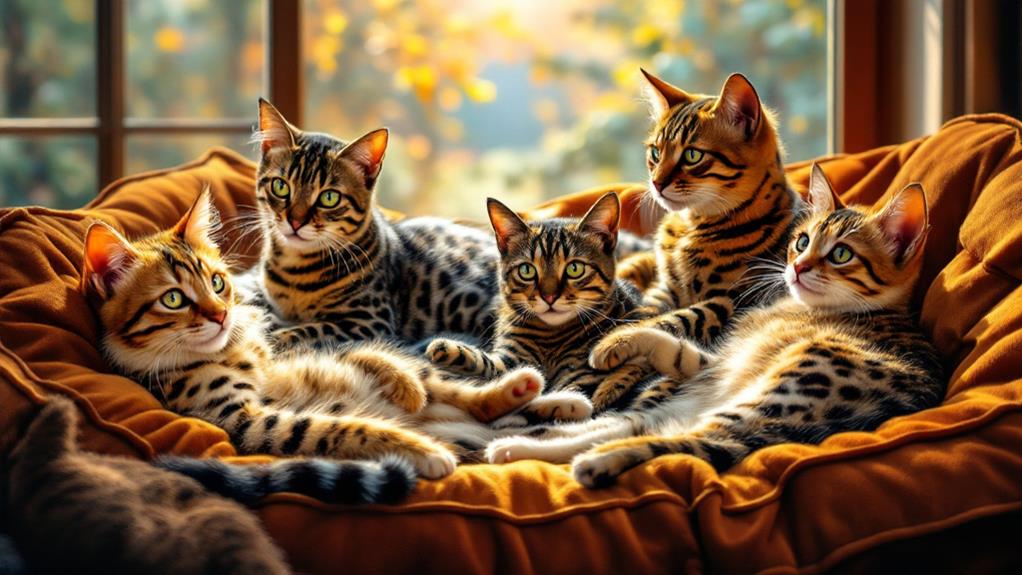
You can invite the wild beauty of exotic cats into your home with breeds like the Bengal, Savannah, and Ocicat. These enthralling felines boast stunning features reminiscent of their wild ancestors, like unique coat patterns and impressive agility. They demand a bit more attention and care, needing interactive toys and plenty of playtime to satisfy their strong hunting instincts and energy. Be mindful of legal regulations in your area, as some breeds require special permits. Before deciding to adopt, consider their health needs and if your lifestyle can provide the stimulation they require. Uncover more about these fascinating companions as you investigate further.
Understanding Exotic Cat Breeds
In regards to exotic cat breeds, understanding their unique characteristics is vital to ensuring they thrive in your home. Exotic domestic cat breeds like the Bengal and Savannah cat have striking features that reflect their wild ancestry. These large cats often showcase unique coat patterns and muscular builds, setting them apart from typical house cats. As a result, they require more than just a cozy spot to nap; they need consistent stimulation and activity to stay happy and healthy.
Bengal cats, with their leopard-like spots, and Savannah cats, known for their size and elegance, both maintain strong hunting instincts. It is important to provide interactive toys that challenge their agility and intellect. These exotic cats thrive on mental engagement, so regular playtime is vital to prevent boredom and destructive behavior.
Despite their wild looks, these pure breeds can become beloved family pets with the right socialization and care. When you bring an exotic breed into your home, you're not just getting a pet; you're inviting a piece of the wild into your family. Make sure you understand their needs and provide an environment that allows these magnificent animals to flourish.
Legal Ownership Considerations
When considering the adoption of an exotic cat breed, it's vital to understand the legal ownership requirements in your area. Legal ownership of these exotic breeds can vary greatly across states in the U.S. Some states, for instance, require permits for hybrid cats like the Savannah, especially if they're closely related to their wild ancestors. Before adopting an exotic, familiarize yourself with the local laws to avoid any legal issues, as some areas might completely prohibit owning certain exotic or hybrid cats.
Your living situation can also impact your decision. Many rental agreements may have restrictions on specific exotic breeds due to their size, behavior, or perceived risks. It's important to review your lease terms thoroughly to guarantee compliance and responsible ownership. Exotic breeds like the Bengal and Chausie might be subject to breed-specific regulations that require particular care and management to assure the animal's well-being.
Research is your ally here. Explore breed-specific legal guidelines and confirm you have all necessary permits before bringing an exotic cat home. By understanding and adhering to these regulations, you'll promote responsible ownership and the well-being of your feline companion.
Activity and Stimulation Needs
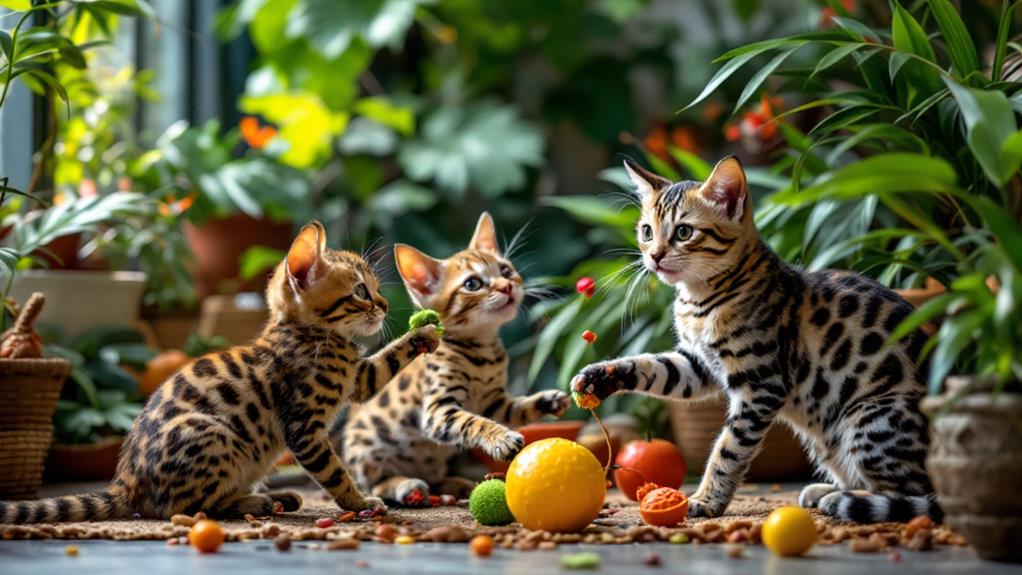
Understanding the legalities of owning an exotic cat is just one part of responsible pet ownership; ensuring these active breeds have their needs met is likewise significant. Exotic cats like Bengals and Chausies are bundles of energy, requiring daily physical exercise and mental stimulation to prevent boredom and potential destructive behavior. If you don't provide them with enough activity, you'll likely see unwanted behaviors stemming from their pent-up energy.
To keep them entertained and mentally sharp, incorporate interactive toys and puzzle feeders into their routine. Engaging play sessions are vital, providing them with the physical exercise they crave. These sessions also tap into their natural hunting instincts, making them perfect for satisfying their adventurous spirit. Many exotic cats enjoy outdoor adventures and can thrive with leash training, offering a safe way to experience the great outdoors.
Creating a cat-friendly environment is imperative. Use vertical spaces like tall cat trees to give them areas to climb and investigate. This not only meets their activity needs but also reduces stress. Remember, a lack of stimulation can lead to behavioral issues, so consistent playtime and enrichment activities should be a daily priority.
Litter Box and Cleaning Tips
As you commence on the adventure of owning an exotic cat, you'll quickly realize that their litter box needs differ from those of regular house cats. Exotic breeds typically require large litter boxes, often at least 24 inches long, to comfortably accommodate their size and active nature. Keeping things clean is vital; these cats can produce more waste, so daily litter changes are necessary for maintaining hygiene.
Observing your exotic cat's preferences is key. They might favor specific litter types, such as clumping or crystal litter. Adjust according to their behavior for a happier and more comfortable experience. To minimize litter tracking, use a litter mat or opt for a box with higher sides, which helps contain their playful messes. This setup guarantees a tidier home environment and reduces the spread of litter.
Consistent monitoring is important to prevent any issues. If you notice signs of litter box avoidance, don't ignore them. Such behavior might indicate discomfort or health problems, warranting a veterinary consultation. Addressing these concerns promptly guarantees your exotic cat remains healthy and content, making your shared home life as smooth as possible.
Popular Exotic Cat Breeds
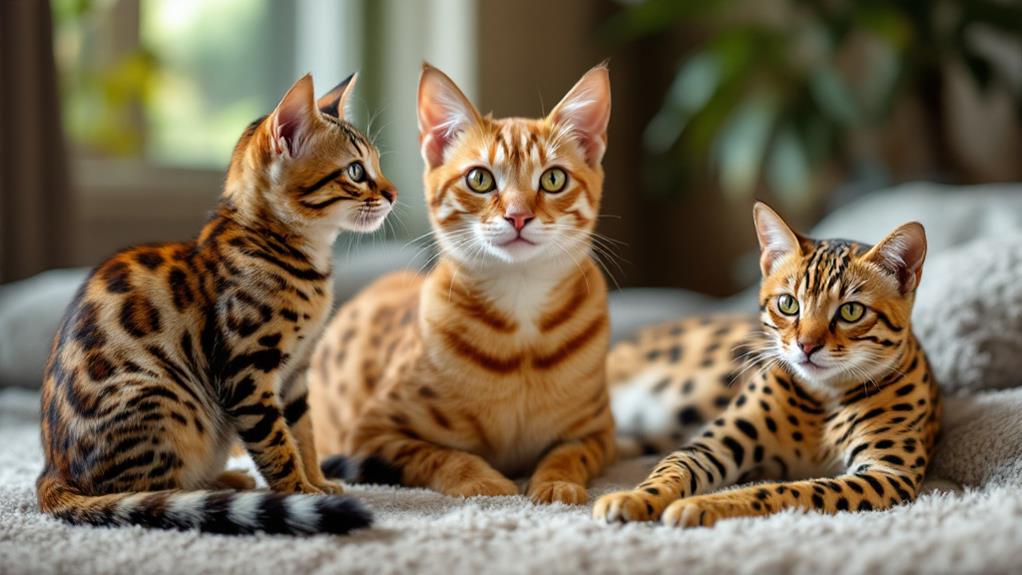
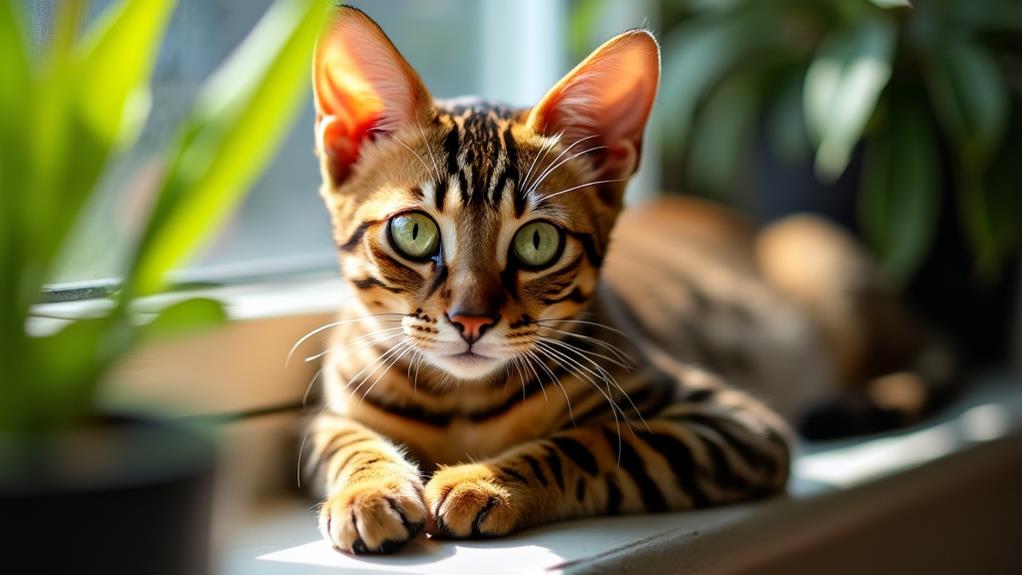
Owning an exotic cat means embracing unique characteristics and needs that make these breeds stand out. The Bengal cat, with its striking leopard-like spots, is a popular choice for those captivated by wild beauty. Its need for substantial mental and physical stimulation is crucial to keep its playful nature in check, preventing boredom-driven aggression.
Savannah cats are a fascinating hybrid of African servals and domestic breeds. Their wild ancestors lend them high energy and strong hunting instincts. These exotic cats can weigh up to 25 pounds, making them one of the larger breeds you'll find. They're perfect for owners who appreciate their athleticism and engaging personalities.
Another exotic breed, the Egyptian Mau, boasts a natural spotted coat and can sprint up to 30 mph. Known for their loyal disposition, these cats combine speed with affection, making them unique companions.
Ocicats, despite their resemblance to wild ocelots, are purely domestic breeds. Their adaptability, along with a playful nature, makes them ideal for families with children and other pets. Each of these breeds offers a distinct blend of wild allure and domestic charm, making them a remarkable enhancement to any home.
Health Considerations
When you own an exotic cat, it's important to keep in mind the unique health considerations that come with these fascinating breeds. Exotic cat breeds often face specific genetic health issues; for instance, Bengals may develop hypertrophic cardiomyopathy (HCM), while Persians frequently experience dental problems. Regular veterinary check-ups are fundamental for early detection and management of these conditions.
A high-protein diet is another key factor in maintaining their health, as their wild ancestry demands nutrient-rich meals to support their energetic lifestyles. Without adequate nutrition, these cats can become lethargic and more prone to illness.
Mental stimulation is just as significant. Breeds like the Abyssinian and Bengal thrive on consistent mental and physical activity. Lack of stimulation can lead to stress-related illnesses, so engaging playtime and interactive toys are crucial.
Regular grooming plays a significant role too, especially for long-haired breeds like the Persian. It helps prevent matting and skin issues that could affect their general health.
Exotic cats can live between 12 to 20 years, so routine health monitoring and preventive care are necessary to enhance their lifespan and guarantee a healthy, lively life.
Adoption and Care Guidance
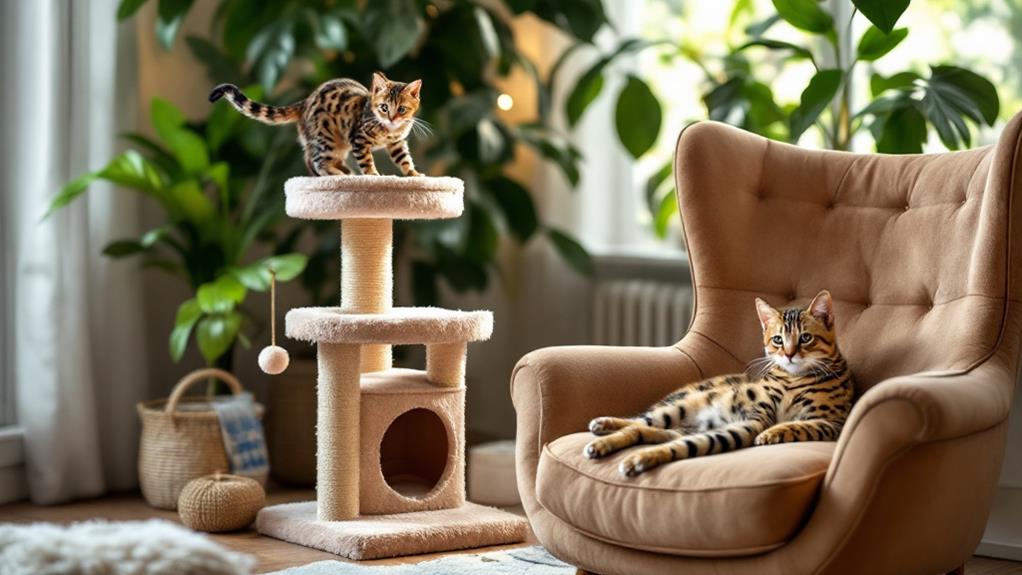
Frequently, deciding to adopt an exotic cat breed requires thorough research and preparation to guarantee a harmonious fit with your lifestyle. Exotic cat breeds like Bengal, Savannah, and Ocicat have unique care requirements and temperaments. It's vital to understand these before bringing one home. These cats often demand more physical and mental stimulation than typical domestic breeds, so you'll need to plan for daily interactive playtime and engaging activities to keep them happy and prevent boredom or destructive behavior.
Before adopting, check local laws and regulations, as some areas have restrictions on owning hybrid breeds due to their wild ancestry. Understanding these laws guarantees you're compliant and that your new pet can remain in your loving home without issue. Regular veterinary care is another significant aspect. Exotic breeds can be prone to specific health issues, so establish a routine for check-ups and preventive care to maintain their well-being.
Consider adopting from a rescue or reputable shelter to provide a loving home for exotic cats in need. This ethical choice not only helps reduce the number of homeless animals but also guarantees you're getting a pet that fits your lifestyle and care capacity.
Cats With Wild Appearances
As you consider adopting an exotic cat, you might be drawn to those with striking, wild appearances. Exotic breeds like the Bengal and Ocicat boast naturally spotted coats, thanks to selective breeding, that mimic the look of wild hybrids. These patterns, including spots and rosettes, give them a unique coat and a mesmerizing presence. The Bengal, a large cat, often enjoys activities like playing fetch, making it a highly active companion.
If you're intrigued by a tiger-like appearance, the Toyger is an excellent choice. This medium-sized breed is designed to resemble a tiger, featuring orange and black stripes that capture the essence of this majestic wild cat. Meanwhile, Savannah cats, a fascinating wild hybrid of domestic cats and African servals, can weigh up to 25 pounds. With their large ears and long legs, they exhibit a truly wild look.
The Egyptian Mau stands out as the only naturally spotted domestic cat breed, showcasing incredible speed and ancient lineage through its unique marking patterns. Moreover, the Highlander, with its tufted ears and muscular build, underscores its wild cat resemblance, offering a striking enhancement to any home.