Chinese Shar-Pei: The Unique Sand-Skinned Guard Dog
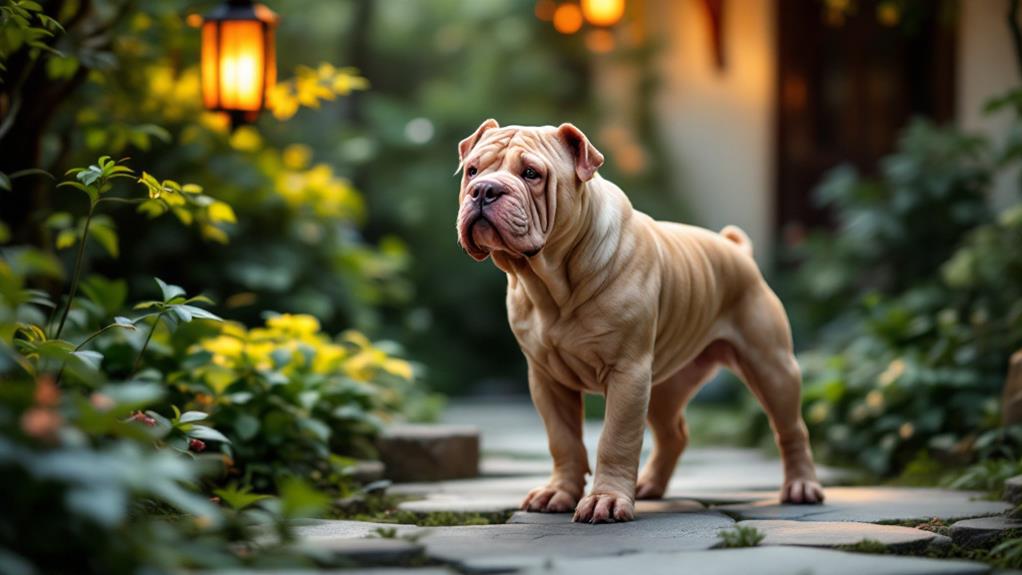
You'll find that the Chinese Shar-Pei is truly one of a kind with its distinctive sand-like coat and ancient heritage. This breed boasts a loyal, protective nature, making it an ideal guard dog. Its unique, loose, wrinkled skin serves as a natural armor, while the blue-black tongue hints at its historical lineage. Despite its intimidating appearance, the Shar-Pei is a gentle companion that thrives with families. Regular grooming and early socialization are key to keeping them healthy and well-behaved. If you're curious about their enthralling history and unique qualities, there's much more to investigate about this fascinating breed.
Breed Characteristics
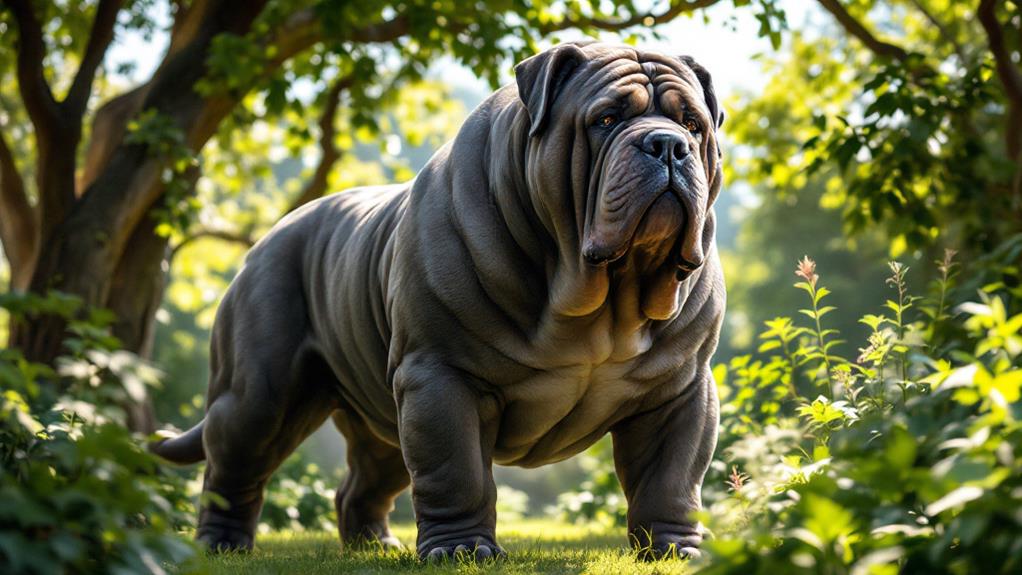
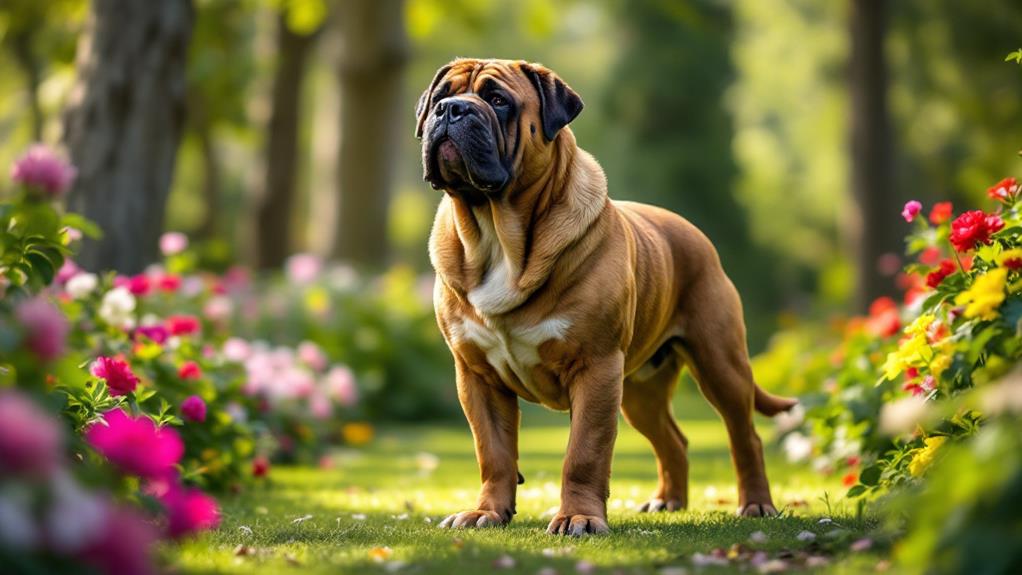
With regard to breed characteristics, the Chinese Shar-Pei stands out with its distinct features. You'll notice their unique loose skin, a hallmark of this breed, which serves a practical purpose. This loose, wrinkled skin not only gives the Shar-Pei its iconic look but also offers protection during altercations, making them effective guard dogs. Their solid, compact body structure, standing between 18-20 inches tall and weighing 45-60 pounds, contributes to their imposing presence. This robust build, coupled with their loyal and protective nature, makes them exceptional at guarding their family and home.
A fascinating aspect of the Shar-Pei is their blue-black or lavender tongue, a rare trait shared with the Chow Chow, hinting at their ancient lineage. This characteristic adds to their mystique and sets them apart in the canine world. Their coat, short and rough, often called "sand skin," requires minimal grooming. However, you must regularly clean their skin folds to prevent infections, ensuring they remain healthy and comfortable. Known for being affectionate with family yet reserved with strangers, Shar-Pei embody the dual role of a devoted companion and vigilant guard dog, ensuring your household's safety and security.
Historical Origins
While the Chinese Shar-Pei's unique features make them exceptional guard dogs today, their roots stretch back to ancient China. You can trace the historical origins of this breed to at least 200 B.C. in the village of Tai Li. During this time, Shar-Peis were bred for guarding and companionship. Their presence in ancient Chinese culture is evidenced by statues resembling them found at archeological sites, particularly from the Han Dynasty. These artifacts highlight their longstanding role in Chinese society.
Despite their historical significance, the Shar-Pei breed nearly became extinct in the mid-20th century. The 1940s were particularly devastating due to heavy taxation on dog ownership and strict Communist policies that led to a drastic decline in their population. The situation worsened by the late 1960s and 1970s, when the Shar-Pei was declared the rarest dog breed in the world by Guinness World Records.
Thankfully, efforts to save the breed gained momentum. In 1979, Matgo Law's heartfelt plea, along with global awareness enhanced by a Life Magazine cover feature, sparked renewed interest. These initiatives played a vital role in revitalizing the Shar-Pei and preserving its unique legacy.
Temperament and Behavior
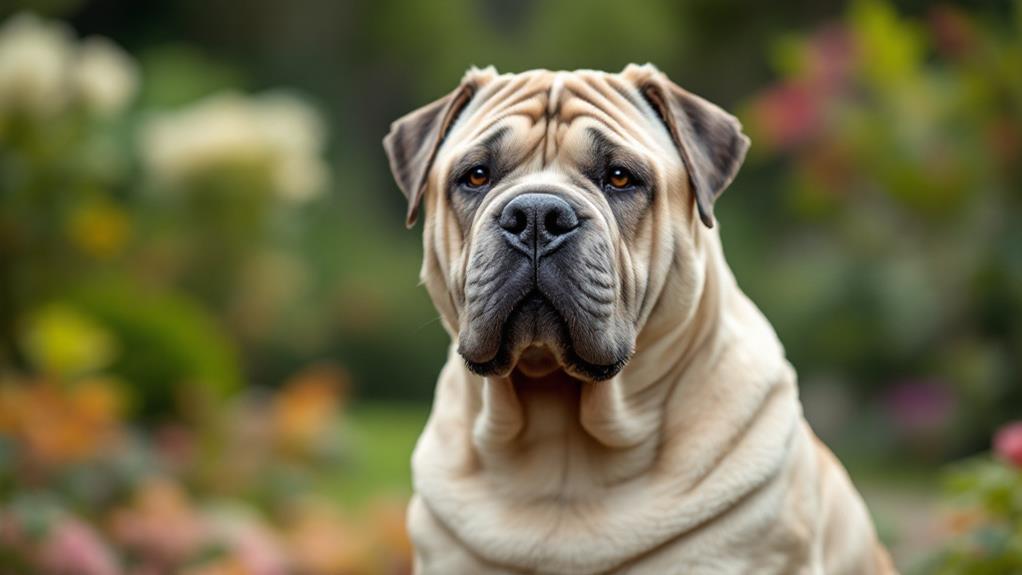
The Chinese Shar-Pei's temperament is defined by its loyalty and protective instincts, making it an excellent guard dog for families. You'll find this breed to be incredibly devoted to its family members, offering affection and calmness in familiar surroundings. However, Shar-Pei can be quite standoffish around strangers, so early socialization is vital. Without it, their natural suspicion might escalate into aggression. By exposing them to different environments and people early on, you can help them develop a balanced temperament.
In terms of behavior, the Shar-Pei is intelligent but often stubborn, which can make training a challenge. You'll need patience and consistency, using positive reinforcement to manage their behavior effectively. Their protective nature often leads to a deep, intimidating bark that serves as an effective deterrent for intruders. Despite their guarding instincts, they're typically laid-back and have a low energy level. This means that short walks and lounging suit them well, making them ideal for apartment living.
Health and Care
Taking care of a Chinese Shar-Pei involves understanding their unique health needs and providing regular veterinary check-ups. These visits are essential for monitoring common health issues such as skin allergies, eye conditions like entropion, and Familial Shar-Pei Fever (FSF). Their distinctive skin folds require regular cleaning to prevent infections and irritations caused by trapped moisture and debris. By keeping their skin clean and dry, you help maintain their overall well-being.
A balanced diet is vital for your Shar-Pei. They thrive on high-quality dry food, with daily portions ranging from 1½ to 2 cups. This helps prevent obesity, a common concern. It's significant to avoid human food, as it can upset their digestive system and contribute to weight gain. Remember, their diet plays a major role in their health and longevity.
Exercise is another crucial component of their care. Although Shar-Pei are a low-energy breed, they still need daily activity to stay healthy. A couple of short walks and some indoor playtime are sufficient. Be mindful of their sensitivity to temperature extremes, ensuring they don't overheat during exercise in warm weather. With proper care, your Shar-Pei can lead a happy, healthy life.
Training and Socialization
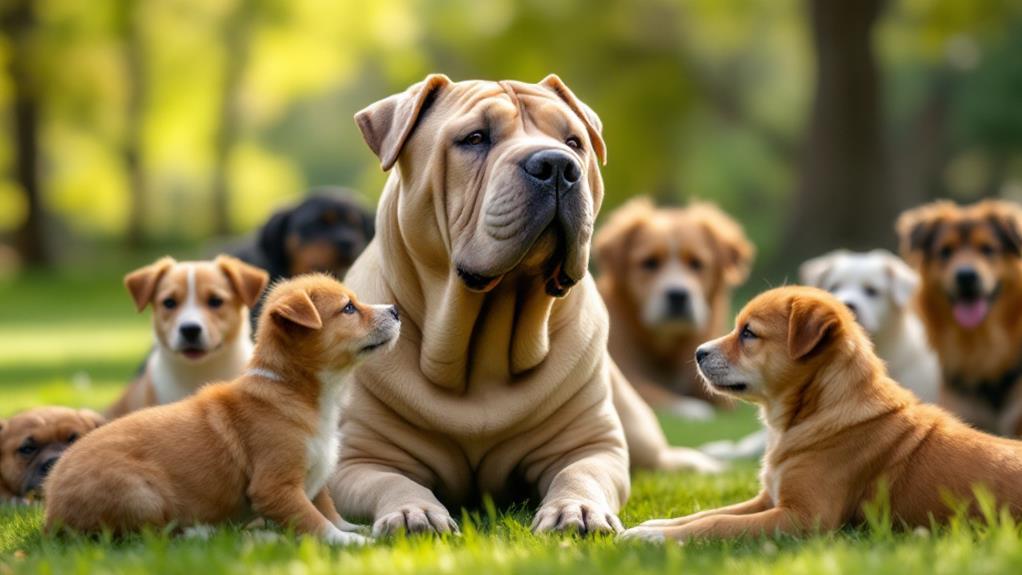
Training and socializing your Chinese Shar-Pei early on is vital for their development into well-behaved companions. These dogs have natural tendencies to be aloof or suspicious of strangers, so early socialization is significant. Introduce them to diverse people, environments, and experiences to cultivate a balanced behavior. Without this exposure, they might develop aggressive tendencies.
When it comes to training, their stubbornness can be a challenge. However, using positive reinforcement techniques can work wonders. Reward their desired behaviors with treats or praise. They're more responsive to rewards than harsh corrections. Consistent training sessions are fundamental to managing their stubborn streak. Focus on basic commands and obedience skills, reinforcing them regularly.
You can strengthen your bond and improve discipline through activities like dog sports. These not only provide physical exercise but also mental stimulation, which is vital for this loyal breed. Regular socialization with people and other pets is just as significant. It prevents aggression and helps in developing a well-adjusted temperament.
Unique Physical Traits
A Chinese Shar-Pei's most striking feature is its loose, wrinkled skin, which acts as protective armor against injuries. This unique physical trait is more than just an aesthetic wonder; it serves a practical purpose, minimizing harm during encounters. The Shar-Pei's skin, combined with its rough, sandy coat texture, forms a distinctive barrier that requires minimal grooming. This coat sheds moderately, allowing you to manage it with ease compared to other breeds.
Another intriguing aspect of the Shar-Pei is its blue-black tongue, a rare trait shared only with the Chow Chow. This unusual coloration is believed to be linked to the breed's ancient lineage, adding to its charm and mystery. When you look at a Shar-Pei, you'll notice its compact build, usually standing between 18 to 20 inches tall and weighing between 45 to 60 pounds. Its solid and sturdy appearance makes it a formidable presence.
The breed's deep-set eyes and large, wrinkled head contribute to a unique expression that many find endearing. This combination of features gives the Shar-Pei a regal stance, making it not only a reliable guard dog but also an enchanting companion.
Cultural Significance
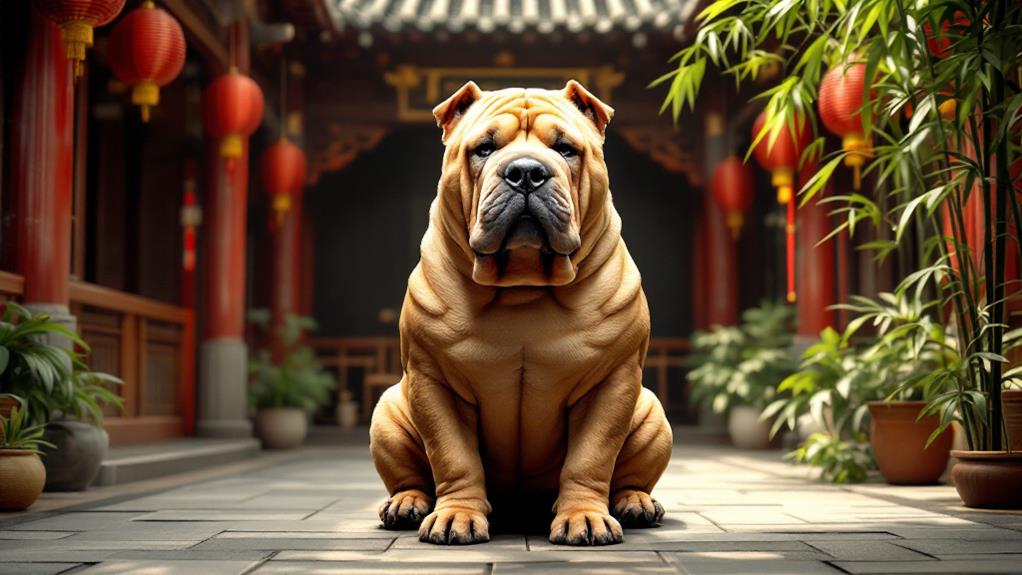
In the rich tapestry of Chinese culture, the Shar-Pei stands out as a symbol of loyalty and protection. Its name translates to "sand-skin," a nod to its unique coat that carries cultural significance. For centuries, Shar-Pei have been intertwined with Chinese royalty, revered for their guarding abilities. These dogs weren't just pets; they were steadfast companions, safeguarding homes and families. Their presence is immortalized in ancient art and statues, underscoring their importance in Chinese heritage.
Archeological findings of Shar-Pei-like statues dating back to the Han Dynasty highlight their longstanding cultural relevance. Their distinctive blue-black tongue is more than just a physical trait; it's believed to ward off evil spirits, an indication of their significance in Chinese folklore. This characteristic makes them a preferred choice for those seeking protection and companionship.
Historically, Shar-Pei served multiple roles, from guarding estates to being cherished household companions. Their ability to protect while offering loyalty made them invaluable in ancient Chinese communities. When you consider the Shar-Pei, you're not just looking at a dog; you're engaging with a breed that's deeply rooted in the rich cultural history and traditions of China.