
Chihuahua: a Small Dog With a Big Personality

Chihuahuas may be small, but their personalities are anything but. You'll notice their feisty, lively nature shining brighter than their 5 to 8-inch stature suggests. With a lineage rooted in ancient Mexico, these little companions are steeped in rich history. Their long lifespan of 14 to 16 years makes them an enduring joy, perfect for apartment living. Loyal and entertaining, they form deep bonds while providing emotional support. However, they demand attentive care, including regular vet visits and a balanced diet. Their spirited temperament requires consistent training. There's much more to uncover about owning these charming "purse dogs."
Understanding the Chihuahua Breed
Why are Chihuahuas such an alluring breed? Their small stature is undeniably fascinating, standing just 5 to 8 inches tall and weighing no more than 6 pounds. This makes them one of the smallest dog breeds recognized by the American Kennel Club (AKC). Despite their tiny size, Chihuahuas have a big presence with their lively personalities and long lifespan, often living between 14 to 16 years. This guarantees they provide years of companionship, becoming beloved members of many families.
Chihuahuas are often seen as "purse dogs", not just due to their size but because they easily fit into urban lifestyles. Their ability to be conveniently carried in bags adds to their charm and appeal, ranking them 32nd among the 201 dog breeds acknowledged by the AKC. This popularity highlights their adaptability and the affection they garner from dog lovers.
When it comes to what these dogs eat, you'll find that their diet needs careful consideration. Their small size means they require a diet specifically tailored to their nutritional needs, assuring they maintain their health and vigor. Understanding this makes caring for a Chihuahua rewarding and engaging.
Historical Background of Chihuahuas
Chihuahuas boast a rich history that traces back to ancient times, making them one of the oldest dog breeds in the Americas. Their lineage can be traced to pre-Columbian civilizations in Mexico, where they held significant cultural importance. As a national symbol of Mexico, Chihuahuas reflect the country's deep-rooted heritage. These small yet spirited dogs were likely bred by ancient civilizations such as the Toltecs. They served as companions and even took part in spiritual rituals, highlighting their revered status.
The breed's name comes from the Mexican state of Chihuahua, where the initial modern Chihuahuas were uncovered in the mid-19th century. It's fascinating to think about how these tiny canines have traversed through history, maintaining their presence in diverse aspects of life. Known for their alertness and amusing personalities, Chihuahuas have earned the nickname "purse dogs." Their small size and popularity as fashionable companions make them a delightful choice for many.
Understanding the historical background of Chihuahuas gives you a greater appreciation for their unique character and enduring legacy. These ancient dogs continue to be cherished, embodying centuries of cultural significance and charm.
Benefits of Owning a Chihuahua

When considering a new pet, you'll find that the benefits of owning a Chihuahua are numerous and compelling. These pint-sized companions offer significant social advantages, enhancing your life in different ways. To begin with, their strong companionship provides exceptional emotional support, helping to improve your mental well-being. Chihuahuas are known to be affectionate, often forming deep bonds with their owners, which can offer comfort and reduce stress.
Moreover, if you reside in a lively city, Chihuahuas are perfect for urban living. Their small size and adaptability make them ideal for apartment dwellers. You won't need a vast backyard to keep them happy, just a cozy space they can call home. This makes them an excellent choice for city folks looking for a manageable and lovable pet.
Here are three benefits of owning a Chihuahua:
- Companionship: Their loyalty and affection provide emotional support.
- Adaptability: Perfect for urban living due to their compact size.
- Entertainment: Their alert and amusing personalities bring joy to your life.
Ultimately, with their entertaining antics and long lifespan, Chihuahuas promise a lasting and joyful relationship that enriches your day-to-day life.
Health and Care Essentials
While Chihuahuas bring joy and companionship, their health and care require thoughtful attention to secure a happy, long life. Regular veterinary check-ups are critical, as Chihuahuas are prone to dental problems and heart disease. These check-ups help monitor their general well-being and address issues early. Dental care is also important; brushing their teeth regularly can prevent dental problems and improve their quality of life.
Chihuahuas' small size means they need a carefully balanced diet, incorporating highly digestible carbohydrates and ingredients like L-carnitine and omega-3 fatty acids to support cardiac health. Weight management is necessary since Chihuahuas should not exceed the recommended weight of 6 pounds. Obesity can lead to serious health issues, so keeping them active and monitoring their diet helps prevent complications.
Providing fresh water at all times is important for maintaining hydration and general health. Keep an eye on their eating habits, as changes might signal health concerns. Small, frequent meals are often beneficial, offering consistent energy throughout the day. By focusing on these care necessities, you can guarantee your Chihuahua stays happy and healthy for years to come.
Training Your Chihuahua

Engaging your Chihuahua in early socialization is key to developing a well-rounded temperament, helping reduce anxiety and making new situations less intimidating. Start with a structured program like the AKC S.T.A.R. Puppy program, which emphasizes positive reinforcement and socialization strategies. This approach builds confidence in your Chihuahua, ensuring they grow into a well-mannered companion.
To train your Chihuahua effectively, focus on overcoming stubbornness by maintaining consistency with basic obedience commands. Chihuahuas can be headstrong, so use positive reinforcement to reward good behavior, making training sessions more enjoyable. Consistent commands and rewards instill good behavior patterns that last a lifetime.
Consider these strategies to improve your Chihuahua's training:
- Positive Reinforcement: Reward your Chihuahua with treats or praise when they follow commands. This encourages them to repeat desirable actions.
- Socialization Strategies: Introduce your Chihuahua to different environments and situations. This reduces anxiety and builds confidence.
- Engagement Through Activities: Participate in dog sports to mentally and physically stimulate your Chihuahua, strengthening your bond and improving their general well-being.
Training your Chihuahua requires patience and dedication, but the rewards are a harmonious relationship with your spirited companion.
Chihuahua Dietary Needs
For your Chihuahua, understanding and catering to their unique dietary needs is imperative to their overall health and happiness. Chihuahuas have distinct dietary preferences; they're finicky eaters and appreciate meals with natural flavors and aromas that suit their selective palate. When selecting food, opt for small, delicate kibble that's easy for them to pick up and chew.
Meeting their nutrition requirements involves providing a diet rich in L-carnitine and omega-3 fatty acids. These nutrients are critical for supporting healthy cardiac function and ensuring your Chihuahua's general well-being. Given their small size and fast metabolism, regular feeding of small portions throughout the day is essential. Proper meal timing helps maintain their energy levels and prevents potential issues from overeating or under-eating.
Be vigilant about monitoring your Chihuahua's eating patterns and preferences. Any noticeable changes could signal potential health issues, especially since this breed is prone to heart problems. A consistent approach to their diet will help you quickly identify any deviations that require attention. By focusing on your Chihuahua's specific dietary needs, you contribute considerably to their health and happiness, ensuring they thrive and maintain their lively personalities.
Feeding Habits and Tips
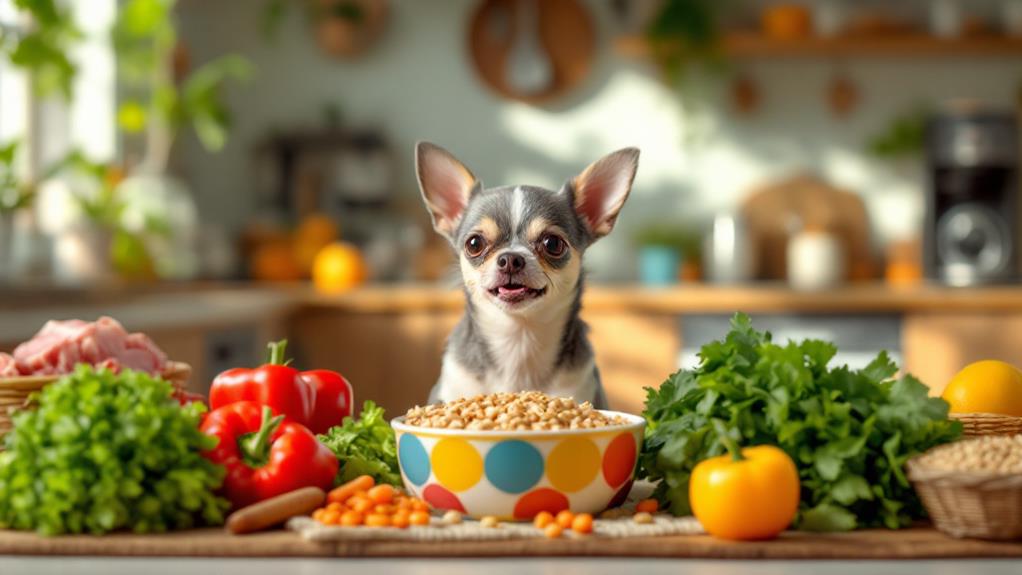
Many Chihuahua owners quickly learn that establishing effective feeding habits is vital to maintaining their pet's health and energy. With their small size and high metabolism, Chihuahuas require frequent feeding of small portions to keep them energized throughout the day. Portion control is fundamental to prevent overeating, which can lead to health problems. Offering several small meals helps manage their energy levels and keeps them satisfied.
Chihuahuas are known for their picky eating habits, so enhancing the flavor of their food can make mealtime more appealing. Consider foods with natural flavors and aromas to encourage eating. You might also want to avoid table scraps, as they can lead to more finicky behavior. Instead, focus on providing kibble that's small, delicate, and easily digestible to meet their nutritional needs.
To support your Chihuahua's overall well-being, especially their cardiac function, make sure their diet includes nutrients like L-carnitine and omega-3 fatty acids. Regularly monitoring their eating patterns is vital, as any change in appetite could signal health issues. Here's how to manage feeding:
- Frequent small meals: Prevents energy dips.
- Natural flavors: Encourages eating.
- Portion control: Maintains healthy weight.
Adapting to Chihuahua Lifestyle
While Chihuahuas may be small, they have specific lifestyle needs that require careful attention. As primarily indoor dogs, their diet should reflect a less active lifestyle. Focus on nutrient-dense foods and practice portion control by feeding them small, frequent meals throughout the day. This approach sustains their energy levels and accommodates their rapid metabolism. Remember, a Chihuahua's diet isn't just about food—hydration is vital. Make sure they have constant access to fresh water to prevent health issues and maintain general well-being.
Social interaction can impact their eating habits, so consider feeding your Chihuahua in a quiet space to encourage them to focus on their meal. Too much excitement during mealtime might distract them, leading to irregular eating patterns. Regular veterinary check-ups are important for monitoring their health, especially for potential heart issues. These visits can also help you adjust their diet as needed to keep them healthy and happy.