Chesapeake Bay Retriever: The Amazing Water Dog and Skilled Retriever
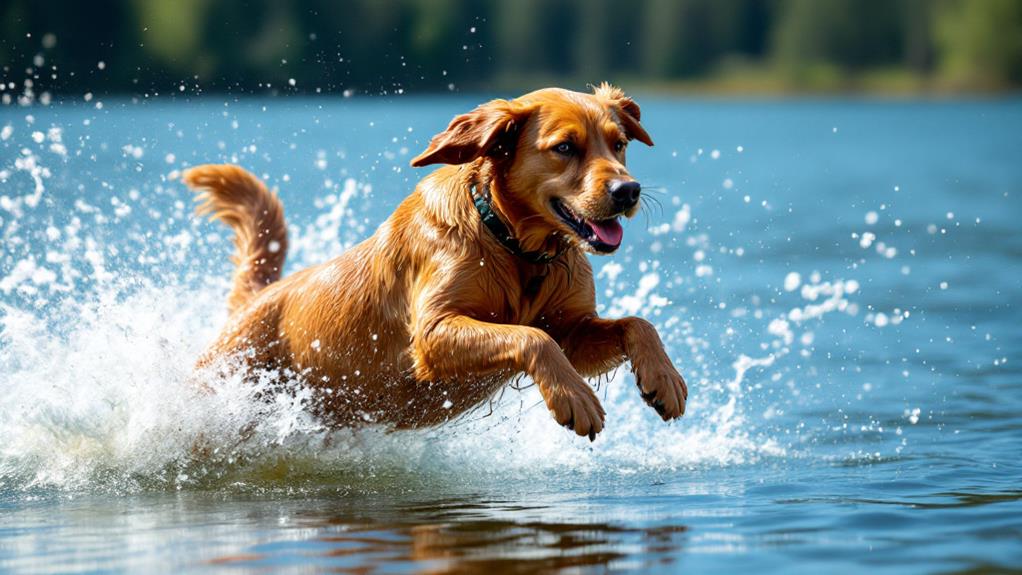
You'll find Chesapeake Bay Retrievers to be extraordinary water dogs and skilled retrievers, famous for their strong swimming abilities and protective, yet friendly nature. With a water-resistant double coat and webbed feet, they're perfect companions for waterfowl hunters and outdoor enthusiasts alike. Their exceptional retrieving instincts and robust energy need channeling through consistent training and daily exercise. They thrive on positive reinforcement and early socialization, being loyal members of your active family. With a lifespan of 10-13 years, these Maryland mascots promise lifelong adventure and companionship. As you investigate further, uncover why they're the ideal breed for you.
Breed Overview
The Chesapeake Bay Retriever is an impressive member of the Sporting Group, ranking 54th in popularity among 201 breeds according to the AKC. If you're looking for a versatile breed with a rich history in water and hunting, this is your dog. Chesapeake Bay Retrievers, often called "Chessies," are celebrated for their exceptional retrieving instincts, making them a favorite among duck hunters in the Mid-Atlantic region. Their ability to work tirelessly in cold, rough waters is unmatched, thanks to their waterproof coat, which is a hallmark of the breed standard.
You'll find that Chessies are not only reliable hunting partners but also excellent companions for active families. They thrive in environments where they can exercise both body and mind. Their muscular build, with males standing 23-26 inches tall and weighing 65-80 pounds, and females at 21-24 inches and 55-70 pounds, highlights their strength and agility. A Chesapeake Bay Retriever's life expectancy is 10-13 years, allowing for years of loyal companionship. If you're an outdoor enthusiast, their love of water and robust nature make them an ideal match for your adventurous lifestyle.
Distinctive Characteristics
Among the many reasons Chesapeake Bay Retrievers stand out, their distinctive double coat is central. This water-resistant coat, with an oily texture and musky odor, provides excellent protection in cold water, making these dogs perfect for aquatic environments. Their strong swimming ability is further improved by their webbed feet, allowing them to excel as waterfowl retrieval dogs.
Chesapeake Bay Retrievers are known for their robust, muscular build. Males typically weigh between 65-80 pounds and stand 23-26 inches tall, while females are slightly smaller, weighing 55-70 pounds and standing 21-24 inches tall. Their size and strength contribute to their ability to navigate challenging water conditions with ease.
In terms of appearance, their coat comes in shades like chocolate brown, sedge, and deadgrass, providing effective camouflage in natural settings. Beyond their physical attributes, Chesapeake Bay Retrievers are renowned for their loyal and protective nature. They form strong bonds with their primary caregivers, often being described as "one-person dogs." Despite this, they're friendly with familiar visitors, showcasing a balance of loyalty and sociability that makes them excellent companions for those who appreciate their unique qualities.
Training and Activities
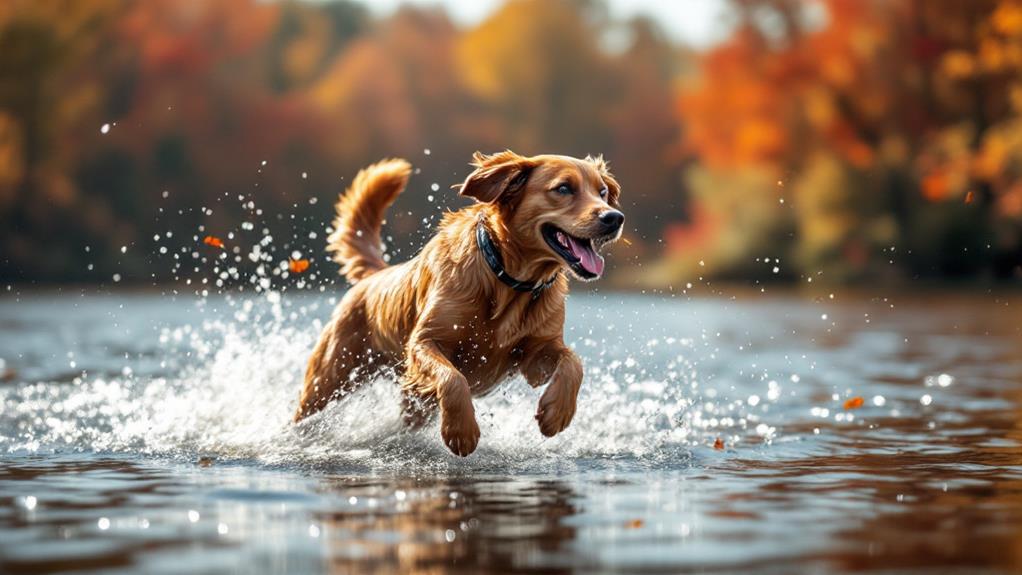
With regard to training Chesapeake Bay Retrievers, consistency is key. Their high energy levels and intelligence demand structured training and early socialization. Positive reinforcement methods work best, as heavy-handed techniques might confuse them and cause them to shut down. Break training into small, manageable steps to keep their enthusiasm and focus sharp. Remember, they thrive on interactive learning.
Daily exercise is vital for these dogs. Aim for at least 20 minutes of intensive activity or a one-hour walk to prevent boredom and potential behavioral issues. Engage their physical and mental abilities through diverse activities. Hunting is a natural fit given their heritage, offering a perfect blend of physical exertion and mental stimulation. Furthermore, introducing them to agility competitions can channel their energy positively and improve their problem-solving skills.
Water retrieval games are another excellent choice. These activities tap into their natural instincts and keep them mentally and physically engaged. They love the challenge and the opportunity to showcase their skills. By integrating these varied activities into your Chesapeake Bay Retriever's routine, you'll harness their potential and guarantee they lead a fulfilling, well-rounded life.
Health and Care
After guaranteeing your Chesapeake Bay Retriever is well-trained and mentally stimulated, focusing on their health and care is just as vital. Regular veterinary check-ups are fundamental for the early detection of common health issues like hip dysplasia and eye conditions. Maintaining peak health starts with a balanced diet; aim for approximately 2.8 cups of food daily, costing between $1.50 and $1.90. This helps keep your dog at a healthy weight and prevents obesity.
Exercise is a significant component of your retriever's care routine. Engage them in at least 20 minutes of intensive activity or a one-hour walk daily to maintain fitness and prevent behavioral problems. Grooming needs are relatively minimal. Weekly brushing will keep their coat healthy, with occasional bathing every 3-4 months to preserve its natural oils and waterproof qualities.
Don't overlook the importance of hydration, especially after vigorous exercise. Always provide fresh water to guarantee your retriever remains hydrated. Monitoring their diet and hydration supports sustained energy levels and general well-being. By focusing on these aspects, you're guaranteeing your Chesapeake Bay Retriever leads a happy, healthy life.
Historical Background
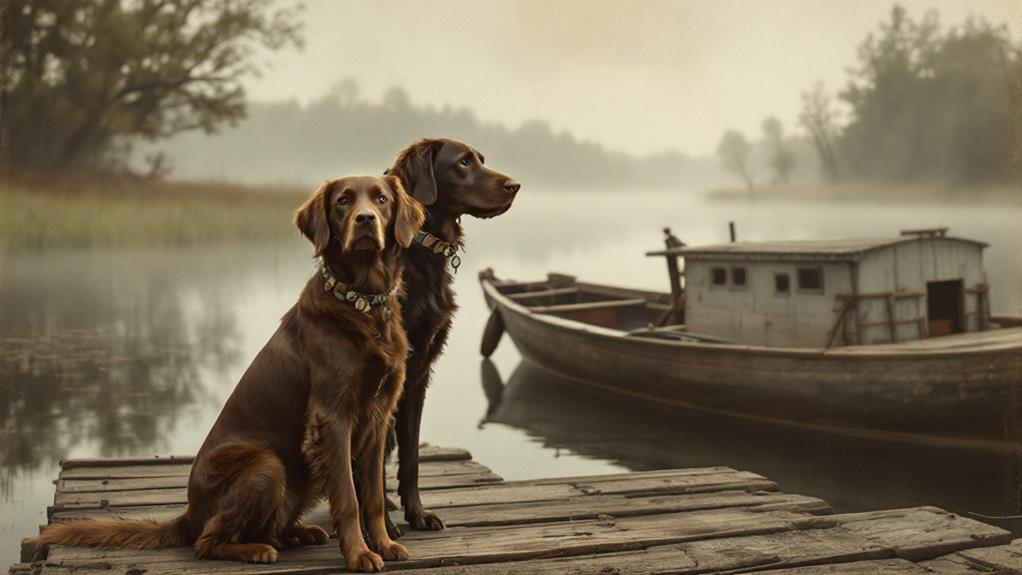
How did the Chesapeake Bay Retriever come to be? This remarkable hunting dog traces its roots back to the 1800s. It all started when two Newfoundland puppies were rescued from a shipwreck off the coast of Maryland. These pups were bred with local dogs, including water spaniels, to create a breed specifically designed for waterfowl retrieval in the Chesapeake Bay region. The breed's lineage also includes crosses with English Otterhound, flat-coated, and curly-coated retrievers, setting the stage for its unique characteristics.
Initially known as the Chesapeake Bay Ducking Dog, it gained recognition in 1877. By 1918, it was consolidated into the Chesapeake Bay Retriever breed, earning a great reputation for its prowess in water and field. This versatile breed was declared the official dog of Maryland in 1964 and even serves as the mascot for the University of Maryland, Baltimore County.
Recognized by the American Kennel Club, the Chesapeake Bay Retriever stands out not only for its historical importance but also for its exceptional abilities as a hunting dog. Unlike some breeds, its development focused on skill rather than strict breed lines, making it a truly remarkable retriever.
Hunting and Working Skills
Building on their storied history, Chesapeake Bay Retrievers have become synonymous with unmatched hunting and working skills. Renowned for their exceptional abilities, these dogs excel particularly in waterfowl retrieval. Their strong swimming skills and natural instincts for tracking and retrieving game make them indispensable companions on hunting expeditions. You'll find that their distinctive waterproof double coat is not just for show; it provides the necessary insulation for them to thrive in cold water environments, enabling them to work tirelessly in harsh conditions.
Bred specifically for the Chesapeake Bay region, these retrievers have earned over 40 American and Canadian field titles. This showcases their versatility and hardworking nature, regardless of whether they're involved in professional competitions or recreational hunts. Their excellent memory and tracking abilities allow them to locate and retrieve wounded birds effectively, ensuring a successful hunting trip.
When it comes to teamwork, Chesapeake Bay Retrievers excel, often forming a close bond with their handlers. This loyalty and dedication make them more than just hunting partners—they become devoted companions. As you work alongside them, their steadfast commitment and unmatched skills will certainly improve any hunting experience.
Owner Considerations
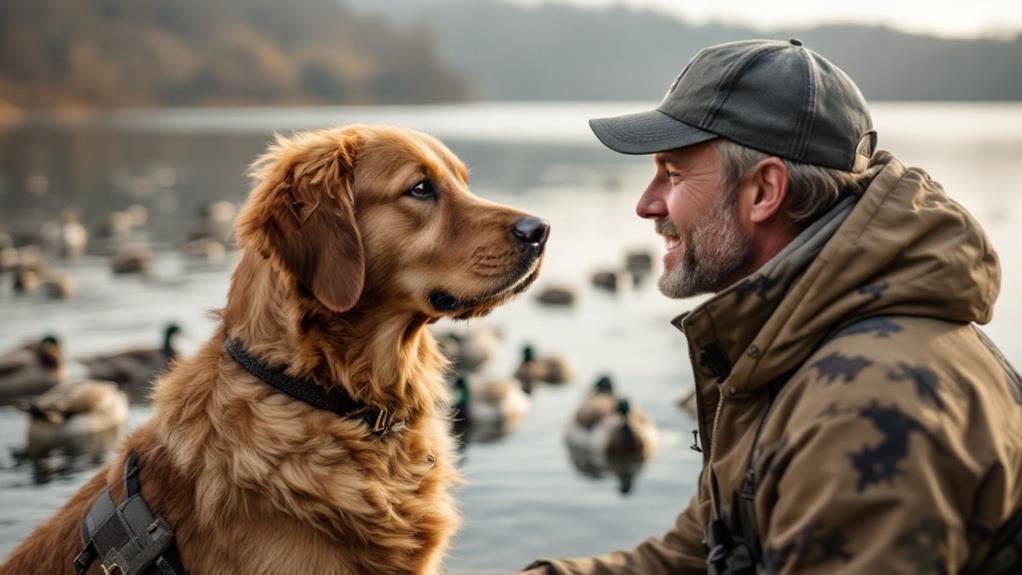
Owning a Chesapeake Bay Retriever comes with unique responsibilities that potential owners should carefully consider. This breed thrives in active households, making them perfect companions for outdoor enthusiasts. Regardless of your love for hiking, swimming, or any physical activities, you'll find that a Chesapeake Bay Retriever matches your energetic lifestyle. However, their high energy levels demand consistent training and socialization from an early period. These efforts help develop their loyalty and willing-to-please attitude, channeling their energy positively.
Regular exercise is essential for a Chesapeake Bay Retriever. Plan for at least 20 minutes of intensive activity or a 1-hour walk daily to prevent boredom and obesity, common health issues in this breed. Their protective nature means they might show aggression towards unfamiliar dogs. Proper socialization guarantees they're friendly with other pets and people.
Consider joining the American Chesapeake Club. It's a valuable resource for training, socialization tips, and connecting with other Chesapeake Bay Retriever owners. The club offers support and organizes events that can improve your training efforts. By understanding these considerations, you're better equipped to provide a happy, healthy life for your Chesapeake Bay Retriever.