Chartreux: Meet the Smiling Cat of France
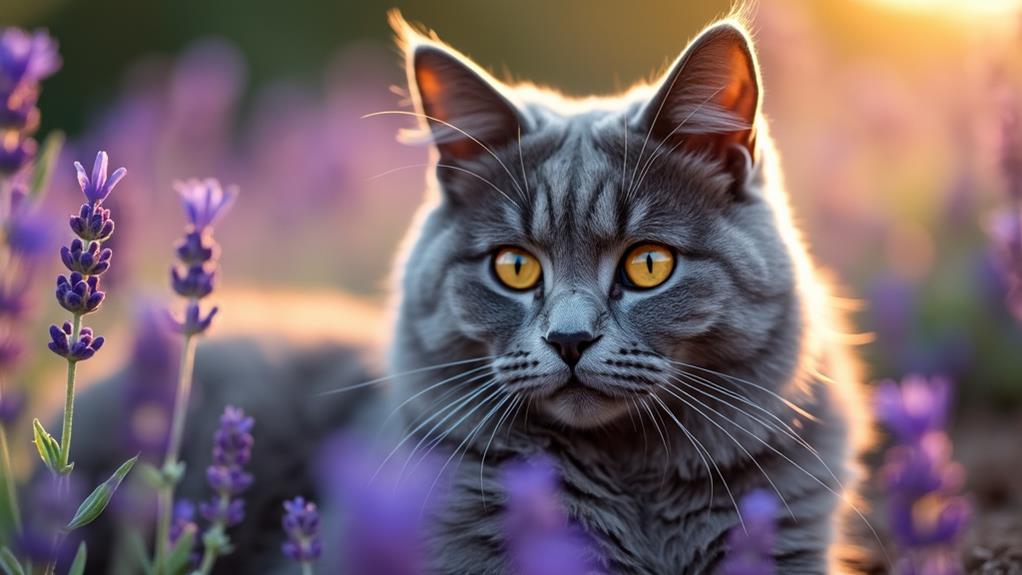
Meet the Chartreux, the smiling cat of France. Known for its enchanting grin and unique blue-grey coat, this breed dates back to French monastery legends and may have roots from the Crusades period. These robust cats aren't just charming but also remarkably low-maintenance, with dense, water-repellent fur that requires minimal grooming. Their calm, playful nature makes them perfect companions who communicate through expressive eyes and soft chirps. Despite their independent streak, they form strong bonds with their humans. Curious about their intriguing history and personality? There's much more to uncover about this enthralling feline.
Key Takeaways
- Chartreux cats, linked to Carthusian monks, have a rich history dating back to the 18th century.
- Known for their striking blue-grey coat, Chartreux cats are low-maintenance with minimal shedding.
- The breed is recognized for its calm, affectionate nature, thriving in family environments.
- Chartreux cats effectively communicate through expressive eyes and soft chirps, forming deep bonds.
- Officially recognized by CFA and TICA, Chartreux cats continue to captivate with their enchanting appearance and grin.
Origin and History
From within the storied halls of France, the Chartreux cat's origins are wrapped in intriguing tales and historical ambiguity. You're diving into a history that may trace back to Carthusian monks who possibly brought these French cats to the Grande Chartreuse monastery. As you look further, you'll find the initial documented mention of the Chartreux in 1558. The breed gained more recognition in the 18th century when naturalist Georges-Louis Leclerc, Comte de Buffon, highlighted them, sparking interest and admiration.
However, the roots of this French cat could stretch even further. Some suggest that these cats might have been introduced to France by knights returning from the Crusades. They may have traveled from ancient Persia, brought back to France as prized companions and protectors against pests.
The path wasn't always smooth; the Chartreux faced near extinction after World War I. Yet, through dedicated breeding programs and cat shows in the 20th century, you helped revive this charming breed. Today, the Chartreux is recognized by several cat registries, ensuring its place in the hearts of cat lovers worldwide. Your appreciation of this breed contributes to its enduring legacy.
Physical Characteristics
With a robust and muscular build, the Chartreux cat is a striking medium to large breed, typically weighing between 9 to 15 pounds. When you initially encounter this feline, you'll notice their powerful, sturdy physique. Their thick and muscular legs support their solid body, completing the build characteristics that make them both agile and strong. The medium-length tail adds to their balanced appearance, showcasing their natural athleticism.
The Chartreux's coat texture is one of their most distinctive features. Although we'll explore the unique color later, it's worth noting that their dense, water-repellent fur feels remarkably similar to sheep's wool. This texture not only adds to their allure but also means they require minimal grooming, as they shed less than other breeds.
You'll be captivated by the Chartreux's eye color, ranging from bright copper to deep gold. These round, expressive eyes stand out against their general appearance, adding a touch of warmth and charm that complements their strong, broad head and short, straight nose. With such striking physical characteristics, it's no wonder the Chartreux is affectionately known as the "smiling cat" of France, exuding a charm that's hard to resist.
Unique Blue-Grey Coat
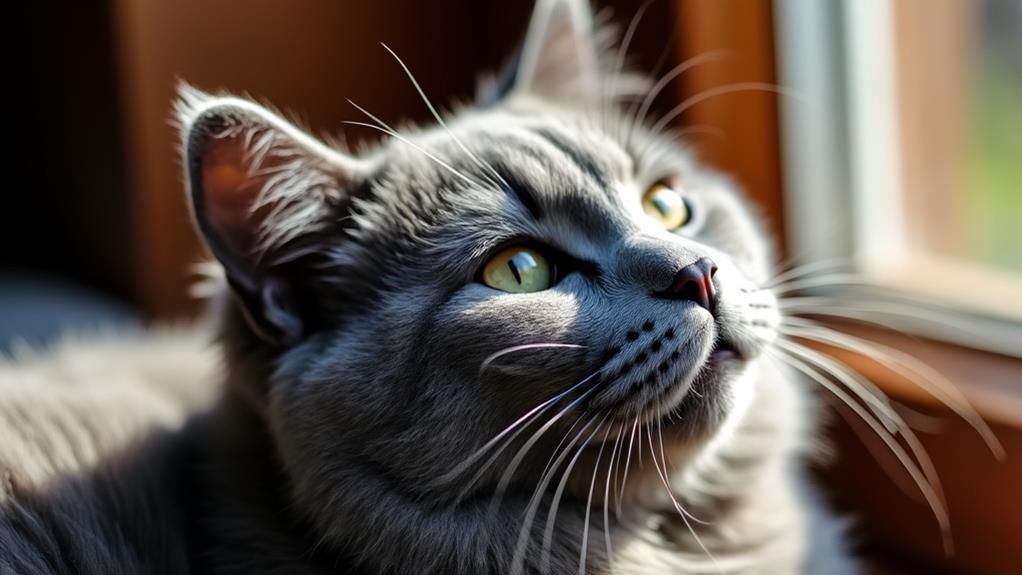
The Chartreux cat boasts a truly unique blue-grey coat that sets it apart from other breeds. This distinctive coat isn't just about color; it's about texture and practicality. Imagine the coat texture comparison to sheep's wool—thick, water-resistant, and plush. These qualities make the Chartreux's coat not only visually striking but also functional, providing insulation and protection. The color genetic factors at play involve a specific gene that gives them this solid blue-grey hue, enhancing their allure.
Besides its beauty, the Chartreux's coat is low-maintenance thanks to minimal shedding. You'll find that grooming techniques are straightforward: gentle, occasional brushing helps maintain that plush softness and keeps loose hair at bay. Here's a quick summary to grab your attention:
- Texture: Think sheep's wool—thick, water-resistant, and plush.
- Color: A unique gene gives them their iconic blue-grey hue.
- Maintenance: Minimal grooming with occasional brushing.
- Functionality: Double coat for insulation and weather protection.
The tactile experience of petting a Chartreux is unlike any other, thanks to their luxurious coat. This makes them not only a visual delight but also a joy to cuddle.
Personality and Behavior
A Chartreux cat's personality makes it a delightful companion, with its calm, affectionate nature standing out among cat breeds. This breed is perfect for families and individuals who appreciate a loving feline friend. You'll find that Chartreux cats are experts at expressing their feelings through intelligent communication. Their expressive eyes and soft chirps convey a world of meaning, even if they sometimes prefer silence. Some of these charming cats might be completely mute, highlighting their unique communication style.
Despite their calm demeanor, Chartreux cats have a playful side that persists well into adulthood. You might catch them engaging in playful antics, like chasing toys or learning tricks such as fetching. This playful nature requires mental stimulation, and they thrive on activities that challenge their intelligence. These cats bond closely with one person in the household, but they're friendly and affectionate towards everyone, creating a warm and welcoming environment.
In essence, a Chartreux cat combines the best of both worlds: affectionate nature and lively spirit. Their unique ways of showing love and engaging with their human companions make them truly special, ensuring they remain cherished members of any household.
Interaction With Humans
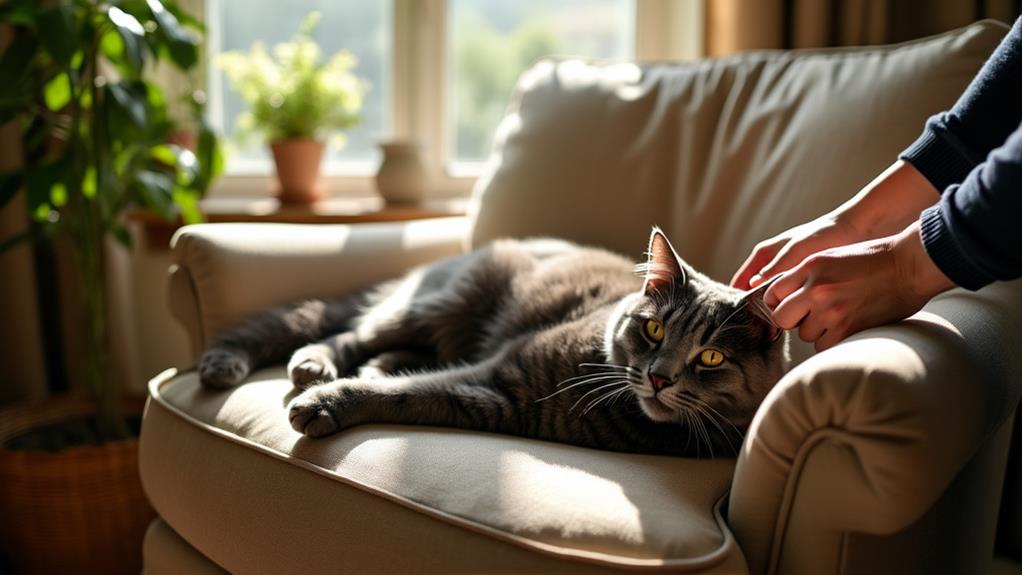
Thanks to their endearing nature, Chartreux cats forge deep and lasting connections with their human companions. Their affectionate demeanor guarantees they form strong bonds and display loyalty over time. Chartreux cats communicate beautifully through expressive eyes and small chirps, making them attentive listeners and responsive to your moods. When you talk to them, notice how their eyes meet yours, conveying understanding—a prime example of their communication cues.
Playtime with a Chartreux cat is both engaging and rewarding. Their playful, curious personalities thrive on interactive play, which offers numerous playtime benefits. Engaging in bonding activities like fetch or puzzle games not only improves their mental stimulation but also strengthens your relationship with them.
Here are some tips to improve your interaction with a Chartreux cat:
- Observe their communication cues: Pay attention to their eyes and chirps for clues about their feelings.
- Prioritize playtime benefits: Schedule regular play sessions to keep them mentally and physically active.
- Include diverse bonding activities: Try different games to find out what they enjoy most.
- Be patient with newcomers: They may take time to warm up to strangers, but their love extends to all household members.
Care and Maintenance
Caring for a Chartreux cat builds on the strong bond you've already fostered through interaction. Start with health monitoring by scheduling regular veterinary check-ups. These visits help catch potential issues early, keeping your feline friend in peak condition. Being proactive about your cat's health guarantees they enjoy a long, healthy life by your side.
Addressing their dietary needs is crucial. Provide a balanced diet consisting of high-quality cat food to support their ideal health and well-being. Avoid feeding them table scraps or low-quality foods, as these can lead to obesity and other health issues. Consult your vet for specific dietary recommendations tailored to your cat's individual needs.
Despite their dense, water-repellent coat, Chartreux cats require minimal grooming. They shed very little, making maintenance easier for you. Regular brushing not only keeps their coat in prime shape but also strengthens your bond. Follow these grooming tips to guarantee your pet remains comfortable and clean.
Chartreux in Culture
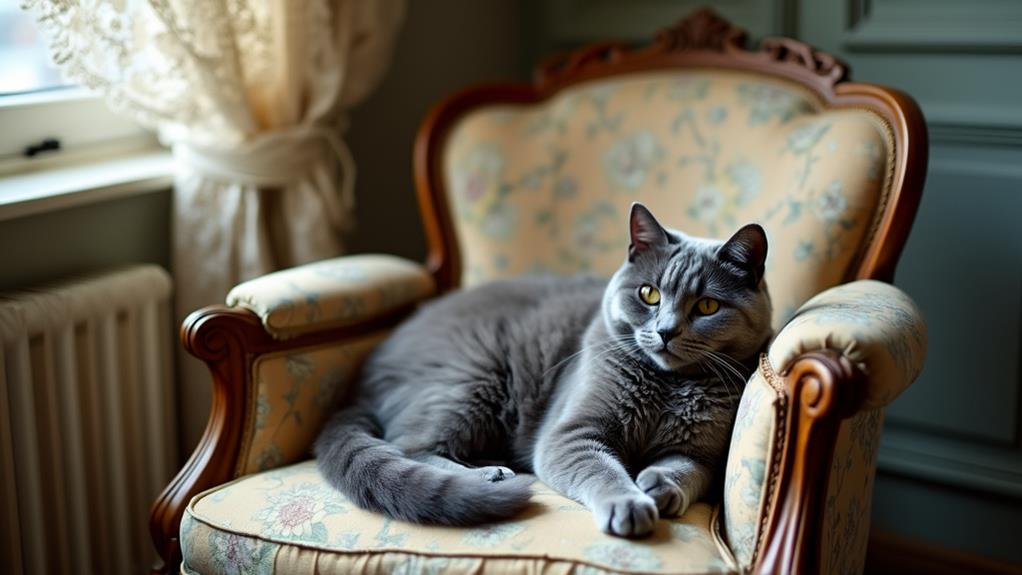
How has the Chartreux cat captured the cultural imagination? This breed, with its iconic smile, has fascinated artists, writers, and audiences across generations. In Chartreux literature, the breed plays significant roles in the works of French writer Colette, particularly in "La Chatte" and "Les Vrilles de la Vigne". These novels examine themes of companionship and independence, with the Chartreux cat embodying these qualities.
Chartreux symbolism shines through in art as well. A notable example is the 1747 painting by Jean-Baptiste Perronneau, which depicts a Chartreux as a cherished pet, illustrating the breed's longstanding admiration. Moreover, the Chartreux's presence in modern culture is marked by Ste Cat, the blue Chartreux mascot of the Montreal International Jazz Festival. This role underscores the breed's charming and amiable nature.
In addition, the Chartreux's cultural ties deepen with French folklore, where they're often linked to Carthusian monks, adding layers of mystique. Here's how the Chartreux has influenced diverse cultural facets:
- Literature: Colette's novels.
- Art: Perronneau's 1747 painting.
- Symbolism: French folklore.
- Modern Events: Montreal Jazz Festival mascot.
Breed Recognition
The Chartreux cat has steadily gained recognition, thanks to its enchanting appearance and charming demeanor. You might be surprised to learn how this breed, with its striking blue-grey coat and rounded head, has fascinated the cat world. Cat registries like the CFA (Cat Fanciers' Association) and TICA (The International Cat Association) have been instrumental in promoting and preserving the breed's standards. These organizations outline specific breed standards that highlight the Chartreux's unique traits, ensuring that its historical significance isn't forgotten.
In the mid-20th century, the Chartreux started to gain official recognition, a proof of its rich history and distinctive characteristics. This recognition paved the way for the breed to be showcased in numerous cat shows. If you've ever attended one, you might've seen a Chartreux stealing the spotlight with its gentle temperament and fascinating grin. Such appearances often earn them accolades, further cementing their place in the feline community.
As Chartreux cats continue to impress at shows and win the hearts of cat enthusiasts worldwide, their popularity grows. Thanks to their historical significance and adherence to breed standards, you'll likely see their recognition continue to rise in the future.
Further Reading and Resources
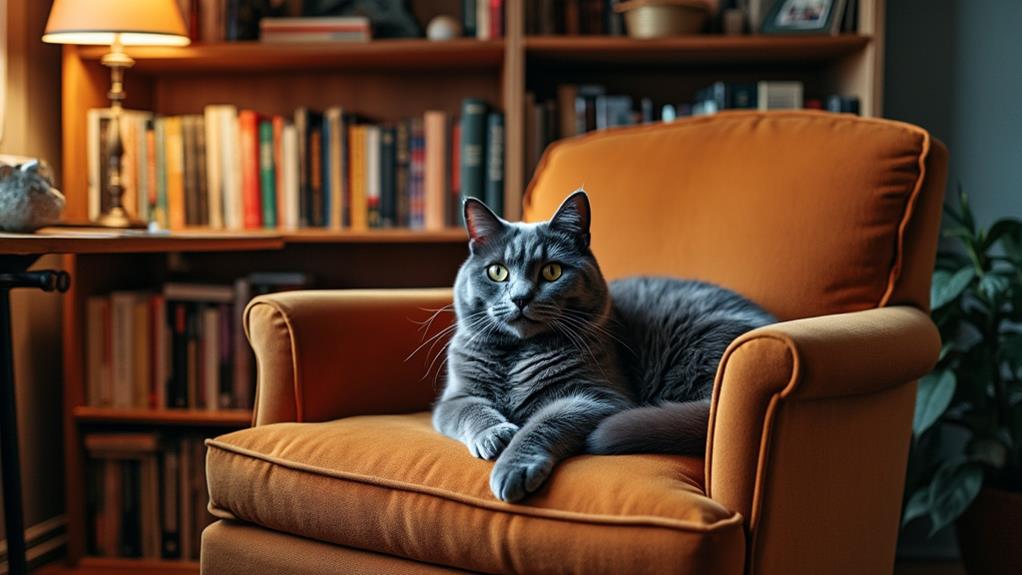
Why not plunge deeper into the fascinating world of Chartreux cats through a variety of enriching resources? Regardless of your captivation by the Chartreux myths or interest in breed comparisons, there's plenty to investigate. Start with literature and art where the Chartreux shines, like in Colette's novels "La Chatte" and "Les Vrilles de la Vigne." These works highlight the breed's allure and presence in French culture.
To gain a thorough understanding, consider the following resources:
- CFA Profile: The Cat Fanciers' Association (CFA) provides detailed information about the Chartreux, including breed standards and traits, making it a crucial guide for enthusiasts.
- Chartreux Cat FAQ: This resource answers common questions about care, characteristics, and history, making it ideal for potential owners concerned with health considerations.
- Encyclopedia of Cat Breeds: This book offers historical context and detailed descriptions, perfect for those delving into breed comparisons and origins.
- Online Resources: Archived pages and links, like the Romanian page on Pisica Chartreux, offer insights into the breed's popularity and cultural impact across different regions.
With these resources, you'll be well-equipped to appreciate the unique charm and history of the Chartreux cat.