Chartreux Cat: The Sweet-Tempered and Quiet Companion
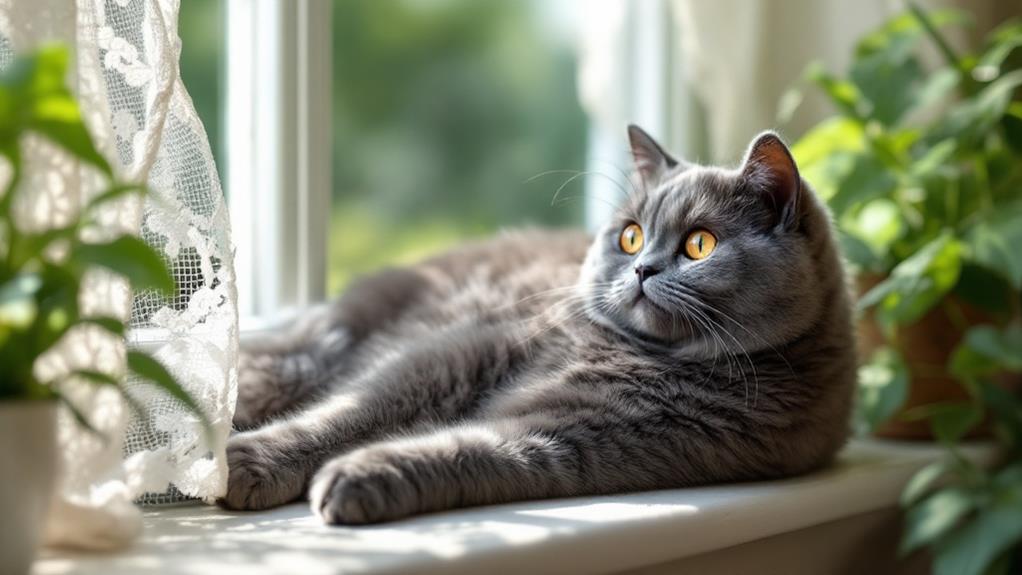
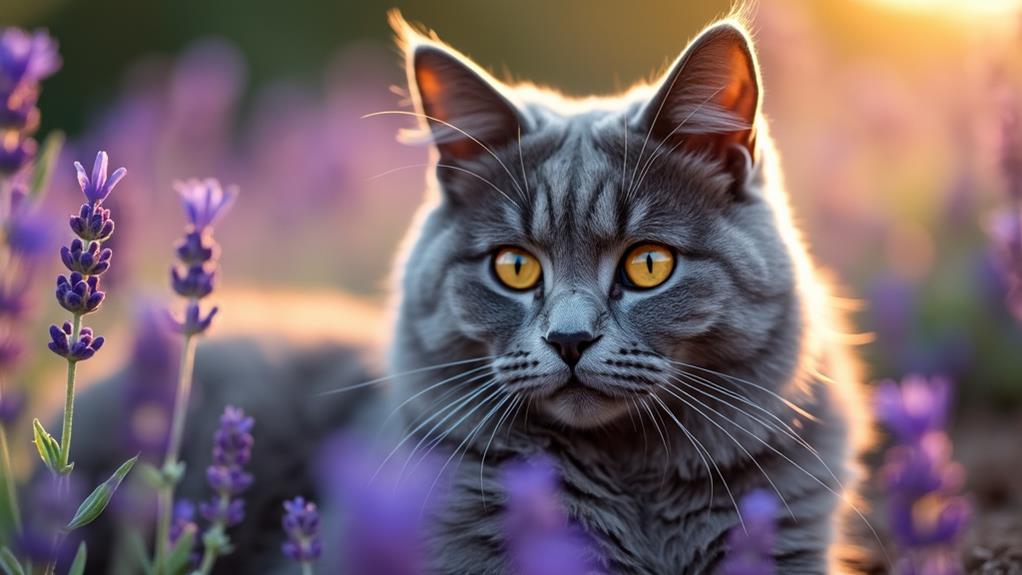
You'll find the Chartreux cat to be a sweet-tempered and quiet companion, perfect for any household. They're medium to large in size with a striking blue-gray coat and expressive copper or gold eyes. These cats are intelligent and learn quickly, communicating more with body language than meows. Their affectionate yet independent nature makes them adaptable to both apartments and larger homes. Low grooming needs and a calm demeanor mean they're low-maintenance buddies who fit into busy lifestyles. With a lifespan of 12 to 15 years, they're truly lasting friends. Uncover more about their unique charm and historical significance.
Overview and Characteristics
The Chartreux cat is an alluring breed with several distinct features that make it stand out. Weighing between 6 to 12 pounds and reaching 9 to 11 inches tall, this medium to large breed captures attention with its unique characteristics. The Chartreux's short, blue-gray coat is silky, water-repelling, and tends to become woolly as they mature. Their striking copper or gold eyes add to their enchanting presence, making them a truly remarkable feline companion.
In terms of temperament, Chartreux cats are calm and affectionate, yet they possess an independent streak. They might appear somewhat aloof, preferring to communicate through subtle body language rather than vocalizations. You'll find that they're not the type to demand constant attention, but they're always nearby, quietly observing or engaging in playful antics. Their intelligence shines through as they quickly learn tricks and commands, demonstrating their quick reflexes and curiosity.
This breed's gentle and composed nature makes them an excellent choice for anyone seeking a sweet-tempered and quiet companion. The Chartreux's blend of unique characteristics and temperament guarantees they're a delightful presence in any home.
Living Environment and Care
A harmonious living environment is key to keeping your Chartreux cat content and healthy. These adaptable felines thrive in diverse settings, regardless of whether it's a spacious home or a cozy apartment. Their quiet demeanor means minimal noise, making them ideal for close-quarter living. Pay close attention to their subtle behavioral changes to guarantee their hydration and activity levels remain steady. Routine and stability are fundamental for their well-being, so maintain a consistent schedule to keep them comfortable.
Weekly brushing is important for your Chartreux's health, as their short, blue-gray coat requires regular grooming to stay sleek. During shedding seasons, increase brushing sessions to minimize hair loss and keep your home tidy. This grooming routine not only maintains their coat but also helps strengthen your bond with them.
Chartreux cats enjoy interaction and can easily adapt to living with children and other pets. Providing them with interactive toys keeps them stimulated and happy. Remember, regular veterinary check-ups are crucial for catching potential health issues early, particularly urinary tract problems and kidney disease. By creating a nurturing environment and practicing consistent care, you'll have a loving, content companion by your side.
Health and Lifespan
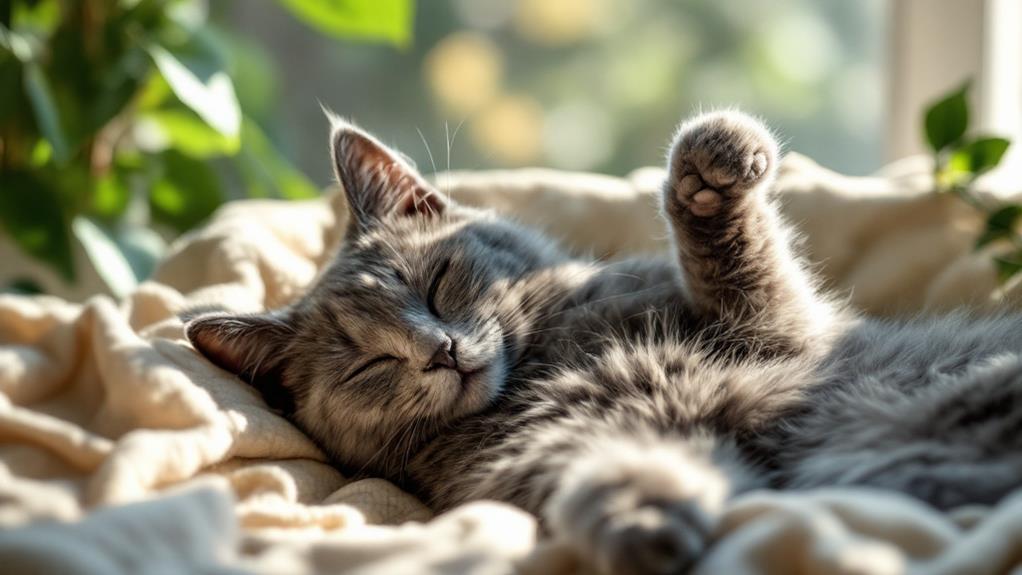
Chartreux cats boast an impressive lifespan, typically ranging from 12 to 15 years, thanks to their robust health and good care practices. However, maintaining their well-being involves attention to certain health issues. They can be prone to urinary tract problems and kidney disease. To catch any potential issues early, regular veterinary visits are vital. These check-ups guarantee your Chartreux stays in top form throughout their life.
Responsible breeding plays a noteworthy role in minimizing genetic health problems. Many breeders conduct rigorous genetic health testing to reduce the chances of hereditary conditions, making sure that you welcome a healthy kitten into your home. Yet, even with careful breeding, some common illnesses like diarrhea and upper respiratory infections can affect these cats. Keeping their environment clean and providing proper nutrition helps mitigate these risks.
Obesity is another concern, leading to conditions like diabetes and joint issues. Monitoring your cat's diet and confirming they get enough exercise is fundamental. By taking these proactive steps, you can notably improve your Chartreux's quality of life, allowing them to be the sweet-tempered and quiet companions they're known to be, for many happy years.
Historical Significance
While understanding their health is crucial for a Chartreux cat's well-being, its historical significance adds a fascinating layer to its identity. This French breed is believed to have been developed by Carthusian monks in France. These monks utilized the Chartreux for pest control, intertwining the cat's history with that of monasteries since the 18th century. Their presence in French literature as early as the 16th century further underscores their enduring cultural importance.
The Chartreux's expedition into the spotlight began in 1931 when it was officially recognized in European cat shows. This recognition marked the start of the breed's illustrious voyage in the feline world. By 1987, the Cat Fanciers Association granted full recognition, cementing the Chartreux's status as a cherished breed. However, post-World War II, the breed faced declining numbers, prompting preservation efforts. A dedicated breed club emerged, passionately promoting and protecting the Chartreux.
Often dubbed the National Cat of France, the Chartreux holds a special place in French heritage and culture. Its historical significance, deeply rooted in French soil and monastic life, continues to captivate cat lovers worldwide, making it a truly remarkable companion.
Grooming Needs
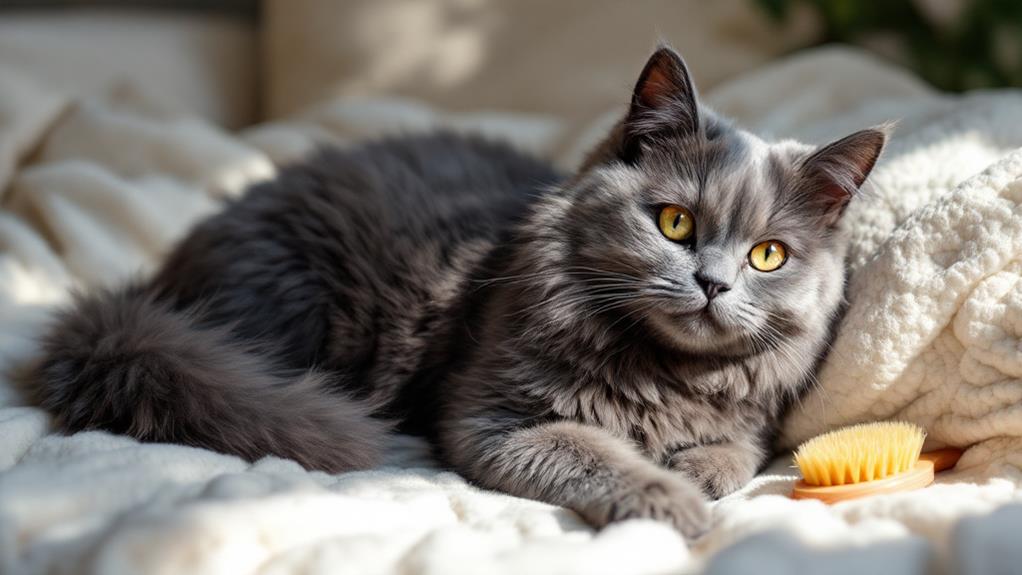
Maintaining a Chartreux cat's grooming routine is straightforward and essential for their well-being. These cats have a short, dense, and water-repellent coat that requires minimal grooming. A simple weekly brushing will help reduce shedding and keep their fur in top condition. However, during shedding seasons, you'll need to increase your efforts to prevent matting. Daily combing during these times is necessary to manage their wooly undercoat effectively, guaranteeing your cat remains comfortable and their coat stays healthy and clean.
In addition to coat care, regular nail trimming is important. Aim to trim your Chartreux's nails on a weekly basis to prevent injuries and guarantee their comfort as they move around your home. Remember, neglected nails can curl and grow into the paw pads, causing pain and potential infections.
Dental hygiene is another key aspect of your Chartreux's grooming routine. Regularly brushing their teeth with cat-specific toothpaste helps prevent plaque buildup and supports general health. By incorporating these grooming practices, you'll guarantee your Chartreux cat remains a happy and healthy companion, bringing joy and tranquility into your home for years to come.
Behavior and Training
Known for their intelligence and gentle temperament, Chartreux cats thrive in environments where their playful and curious nature is nurtured. Their behavior is often affectionate, as they enjoy following you around the house, showcasing their loyalty. To keep them engaged, training should incorporate interactive activities. Positive reinforcement works wonders with these intelligent felines. Use rewards like treats or playtime to encourage learning. Here are some tips for successful training:
- Consistency is key: Stick to a regular training schedule. Chartreux cats may take a little time to learn new tricks, but their intelligence guarantees they'll catch on with patience.
- Interactive play: Engage them with puzzle toys or fetching games. These not only stimulate their minds but also serve as a fun bonding experience.
- Watch their cues: Pay attention to their body language and subtle vocalizations. Chartreux cats communicate needs through chirps and movements, helping you understand their desires.
Their affectionate behavior and willingness to learn make Chartreux cats delightful companions. With consistent training and a focus on interactive play, you'll foster a loving and well-behaved pet. Remember, your patience and dedication will lead to successful training outcomes.
Diet and Nutrition

In relation to feeding your Chartreux cat, the right diet is essential for their health and well-being. Chartreux cats are obligate carnivores, so their diet should mainly consist of high-quality animal proteins. Look for commercial cat food that meets AAFCO standards to guarantee it provides complete and balanced nutrition for your cat at every life stage. Kittens need specially formulated food to support their growth, while adult Chartreux cats should adapt to age-appropriate diets to maintain peak health.
Obesity is a common issue among cats, and Chartreux cats are no exception. To prevent this, portion control is significant. Monitor their daily calorie intake based on their years, weight, and activity level. This helps maintain a healthy weight and avoid obesity-related health problems. Always verify fresh water is available to keep your cat hydrated.
Offering variety in their diet can promote general health and prevent dietary boredom. You might consider rotating between different protein sources or flavors of cat food. By carefully managing their diet and nutrition, you'll help your Chartreux cat stay healthy, happy, and as sweet-tempered as ever.
Fun Facts and Trivia
With its delightful quirks and rich history, the Chartreux cat offers more than just companionship; it provides a mesmerizing glimpse into feline heritage. As one of the oldest natural cat breeds, the Chartreux is recognized as the National Cat of France. Its origins trace back to the early 18th century, enchanting cat lovers with its iconic blue-gray, water-repellent coat that thrives in diverse environments. But there's more to this charming feline than meets the eye.
- Unique Communication: Unlike many cats, the Chartreux relies less on vocalizations. Instead, it uses body language and subtle chirps, inviting you to engage with its quiet yet expressive nature.
- Playful Side: Known for its sense of humor, the Chartreux enjoys playful antics and interactive toys. You'll find joy in watching it chase after feather wands or solve puzzle toys, showcasing its cleverness.
- Cultural Influence: The Chartreux has left its paw print on art history. It's been featured in works like Jean-Baptiste Perronneau's 1747 painting, highlighting its esteemed status in French culture.
Embrace the Chartreux's blend of history, playfulness, and artistry—it's a companion that captivates and entertains.