Cats and Babies: What You Should Be Aware Of for a Safe Introduction

Introducing your baby to your cat can be a smooth process with the right preparation. Start by setting boundaries using baby gates to mark off-limits areas. Let your cat gradually get used to the baby's scents and sounds with items like blankets and recordings. During initial introductions, keep things calm and use treats to reward positive behavior. Consistency is key, so maintain your usual routine and give your cat dedicated attention. Verify you supervise all baby-cat interactions to prevent any accidents. Curious about keeping harmony in your household? There's more detailed advice about managing these interactions safely.
Preparing Your Home
Preparing your home for the arrival of a baby when you have a cat involves a few vital steps. Initially, make room for your baby by designating a space that's off-limits to your cat. This helps prevent any unsupervised interactions, guaranteeing safety for both the baby and the cat. As you prepare for the baby's arrival, use baby gates to block entry to these areas and keep doors closed. This way, when the baby arrives, your cat knows its boundaries.
Create positive associations by gradually introducing your cat to new scents linked with the baby, like baby lotion and powder. This can help your cat feel more comfortable and less stressed when the baby comes home from the hospital. Remember, maintaining your cat's routines is fundamental. Stick to regular feeding, playtime, and attention, so your cat doesn't feel neglected during the change.
Also, consider your cat's needs by providing safe hiding and high resting spaces. These are vital for when your cat feels overwhelmed by the baby's presence. By planning ahead, you'll guarantee a smoother change and a harmonious home environment for everyone.
Familiarizing With New Scents
In the case of bringing a baby into a home with a cat, familiarizing your feline friend with new scents can make all the difference. By gradually introducing baby-related smells like lotions and powders, you help your cat adjust to the upcoming changes. Start by applying baby lotion to your hands before interacting with your cat. This simple act creates a positive association with the new scents they'll soon encounter more frequently.
Let your cat investigate baby items such as blankets and clothing. These objects will carry the baby's scent, and allowing your cat to examine them can ease the adjustment. This way, by the time the baby arrives, your cat won't be overwhelmed by unfamiliar smells.
To help your cat acclimate to the sounds that a baby will bring, consider playing tapes of baby noises at a low volume. This practice familiarizes them with the sounds, reducing potential anxiety.
Early setup of the nursery is crucial. Allow your cat to investigate the new furniture and items there, helping them adjust to environmental changes without stress.
- Apply baby lotion on your hands
- Let the cat investigate baby items
- Play baby noise tapes
- Set up the nursery early
Managing First Encounters

Introducing your cat to the newborn can be an exciting yet delicate process. As the baby comes home, it's vital to introduce your cat in a way that feels safe and comfortable for both. Allow your cat to approach at its own pace, making certain these initial encounters are brief and positive. This helps build a foundation of comfort. Offer treats and use positive reinforcement to create enjoyable moments, helping your cat become familiar with the baby's presence.
Pay close attention to your cat's body language. Watch for signs of stress like flattened ears or hissing. If your cat seems uneasy, provide a safe retreat space where it can relax away from the baby. It's important to keep the baby's sleeping areas off-limits to the cat to prevent accidents, such as suffocation. Always supervise interactions between your cat and the baby to guarantee safety.
As your cat becomes more comfortable, gradually increase the duration and closeness of their interactions. Reinforce calm behavior around the baby, making sure that each encounter is positive. With patience and attentiveness, your cat can become a loving companion to your growing family.
Maintaining Routine and Structure
Maintaining a consistent routine is key to helping your cat adjust to the arrival of a new baby. Cats thrive on predictability, so disruptions to their daily life can lead to stress and anxiety. By maintaining routine with feeding, playtime, and attention, you create a safe introduction for your furry friend. Start making gradual adjustments to your cat's schedule 1-2 months before the baby arrives. This helps them acclimate to the new dynamics smoothly, ensuring a positive adjustment.
To keep your cat's life stable, focus on the following:
- Feeding: Stick to regular feeding times to provide comfort and stability.
- Playtime: Incorporate consistent play sessions to keep your cat engaged and happy.
- Alone Time: Dedicate time to interact with your cat without baby-related distractions.
- Positive Behavior: Reinforce positive behavior by rewarding your cat during interactions with the baby.
Consistency in your cat's daily schedule, including grooming and play sessions, reinforces their sense of normalcy. This reduces feelings of neglect and resentment towards the new family member. By maintaining routine and rewarding positive behavior, you help your cat associate the baby with positive experiences, fostering a harmonious relationship.
Addressing Safety Concerns

When introducing a baby to a household with a cat, safety should be your top priority. Cats and babies can coexist harmoniously, but you need to take steps to address potential risks. Always supervise interactions to prevent incidents such as suffocation or smothering during sleep. It's wise to keep cats out of sleeping areas by using closed doors or baby gates, guaranteeing safety for infants.
Health concerns like toxoplasmosis, which can be transmitted through cat feces, highlight the significance of keeping the litter box clean. Regularly maintaining it minimizes health risks, protecting both your baby and your cat. Supervised interactions are vital not just to prevent scratches and bites, but also to help both the cat and baby feel secure during their encounters.
Additionally, understanding cat behavior is important. Pay attention to any signs of stress or discomfort in your cat and address them promptly. Routine veterinary check-ups confirm your cat remains healthy, reducing health risks associated with pet ownership. By prioritizing these measures, you can create a safe environment where cats and babies thrive together, building a strong bond over time.
Handling Jealousy and Stress
Cats often display signs of jealousy when a newborn arrives, and it's important to recognize and address these behaviors promptly. You might notice your cat meowing excessively or acting out with destructive behaviors. This usually happens if their routine is disrupted. To minimize feelings of resentment, it's important to maintain your cat's established routine, including regular feeding and playtime. This helps them feel secure and provides the time to adjust to the new family member.
Creating safe spaces for your cat is significant. These are areas where your cat can retreat when feeling overwhelmed by the baby's presence. It reduces stress and prevents negative behaviors linked to jealousy. Supervised interactions between your baby and the cat are beneficial. Allow your cat to acclimate to the baby at their own pace, preventing aggressive behaviors and ensuring both safety and comfort.
Positive reinforcement plays a key role in fostering a harmonious environment. Use treats and praise to encourage calm behavior, reducing competition for your attention. Here are some strategies to handle jealousy and stress effectively:
- Maintain your cat's routine
- Create safe spaces for retreat
- Encourage supervised interactions
- Use positive reinforcement consistently
Teaching Child-Cat Interaction
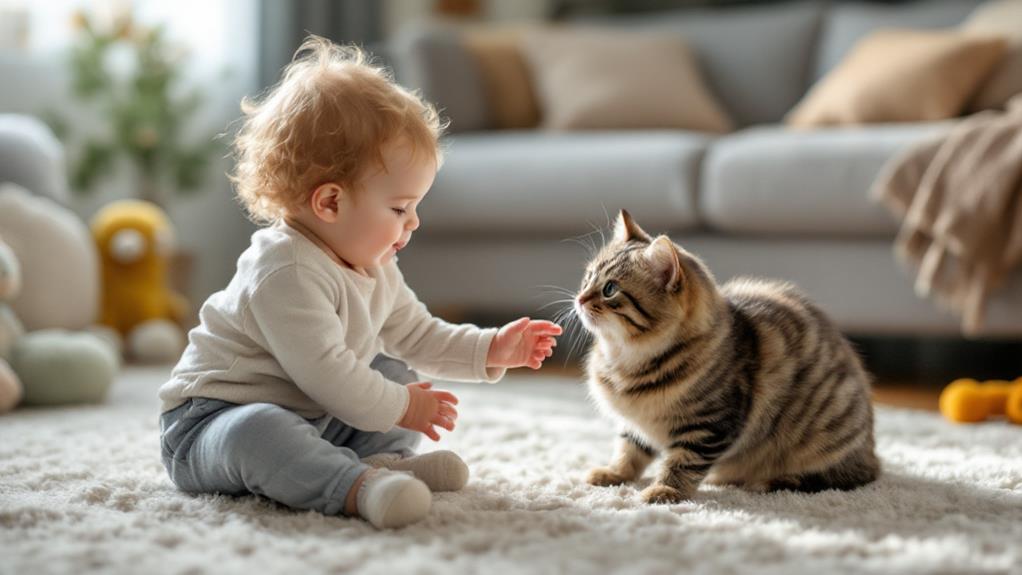
Introducing your child to your cat requires patience and guidance to guarantee a safe and positive relationship. Start by teaching child-cat interaction with a focus on how to approach cats slowly and calmly. Encourage your child to let the cat initiate contact, reducing the chance of startling or frightening their new furry friend.
Instruct your child to use gentle hands when petting the cat. Emphasize the importance of avoiding pulling on the cat's fur or tail to prevent injury. It's vital that your child understands cat body language, learning to recognize signs when the cat feels threatened or uncomfortable. This knowledge helps your child know when to give the cat space and guarantees the cat feels safe.
Reinforce that cats are not toys, and remind your child to treat cats with respect. Avoid overly loud noises or sudden movements around them, which can cause distress. During supervised playtime, encourage positive interactions by rewarding both your child and the cat with treats. This approach fosters a bond between them while promoting safe and respectful behavior. By following these steps, you'll help create a harmonious and loving environment for both your child and cat.
Monitoring Behavioral Changes
As you nurture the relationship between your child and your cat, it's essential to keep an eye on your cat's behavior to guarantee they're coping well with the new dynamics. Monitoring your cat's behavior is important for identifying signs of stress or jealousy, such as excessive meowing, hiding, or destructive actions. These can indicate your cat's discomfort with the baby. Look for changes in eating habits or grooming routines, as they might signal anxiety stemming from the new presence in the home.
Your cat's body language offers valuable insights. Be alert for signs like flattened ears, dilated pupils, or a twitching tail, which might suggest agitation or fear. Keeping a journal to track any behavioral changes can help you pinpoint triggers associated with your baby's interactions. This proactive step can assist in recognizing issues early and addressing them promptly.
- Signs of stress: Excessive meowing, hiding, or destructive actions.
- Changes in eating habits: Possible indicators of anxiety.
- Body language: Flattened ears, dilated pupils, twitching tail.
- Behavioral problems: Consider consulting a feline behavior specialist if these persist.
Seeking Professional Guidance
When you're maneuvering the complexities of introducing a cat to a new baby, seeking professional guidance can be invaluable. Consulting an animal behaviorist offers tailored strategies for a smoother introduction process. These professionals specialize in identifying specific behavioral issues, like aggression or anxiety, that might emerge. Addressing these concerns early can prevent problems and guarantee both your cat and baby coexist peacefully.
Utilizing resources from veterinarians or feline behavior specialists deepens your understanding of cat behavior. This knowledge is vital for facilitating a positive experience for everyone involved. Experts can teach you gradual desensitization techniques, which help reduce stress and improve your cat's comfort levels during this significant change. These methods introduce the baby to the cat's environment slowly, allowing your pet to adjust without feeling overwhelmed.
Moreover, professional guidance isn't just a one-time intervention. Experts offer ongoing support and monitoring of your cat's behavior, securing long-term harmony as your baby grows. They can help you adapt strategies as needed, maintaining a balanced household. By seeking professional help, you're taking proactive steps to create a nurturing environment where your cat and baby can thrive together.