Catahoula Leopard Dog: The Striking and Versatile Working Dog
The Catahoula Leopard Dog is an enchanting breed known for its eye-catching coat and versatility in diverse working roles. Bred in Louisiana for herding and hunting, this agile dog sports unique leopard-like patterns and often displays striking eye colors like blue or amber. With webbed feet for swimming and an athletic build, it thrives in active environments. It's loyal, protective, and highly intelligent, but requires consistent training and early socialization. Health concerns like hip dysplasia and deafness mean you should choose breeders carefully. To truly appreciate their history and talents, there's much more to uncover about this remarkable breed.
Origins and Development
The Catahoula Leopard Dog's story begins in rural Louisiana, where it was bred for herding cattle and hogs. This breed's origins are deeply rooted in the diverse and rugged landscape of Catahoula Parish. As you investigate its history, you'll uncover that Catahoula Leopard Dogs were shaped by a blend of Spanish dogs brought by adventurers in the 16th century and Native American dogs used for hunting and livestock management. These influences formed a resilient and versatile working dog, perfectly suited to the challenges of Louisiana's terrain.
Settlers quickly recognized the breed's exceptional adaptability and working abilities, making Catahoula Leopard Dogs indispensable companions in agricultural tasks. Originally known as Catahoula leopard curs, these dogs earned a reputation for their skill and tenacity in herding and protecting livestock. In 1979, their name was officially changed to reflect their distinct characteristics and heritage.
The breed's historical significance is undeniable, and it remains an integral part of Louisiana's culture. As you learn more about Catahoula Leopard Dogs, you'll appreciate how their development as a working dog has been intertwined with the area's history and the practical needs of its people.
Unique Physical Traits
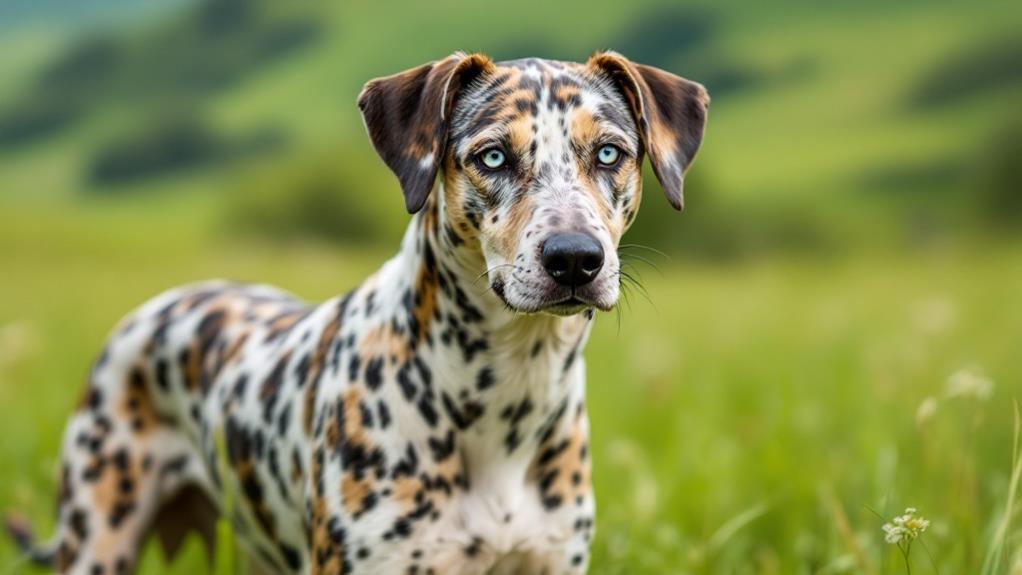
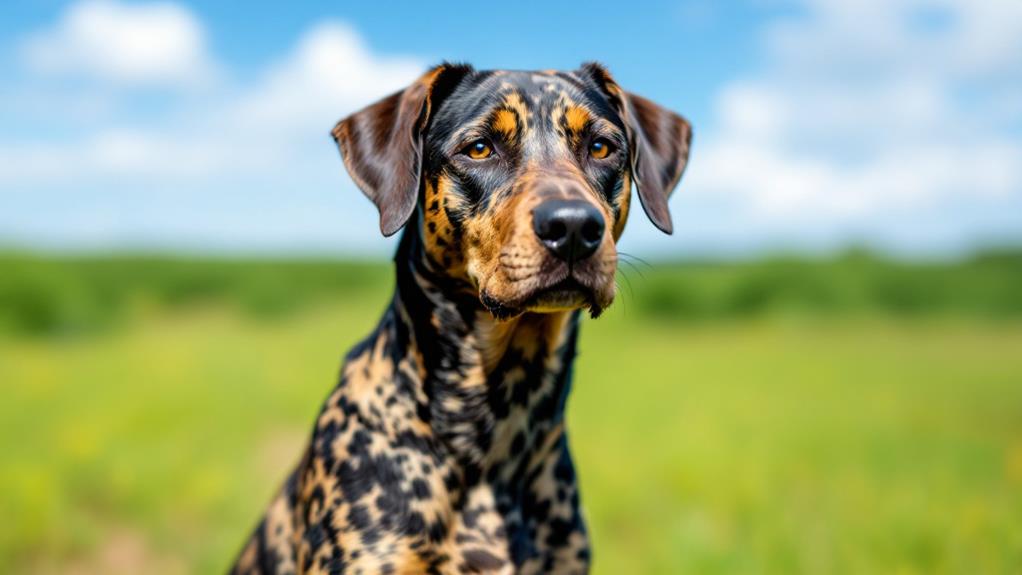
Among the most striking features of the Catahoula Leopard Dog are its unique coat patterns and lively eye colors. This breed's coat is a canvas of enchanting hues, ranging from blue merle and red merle to brindle, black, and tan. These coats often boast leopard-like patterns, giving them their name and a truly remarkable appearance. When you look into a Catahoula's eyes, you might find heterochromia, with one eye being a different color from the other, showcasing shades like blue, green, or amber. It's this combination of a unique coat and eye colors that makes them stand out in any crowd.
Beyond their visual appeal, Catahoulas have an athletic build that underlines their physical prowess. Standing between 22 to 24 inches tall and weighing 50 to 95 pounds, they possess a well-muscled frame ideal for numerous activities. Their webbed feet are an interesting trait, enhancing their swimming abilities and making them versatile in water. Despite their rugged exterior, their short coat requires minimal grooming, just a regular brushing to keep it glossy and manage shedding. This balance of beauty and brawn contributes to the Catahoula Leopard Dog's unique physical traits.
Working Abilities
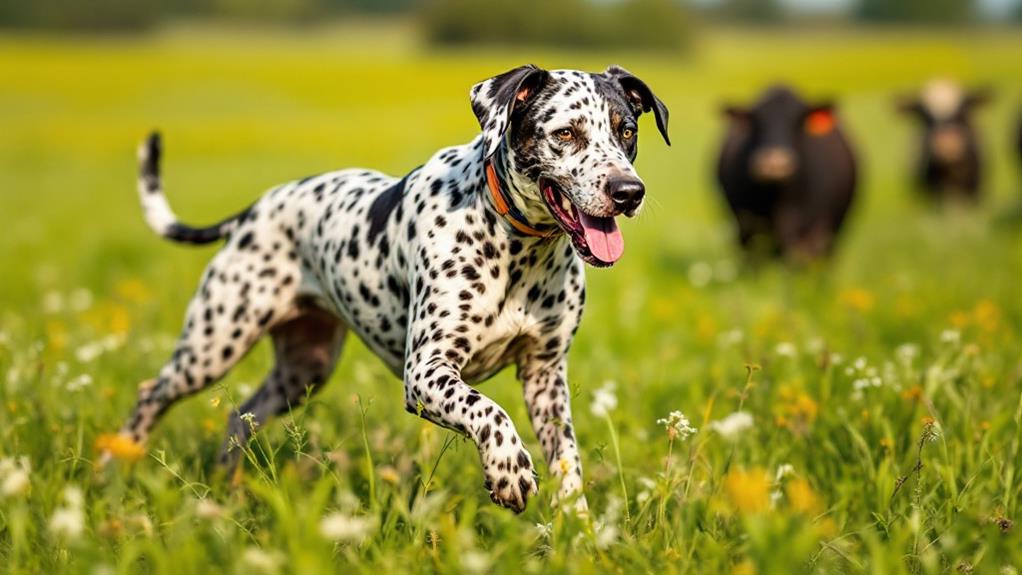
Renowned for versatility, the Catahoula Leopard Dog shines in distinct working roles. In terms of herding, this breed stands out with its exceptional ability to manage cattle and hogs. They employ a gentle yet assertive approach, making them effective and reliable herding partners. As a working dog, the Catahoula's adaptability extends beyond herding. They are skilled hunters, capable of tracking and capturing different game such as deer and wild hogs. This hunting prowess highlights the breed's versatility and keen instincts.
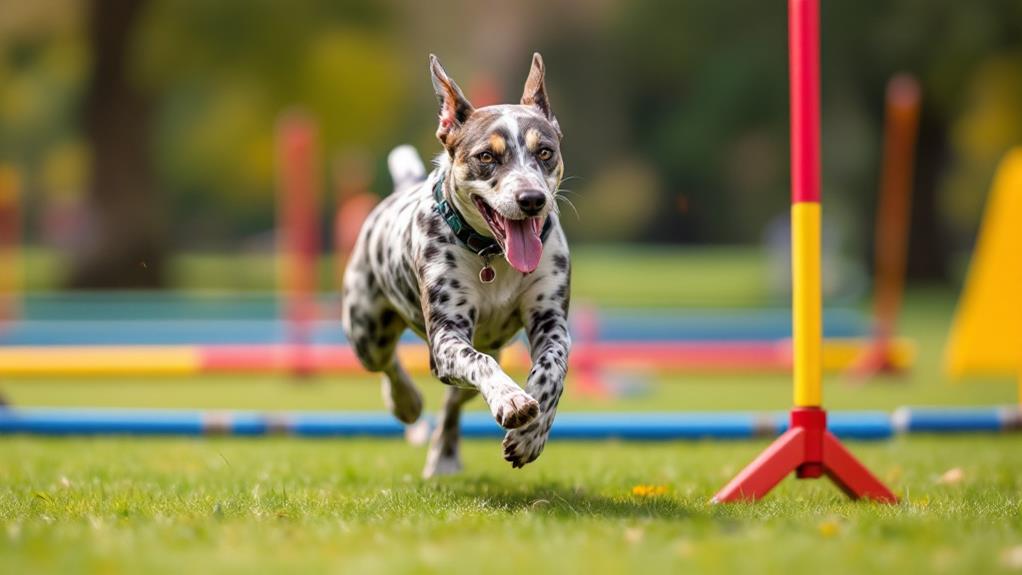
In the domain of dog sports, Catahoulas excel in agility and obedience competitions. Their intelligence and quick learning capabilities allow them to navigate courses with ease and precision, often outperforming other breeds. Additionally, their keen senses make them invaluable in search and rescue operations. They can confidently navigate challenging environments, using their problem-solving skills and quick decision-making to locate missing individuals.
Temperament and Behavior
Catahoula Leopard Dogs, known for their loyalty and protective nature, often form strong bonds with their families and act vigilantly towards strangers. As a loyal family pet, they're incredibly devoted, making them great companions. However, this strong bond means they're naturally wary of unfamiliar faces. To guarantee your Catahoula is well-adjusted, early socialization is key. Introducing them to diverse people, situations, and other animals early on helps reduce the chance of reserved or aggressive behavior later.
Their intelligence and independence are notable, but without proper training, these traits can lead to challenges. You'll want to use consistent training methods with positive reinforcement to guide their behavior effectively. Catahoulas have a strong herding instinct, which can sometimes translate into territorial behavior. Providing them with tasks and mental stimulation is essential to channel their energy productively.
Their energetic nature thrives in active environments, so make sure they get plenty of exercise. An under-stimulated Catahoula may develop destructive behaviors out of boredom. By engaging them in activities and offering mental challenges, you'll help keep your Catahoula happy and well-behaved, making them a delightful addition to your family.
Health Considerations
While providing your Catahoula Leopard Dog with ample exercise and mental stimulation is vital for their behavior, keeping them healthy involves understanding specific health considerations unique to the breed. One prominent concern is hip dysplasia, a common condition in larger breeds. Regular veterinary check-ups and appropriate exercise are imperative to maintaining your dog's joint health and preventing discomfort. This proactive approach can help manage this health condition effectively.
Another significant health issue to watch for is genetic deafness. Studies indicate that up to 38% of Catahoulas might be affected, particularly those with white coats and blue eyes. Early detection and management are key, so it's wise to monitor your dog for any signs of hearing loss and consult with your vet if needed.
In addition to these concerns, keep an eye out for bloat, a serious condition that can occur in larger breeds. Regular monitoring and prompt veterinary attention can make a big difference. To reduce the risk of inherited health problems, choose puppies from ethical breeders who prioritize healthy parentage. Ultimately, verify your Catahoula's diet is balanced and tailored for active, medium to large breeds, supporting their energy and health.
Grooming and Maintenance
In regard to grooming and maintenance, the Catahoula Leopard Dog's short coat makes the task straightforward and manageable. Their coat requires minimal upkeep, needing just a weekly brush to manage moderate shedding and keep their fur healthy. This routine helps reduce loose hair in your home and keeps their coat looking its best.
Regular maintenance doesn't stop at brushing, though. You should clean their eyes and ears frequently to prevent infections, which can impact their general health. Monitor their nails, trimming them every 3-4 weeks to maintain the proper length. Proper nail care guarantees comfort and prevents issues that could arise from overly long nails.
Bathing your Catahoula should be done every 4-6 weeks, using a dog-specific shampoo to avoid stripping their coat of its natural oils. Adjust the frequency based on their activity level, especially if they often get dirty.
Additionally, supporting your dog's health involves routine vet check-ups. These visits help monitor for common breed-specific issues, such as hip dysplasia and potential deafness. By following these grooming and maintenance tips, you'll make certain your Catahoula Leopard Dog stays healthy and happy.
Training and Socialization
Training and socialization are key components in raising a well-adjusted Catahoula Leopard Dog. These intelligent, independent dogs respond best to positive reinforcement techniques. Use treats, praise, and encouragement to teach them new commands and behaviors. A consistent approach is essential, as Catahoulas can be strong-willed. Clear communication and regular routines will help them understand and respond effectively.
Early socialization is just as significant. Introduce your Catahoula to a variety of people, animals, and environments from a young period. This exposure helps them develop a balanced temperament and reduces the risk of aggression towards strangers or unfamiliar animals. Without proper socialization, they might become overly protective or nervous, which can lead to behavioral issues.
Incorporate mental stimulation into your training sessions. These dogs are highly intelligent and need engaging tasks to keep them from getting bored. Structured activities like agility training and obedience classes are excellent for providing both physical exercise and mental challenges. These activities not only improve their skills but also strengthen the bond between you and your Catahoula. By focusing on training, socialization, and mental stimulation, you'll raise a happy, well-adjusted Catahoula Leopard Dog.
Ideal Living Environment
Providing an ideal living environment is vital for the well-being of a Catahoula Leopard Dog. With their high energy levels, these dogs need a large, securely fenced yard to roam freely without the risk of wandering off or chasing after small animals. Apartment living just doesn't cut it for a Catahoula Leopard Dog. They thrive in active households where you can dedicate at least an hour each day to strenuous activities, keeping them both physically and mentally engaged.
For the best fit, consider environments like farms or ranches. These spaces not only provide ample exercise opportunities but also allow Catahoulas to tap into their natural herding skills. Early socialization is important since Catahoulas can be wary of strangers. They bond well with families but should be supervised around young children due to their energetic nature.
Moreover, their protective instincts make them excellent watchdogs. However, you'll need to provide firm training and structure to manage their assertiveness and independence. A Catahoula Leopard Dog thrives when given both the freedom to investigate and the guidance of a committed owner who understands their unique needs. By meeting these requirements, you're ensuring a happier, healthier companion.