Cat Breeds Known for Their Strong Vocal Expressions
If you're looking for cats that are particularly vocal, consider the Siamese, known for its loud and low-pitched meows. This breed thrives on social interaction and will certainly demand your attention with expressive vocalizations. Burmese cats offer a softer, sweeter voice, often following you around to maintain a playful bond. Maine Coons enchant with melodic chirps and trills, signaling happiness and engagement. Bengal cats mix melodious meows and jungle-like chirps, reflecting their lively nature. Finally, Oriental Shorthairs are articulate, engaging in lengthy conversations, ensuring you're never alone. There's more to investigate about these chatty companions.
Understanding Vocal Cat Breeds
Vocal cat breeds bring a lively dynamic to any home, with their expressive voices offering both entertainment and companionship. If you're considering adopting a talkative cat breed, you'll find that they have unique ways of interacting with you. The Siamese, for example, is famous for its loud, low-pitched meows and dynamic vocal range. These cats demand attention and express their needs clearly, making them the most talkative cat breed. Their vocalizations are not just noise; they're a way to communicate their social nature with you.
Burmese cats, with their sweet, soft voices, use playful vocalizations to maintain a close bond with humans. They follow you around, offering companionship and conversation. Maine Coons, on the other hand, communicate happiness and interaction needs through melodic chirps and trills. They're less persistent than Siamese but similarly effective.
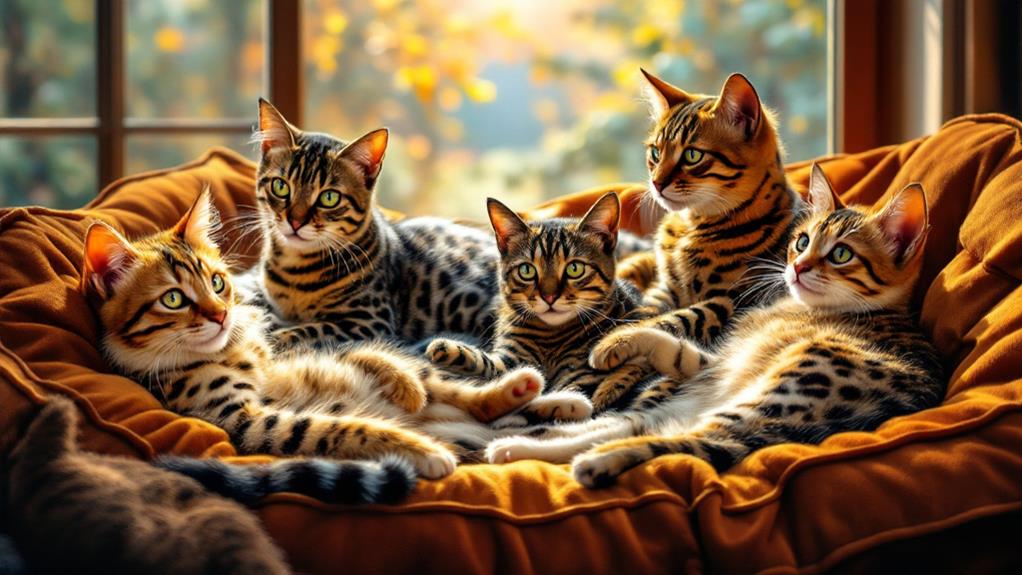
Bengal cats entertain with a mix of melodious meows and jungle-like chirps. Their playful, expressive vocalizations reflect their lively personalities. Oriental Shorthairs engage in lengthy conversations, using a wide range of vocal expressions to connect with their owners. These vocal breeds guarantee you're never alone, always ready to communicate through their unique voices.
Unique Traits of Talkative Cats
With respect to talkative cats, their vocal expressions are just one aspect of their unique personalities. These vocal cats, such as the renowned Siamese cats, use their loud, low-pitched meows to express needs and engage in meaningful conversations with you. Their vocal personality makes them one of the most talkative breeds, always keen to communicate with their humans.
Bengal cats, known for their playful nature, produce a variety of vocalizations. Their repertoire includes coos and chirps, reflecting their wild ancestry while still maintaining a desire to interact closely with you. Meanwhile, Burmese cats possess a sweet, soft voice and often follow you around, constantly vocalizing to guarantee they maintain close interaction and companionship.
Oriental Shorthairs are another talkative breed, exhibiting highly articulate and expressive vocalizations. They love engaging in lengthy conversations, making certain you understand their desires and feelings. Maine Coons, known for their gentle chirps and trills, use these sounds to convey happiness and seek your attention in a charming manner.
Engaging With Vocal Felines
Engagement is key regarding building a strong bond with vocal felines. You can foster a deeper connection with your chatty cat by actively responding to their vocalizations. Breeds like Siamese and Burmese thrive when you engage with them through consistent communication, acknowledging their needs and desires. Paying attention to their unique vocal patterns allows you to respond appropriately, creating a harmonious environment.
Interactive play is another effective way to maintain and improve their chatty nature. Cats such as Tonkinese and Bengal love games like fetch or hide-and-seek, which not only provide physical exercise but also stimulate vocal interactions. This kind of play encourages them to express their desires more freely, strengthening your bond.
Mental stimulation is vital for vocal cats. Incorporating puzzle toys and regular playtime keeps them mentally engaged, reducing crankiness often seen in breeds like Oriental Shorthairs. By fulfilling their mental and emotional needs, you guarantee they remain happy and communicative.
Common Vocalization Patterns
Many cats exhibit distinct vocalization patterns that reflect their moods and needs. Recognizing these patterns can improve your understanding of feline communication. Siamese cats, for instance, are famous for their loud, low-pitched meows. These vocalizations are often used to express needs such as hunger or the desire for attention. Their vocal range allows them to convey a variety of messages, making their communication quite clear.
Burmese cats, on the other hand, possess a sweet, soft voice and utilize vocalizations mainly during social interactions. This strengthens the bond between them and their owners, as their vocal patterns are more about companionship than demands. If you have a Burmese, you'll likely notice how their gentle sounds often coincide with moments of affection.
Here's a quick guide to common feline vocalizations:
- Meows: Often used to express needs or desires, particularly in breeds like Siamese cats.
- Trills and Chirps: These are common in Maine Coons, signaling happiness or a desire for interaction.
- Expressive Sounds: Oriental Shorthairs use a wide range of vocalizations to effectively communicate their emotions and needs.
Reasons Behind Cat Vocalizations
Cats don't just meow for the sake of it; their vocalizations are purposeful and varied. They use these sounds to communicate their needs, regardless of whether it's hunger, discomfort, or the desire for attention. Talkative cats, like Siamese and Burmese, have strong vocal tendencies, often expressing their social and affectionate nature through distinct sounds. These breeds are particularly known for using vocalizations to engage with their human companions.
You're likely to notice that a cat's vocal tendencies can change depending on its environment. When you introduce interactive toys or engage in playful activities, it can stimulate more vocal expressions as your cat becomes more involved and communicative. However, keep an eye on excessive meowing, as it may signal health issues or stress. Monitoring your cat's vocal patterns and body language is essential for ensuring their well-being.
To manage vocal behavior, consider using positive reinforcement. Rewarding your cat for quieter interactions can help curb excessive vocalization. Maintaining a consistent routine and engaging with your cat regularly will also meet their social needs, reducing unnecessary meowing. By understanding and responding to these vocal cues, you can foster a harmonious relationship with your feline friend.
Choosing a Vocal Cat Breed
Understanding why cats vocalize can guide you in selecting a breed that matches your lifestyle and preferences. If you're drawn to vocal cat breeds, consider the following options based on their distinct vocalizations and social traits:
- Siamese: Known for their loud and expressive sounds, Siamese cats use a mix of wailing and yowling to communicate their desires and needs. They thrive on interaction and will keep you engaged with their distinctive vocal expressions.
- Burmese: With their sweet, soft voices, Burmese cats are perfect for those seeking companionship. They form strong attachments to their owners and often follow you around, vocalizing to maintain a social bond.
- Maine Coon: While not as persistent as Siamese, Maine Coons charm with their soft trills and chirps. These sounds often signal happiness and a need for social engagement, making them a delightful enhancement for those who enjoy gentle vocalizations.
Moreover, Bengals and Oriental Shorthairs are highly expressive. Bengals, with their unique range of vocalizations, echo their wild ancestry, while Oriental Shorthairs are articulate and social, ideal for interactive companionship. Choose a breed that aligns with your desire for an expressive and social feline friend.