Caring for a Sick Kitten at Home: Tips for Nurturing Recovery
To care for a sick kitten at home, observe their symptoms closely and act swiftly. Provide a warm, clean environment and make sure they have easy access to a litter box. Follow your vet's advice on nutrition, offering kitten milk replacement if needed. Monitor food and water intake carefully and avoid cow's milk. Keep an eye on their behavior, checking for signs like lethargy or decreased appetite, and weigh your kitten regularly. At any sign of persistent issues like vomiting or diarrhea, contact your vet immediately. By understanding these fundamentals, you can effectively support your kitten's path to recovery.
Veterinary Care Essentials
Veterinary care is imperative when caring for a sick kitten, guaranteeing they're on the path to recovery. Prioritize regular check-ups with your veterinarian to closely monitor the kitten's health. Be vigilant about symptoms such as persistent vomiting, diarrhea, or dehydration, and contact your vet immediately if these occur. Keeping a detailed record of symptoms and behavior changes will help provide thorough updates during visits, allowing the vet to tailor the treatment effectively.
Following the veterinarian's advice on nutrition and hydration is fundamental. Proper hydration and a balanced diet support the kitten's recovery, so be diligent about these aspects. Medications should be administered precisely as prescribed, and it's helpful to note the administration times to avoid any missed doses. This attention to detail can greatly impact the kitten's recovery process.
Don't overlook the importance of follow-up appointments. These re-examinations are critical for evaluating progress and adjusting the treatment plan as needed. They guarantee that any changes in health are promptly addressed. Continuous monitoring of your kitten's health, coupled with strict adherence to veterinary guidance on treatment, is key to supporting their full recovery.
Creating a Comfortable Environment
While guaranteeing your kitten receives the best veterinary care, it's just as vital to create a comfortable environment that supports their healing. A sick kitten needs a warm, dry, and quiet space to reduce stress and promote recovery. Here's how you can help:
- Optimal Temperature: Use a heating pad or heat lamp cautiously to maintain the right warmth. Avoid overheating by regularly checking the temperature to confirm it's comfortable for your kitten.
- Clean and Hygienic Space: Keep the area tidy to prevent infections. Regularly clean the bedding and surrounding space, and watch for any signs of discomfort or skin issues.
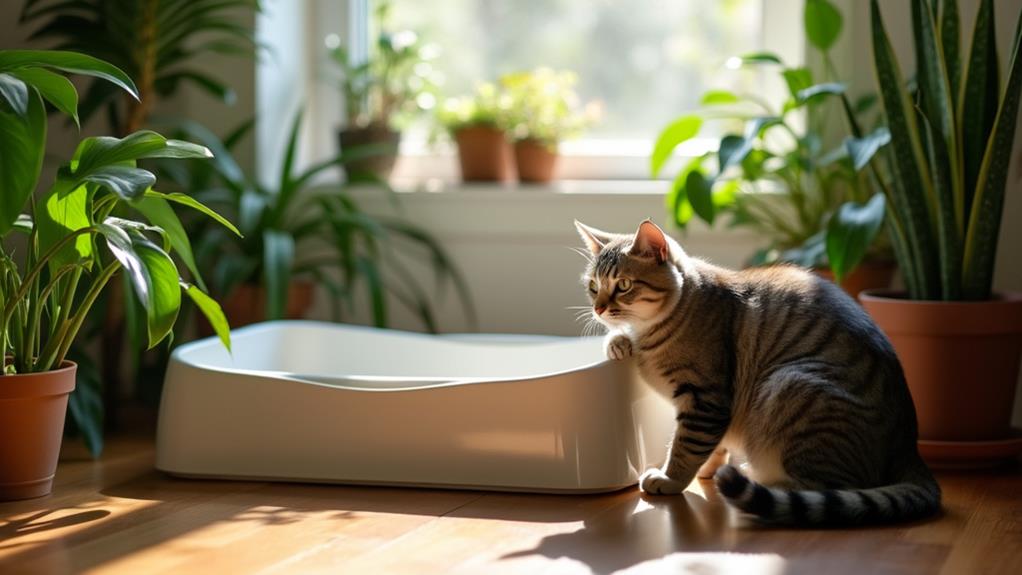
- Easy Access to Essentials: Make certain your kitten can easily reach a litter box with low sides. If they struggle with a standard box, try a shallow pan or a cardboard box. This will help them avoid unnecessary exertion.
Provide sufficient lighting to monitor behavior and track any changes in symptoms. A quiet space also helps in stress reduction, giving your kitten the best chance to heal. By creating a comfortable environment, you're actively contributing to their recovery process.
Nutrition and Feeding Strategies
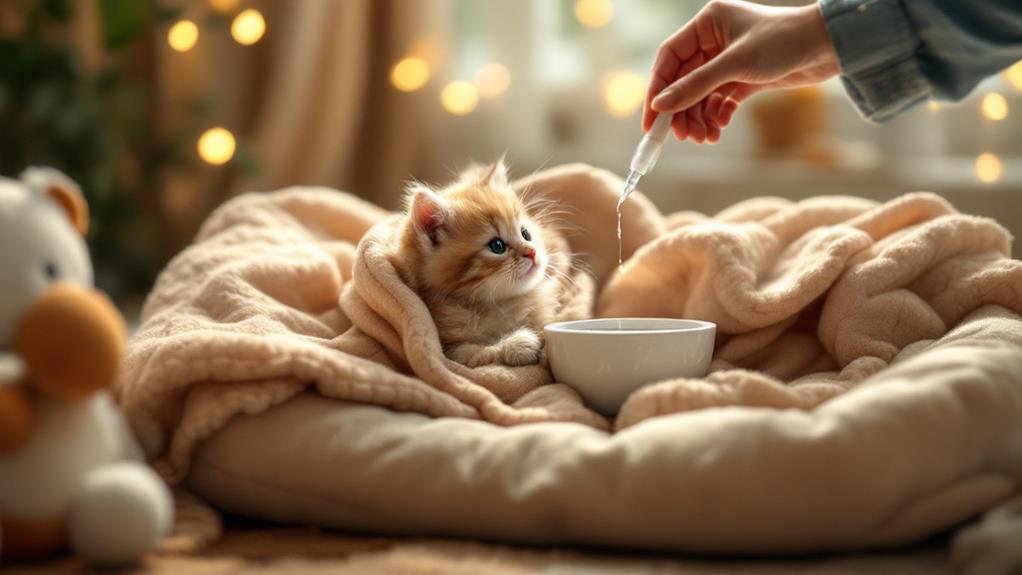
Consistently providing your sick kitten with proper nutrition is crucial to their recovery. For kittens from 0 to 4 weeks, use a kitten milk replacement (KMR) in a bottle or plate, as they can't digest solid food yet. As they reach 4 to 6 weeks, introduce semi-moist food mixed with KMR to gradually shift to solid food. Adjust the consistency as they wean, ensuring it's manageable for their small mouths. At 7 weeks and older, high-quality canned or dry kitten food becomes suitable. Warm it to body temperature to improve palatability and encourage them to eat.
Monitor food and water intake closely. Offer small amounts frequently to prevent vomiting and support hydration. Fresh, clean water should always be available to meet their hydration needs, especially during recovery. Avoid cow's milk, as many cats are lactose intolerant, which can lead to digestive issues.
Encouraging your kitten to eat can be challenging, but patience and persistence are key. Keep an eye on their progress, and consult a vet if you're concerned about their eating habits. With the right nutrition and care, your kitten will be on the path to recovery.
Managing Common Health Issues
Proper nutrition sets the foundation for your kitten's recovery, but understanding and managing common health issues guarantees they stay on the right track. Start by recognizing symptoms that require immediate attention. Here are some key issues to watch:
- Vomiting and Diarrhea: If your kitten experiences vomiting lasting over 24 hours or diarrhea persisting more than two days, a vet visit is vital. These symptoms can lead to dehydration and serious health issues if not addressed promptly.
- Cat Flu Symptoms: Runny eyes, nose, and fever are signs of cat flu. Regardless of their development stage, kittens are vulnerable to complications, so don't hesitate to seek veterinary care for proper treatment and recovery.
- Skin Issues: Rashes or hair loss can indicate underlying problems. A vet can determine the cause and recommend treatments to prevent further discomfort or infection.
Regular monitoring of your kitten's health, including any changes in appetite or behavior, is significant. This vigilance guarantees that you catch potential health issues early. Always prioritize hydration and be proactive in seeking veterinary care to support your kitten's recovery process effectively.
Monitoring Symptoms and Behavior
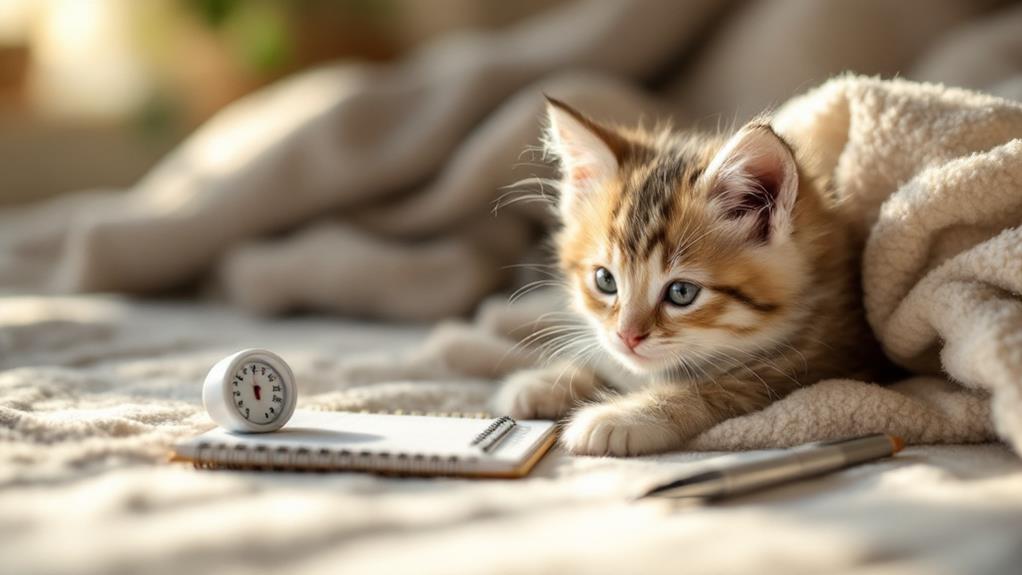
Keeping a close eye on your kitten's symptoms and behavior is vital for guaranteeing their well-being. Start by monitoring symptoms like lethargy, decreased appetite, or unusual behavior, as these could signal underlying health issues. It's significant to observe your kitten regularly for any signs of vomiting or diarrhea, and take note of their frequency and severity to provide accurate information during veterinary consultations.
Pay attention to your kitten's hydration by checking if they're drinking enough water. Dehydration can quickly become serious, especially if accompanied by vomiting or diarrhea. Weigh your kitten regularly to confirm there's no weight loss, which could indicate a problem, especially if paired with a decreased appetite. Encourage a healthy appetite by offering palatable food options that your kitten is more likely to eat.
Keep track of your kitten's bowel movements, noting any changes in consistency or frequency. This can offer significant clues about their digestive health. If you notice severe symptoms such as difficulty breathing, persistent vomiting, or a refusal to eat for more than 24 hours, contact your veterinarian immediately. Prompt action can be vital for your kitten's recovery.