
Cane Corso: The Noble and Powerful Guard Dog

You're considering a Cane Corso, known for their noble lineage from ancient Roman war dogs. With their impressive size and powerful build, they stand as both a loyal family companion and an imposing guard. They have a calm yet protective nature, bonding deeply with family but requiring proper socialization to manage their wariness of strangers. A structured routine, consistent training, and mental engagement keep their sharp minds and independent spirits in check. Watch out for health issues like hip dysplasia and guarantee regular vet visits. If you're interested in this breed's fascinating history and requirements, there's much more to uncover.
Origins and History
Originating from the formidable Molossian war dogs of ancient Rome, the Cane Corso boasts a rich history steeped in strength and guardian roles. You'll find that this breed was initially bred in Italy, where it played a versatile role on farms. Regardless of it being guarding livestock or protecting property, the Cane Corso's protective nature made it indispensable. The name itself, translating to "bodyguard dog" in Latin, underscores its primary function as a steadfast guardian.
Throughout history, the Cane Corso's reputation as a powerful protector grew. However, like many breeds, it faced challenges. The World Wars took a significant toll on its population, leading to a steep decline. Yet, in the 1970s, a revival began in Italy. Enthusiasts dedicated themselves to restoring this noble breed, ensuring its legacy continued.
The breed's resurgence didn't go unnoticed. By 2010, the Cane Corso earned recognition from the American Kennel Club, marking a significant milestone. Today, the Cane Corso is celebrated worldwide, admired for its heritage and formidable presence. Its expedition from ancient Rome to modern times highlights a storied history of resilience and loyalty.
Physical Characteristics
One look at the Cane Corso, and you'll understand why it's considered a commanding presence. This medium to large dog stands tall at 23 to 28 inches and weighs between 90 to 110 pounds. Its muscular and stocky physique is complemented by a large, wide head, exuding strength and confidence. The physical characteristics make the Cane Corso a striking figure that's hard to miss.
When it comes to coat colors, the Cane Corso offers a variety of options. You can find them in:
- Black and Gray: These classic shades emphasize their noble appearance.
- Fawn and Red: Lighter hues that add a unique touch to their look.
- Brindling Patterns: An intricate mix that adds depth to their coat.
The Cane Corso's short coat is double-layered yet requires minimal grooming, needing just a weekly brush to stay sleek and tidy. Traditionally, their tails are docked, and ears cropped in countries where it's legal, enhancing their formidable look. This breed's imposing appearance is matched by physical characteristics that showcase its role as a powerful guard dog, making it a true embodiment of strength and nobility.
Temperament and Behavior
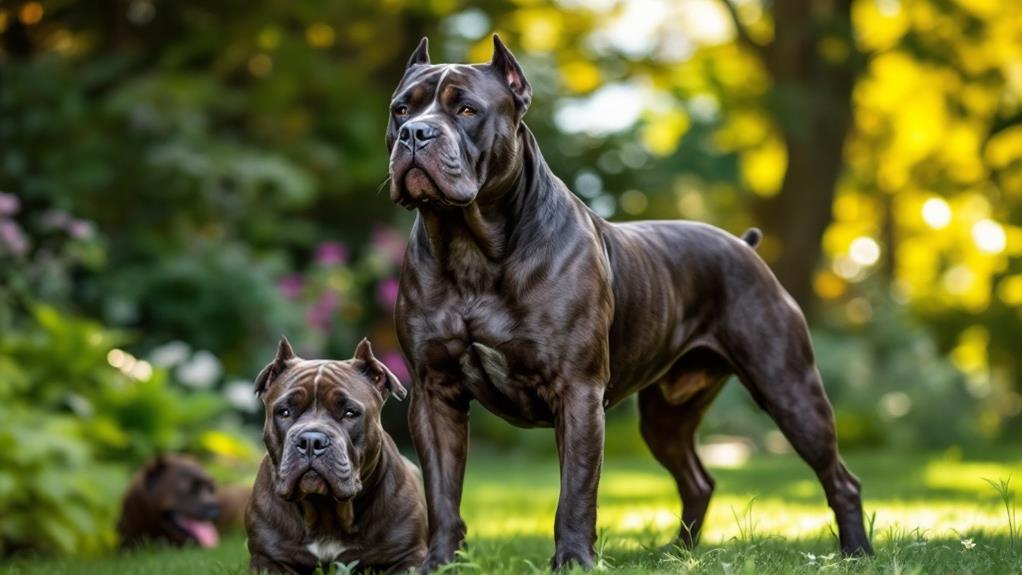
Known for their strong protective instincts, Cane Corsos are excellent watchdogs and can be trained effectively as protection dogs. With a temperament that balances alertness and loyalty, these dogs are fiercely devoted to their families. Despite their imposing appearance, they are affectionate and form strong bonds with their loved ones. However, their independent nature requires you to establish consistent and clear boundaries to manage their behavior effectively.
Early socialization is essential for a Cane Corso to guarantee they adapt well to different situations. Without it, they can become suspicious of strangers and may react unfavorably toward other dogs if provoked. You'll find that some Cane Corsos are more laid-back, while others remain constantly vigilant. Regardless of their individual temperament, they all require regular mental stimulation and exercise to prevent boredom and subsequent behavioral issues.
A Cane Corso's loyalty is unmatched, and they thrive in environments where they feel included and mentally challenged. Their protective instincts make them natural guardians, but their independent nature means they need a confident leader. By understanding their temperament and providing early socialization, you can guarantee your Cane Corso becomes a well-behaved and balanced companion.
Training and Socialization
Proper training and socialization are the cornerstones of raising a well-adjusted Cane Corso. This breed, known for its independent nature and strong protective instincts, requires a structured approach from an early stage. Start by focusing on early socialization to help your Cane Corso become comfortable around strangers and new environments, reducing undue suspicion. Consistent training with clear boundaries helps manage their independent streak, ensuring they know who's in charge.
To effectively train your Cane Corso, consider the following steps:
- Engage in Obedience Training: Structured sessions develop discipline and strengthen your bond.
- Provide Regular Exercise: Aim for at least three walks per day to keep them physically and mentally fit.
- Participate in Dog Sports: Activities like agility offer mental stimulation and channel their energy positively.
Health and Nutrition

Ensuring the health and nutrition of your Cane Corso is essential to their longevity and quality of life. As a large breed, Cane Corsos are prone to specific health issues like hip dysplasia, idiopathic epilepsy, and bloat. Regular veterinary check-ups are important to monitor these conditions and maintain their overall well-being. A carefully planned diet plays a significant role in supporting their joint health and preventing obesity. For adult Cane Corsos, consider large breed-specific formulas like Purina Pro Plan Specialized Large Breed Formula or Purina One SmartBlend Large Breed Adult Formula to meet their nutritional needs.
When raising a Cane Corso puppy, focusing on their diet is particularly crucial. Opt for large breed-specific formulas that include DHA for brain development and antioxidants for immune support during their initial year. Structured feeding schedules—3-4 times daily until they reach six months—help promote healthy growth and prevent obesity. It's vital to avoid free-feeding and carefully monitor portion sizes to mitigate weight-related health issues. Given their large size, Cane Corsos are susceptible to joint problems, so maintaining a balanced diet is key to supporting their long-term health and well-being.
Choosing a Cane Corso
When choosing a Cane Corso, start by prioritizing reputable breeders who emphasize health and temperament. It's vital to ask about the puppy's lineage and socialization practices. Visiting the breeder's facility is a good idea to guarantee puppies are well-cared for and exposed to different experiences, which is key for a well-adjusted adult dog. The Cane Corso's future temperament greatly depends on these early stages. Here's a quick guide to help you navigate the process:
- Research Breeders: Find breeders with a solid reputation for health-conscious breeding and thorough socialization. Don't hesitate to ask for references from past buyers.
- Evaluate Your Lifestyle: Confirm your family is ready for the commitment. Cane Corsos need consistent training, plenty of exercise, and strong leadership.
- Understand the Breed: Learn about the Cane Corso's protective nature and independence. Make sure these traits align with your expectations for a family pet.
Once you've chosen the right Cane Corso, download resources on responsible dog ownership. These guides will prepare you for training and integrating your new family member. Remember, a well-chosen puppy and proper socialization lead to a loyal and protective companion.