Can You Tame a Lion and Keep It as a Pet? The Reality of Exotic Animals
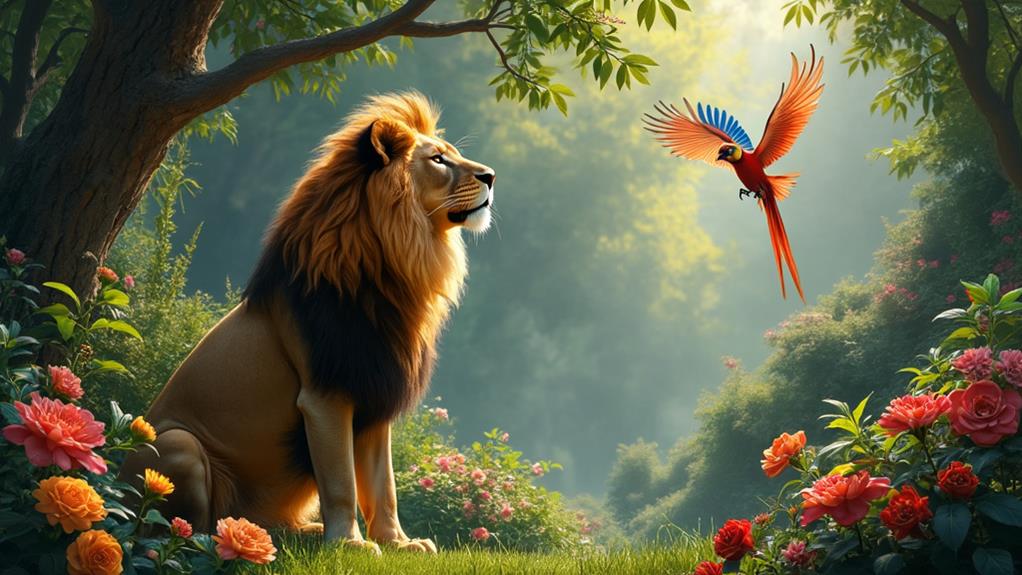
Owning a lion as a pet isn't a good idea because their wild instincts make them unpredictable and dangerous. Lions, unlike domesticated animals, can't be truly tamed. Even with training, they may suddenly revert to their natural aggressive behaviors, putting both you and the public at risk. Furthermore, lions can carry diseases that pose health threats to humans. Besides the safety concerns, laws in many places prohibit or restrict private ownership of big cats. Ethically, keeping a lion as a pet disrupts their natural instincts and harms their well-being. Exploring safer, responsible alternatives could offer better solutions.
Key Takeaways
- Lions retain wild instincts, making them unsuitable and dangerous as pets, posing life-threatening risks to humans.
- Owning exotic pets like lions can lead to severe injuries or fatalities due to unpredictable behavior.
- Lions in captivity often experience stress-related behaviors, increasing aggression and danger to owners.
- Many U.S. states have laws prohibiting or regulating private ownership of big cats to ensure public safety.
- Ethical concerns include disrupting lions' social structures and welfare issues in the exotic pet trade.
Understanding Exotic Pet Risks
Owning exotic pets often poses significant risks that you shouldn't overlook. Exotic pets like lion cubs might seem appealing at the outset, but their wild instincts can lead to unpredictable and dangerous behavior. Reports of attacks resulting in severe injuries or fatalities are not uncommon. These animals are not domesticated and maintaining their natural behaviors is challenging, which can compromise both your safety and theirs.
When considering lion cubs or other exotic pets, it's essential to think about animal welfare. Captive lions frequently exhibit stress-related behaviors, such as pacing, because they can't express their natural instincts in confined spaces. This mental distress isn't just harmful to the animal; it increases the risk of aggressive outbursts. Your home environment is likely unsuitable for meeting a lion's complex needs, which can lead to irresponsible ownership decisions.
Moreover, the exotic pet trade often results in these animals being abandoned or euthanized when owners realize they can't meet the care requirements. This cycle causes unnecessary suffering. The lack of accurate records on exotic pet ownership only exacerbates these issues, making it imperative to reconsider keeping exotic pets for the sake of their welfare and public safety.
Health Concerns With Wild Animals
Beyond the allure of exotic pets, there are significant health concerns that come with keeping wild animals. Exotic animals like lions and reptiles can carry zoonotic diseases, which pose serious health risks to you and your family. For instance, Herpes B, found in about 80-90% of macaque monkeys, is deadly in 70% of human cases. This highlights the danger of keeping such animals as pets. Captive lions, though majestic, can transmit infections through bites, which are some of the worst animal bites due to their potential for severe injuries and infections.
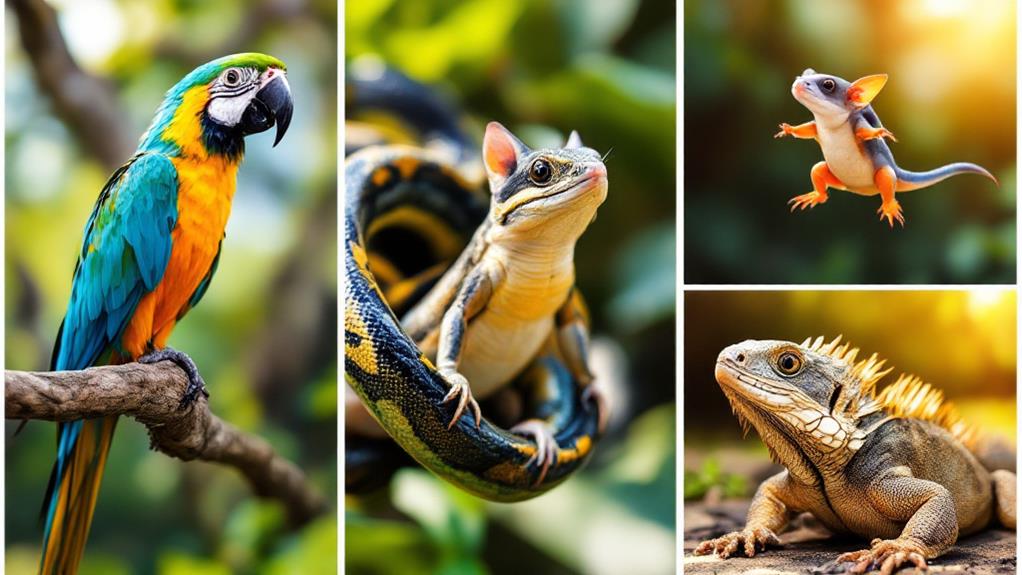
Reptiles, another popular choice among exotic animal enthusiasts, are known carriers of Salmonella. With roughly 90% of reptiles harboring this bacteria, they contribute to an estimated 93,000 salmonella cases in the U.S. each year. These health concerns aren't just limited to diseases. The unpredictable nature of exotic animals often leads to aggressive behavior, resulting in serious injuries or even fatalities.
Moreover, without proper veterinary care and specialized diets, these animals can suffer from health complications, increasing the risk of disease transmission to humans. It's clear that the health risks of keeping exotic animals are substantial and shouldn't be taken lightly.
Legal Aspects of Ownership

While the health risks of keeping exotic animals are substantial, maneuvering the legal landscape of ownership is likewise complex. Many regions, including 21 U.S. states, have enacted laws that regulate or outright prohibit the private ownership of big cats like lions. These regulations primarily aim to address public safety concerns, acknowledging the potential dangers such animals pose to communities. Understanding these legal aspects is essential if you're considering owning a lion or any other exotic animal.
Although the Endangered Species Act prohibits the possession, sale, or purchase of endangered species, it doesn't specifically regulate the private ownership of exotic animals, such as lions. The Public Health Service Act, on the other hand, has banned non-human primate importation for non-scientific purposes since 1975, illustrating ongoing zoonotic disease concerns. The Lacey Act allows for the prosecution of individuals with illegally obtained exotic animals, yet it doesn't offer a framework for legal private ownership.
Local ordinances might impose stricter regulations than state laws, emphasizing community safety. As a result, it's essential to research your local and state laws before considering such ownership. Maneuvering these legal aspects guarantees not only compliance but also prioritizes public safety.
Taming vs. Domestication
Understanding the difference between taming and domestication is crucial when considering exotic animals as pets. Taming involves conditioning wild animals to tolerate human presence. This doesn't mean they become suitable for domestic life. For instance, a tamed lion may seem docile but can still act unpredictably and aggressively. In contrast, domestication is a lengthy process involving selective breeding to foster traits like friendliness and adaptability, which are passed down through generations.
Here's what you need to know:
- Taming: It's a temporary adjustment of behavior in a wild-born animal. While you might make a lion comfortable around humans, its offspring will remain wild.
- Domestication: It requires centuries of selective breeding. Animals like dogs and cats were domesticated over thousands of years, unlike lions, which have never undergone this process.
- Historical Context: Domestication began around 11,700 years ago, and lions were never part of this path. They remain wild animals by nature.
- Risks: Even tamed wild animals, like cheetahs and lions, can become dangerous. They might have moments of calm, but their wild instincts can surface unexpectedly, posing serious risks.
Understanding these differences underscores why wild animals aren't suitable pets.
Training Challenges and Accidents

The world of lion training is fraught with challenges and risks that often lead to serious accidents. When you're dealing with wild animals like lions, the unpredictability factor always looms large. Despite a historical precedent of lion taming dating back to the 19th century, accidents remain alarmingly frequent and often result in severe injuries or even fatalities for both trainers and the lions themselves.
Professional trainers, often referred to as "animal breakers," attempt to make lions tolerate human presence. However, even they face significant training challenges. The wild nature of these big cats means that aggression can surface at any time, sometimes with devastating consequences. One infamous incident was the attack on magician Roy Horn in 2003, which served as a stark reminder of the inherent dangers involved.
Captive lions often exhibit behavioral issues, such as pacing or other stereotypic actions, signaling stress and frustration from an unnatural environment and stressful training methods. This shift away from the term "lion tamers" to "animal trainers" reflects growing awareness of these challenges and the ethical concerns. Yet, the harsh reality remains: training wild animals like lions comes with risks and unpredictable accidents that can't be fully controlled.
Aggression and Lion Behavior
Lions captivate with their majestic presence, but their inherent wild nature makes them unpredictable and potentially aggressive, especially as they mature. You might think a lion cub's playful demeanor is a sign of taming success, but as they grow, their wild instincts and aggression become more pronounced. Even with early socialization, lions retain their natural behaviors, posing risks to anyone trying to domesticate them.
Consider these points when thinking about keeping a lion as a pet:
- Unpredictable Aggression: Reports consistently show lions can exhibit aggressive behavior without warning, leading to serious injuries or even fatalities. The attack on magician Roy Horn in 2003 is a stark reminder of this danger.
- Stress in Confinement: Captive lions often display stress-related behaviors like pacing, indicating their inability to adapt to confinement. This stress can exacerbate their aggression, making management even more challenging.
- Wild Origins: Despite early attempts at taming, lions' wild origins mean they may never fully lose their aggressive instincts. This makes them unsuitable as exotic pets.
- Historical Dangers: Past incidents highlight that trying to tame or keep exotic lions as pets can have dire consequences.
Keeping a lion isn't just challenging—it's potentially life-threatening.
Ethical and Conservation Issues
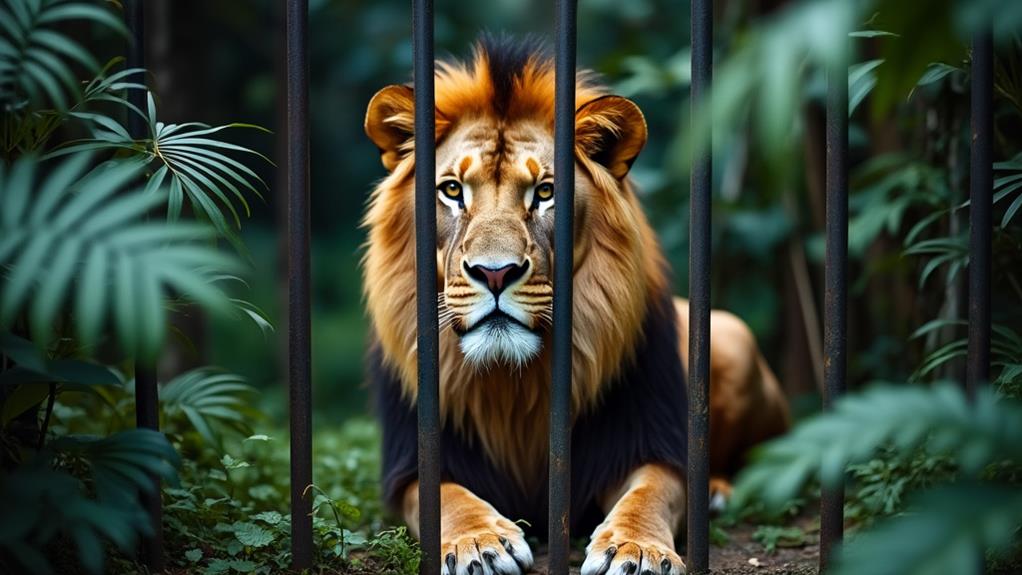
While the allure of keeping a lion as a pet might seem appealing, it raises profound ethical and conservation concerns. Lions are inherently wild animals, and attempting to tame or domesticate them can lead to unpredictable behavior, posing significant danger to humans. This is a critical ethical concern because it ignores the natural instincts and needs of these majestic creatures. When you remove a lion from its natural habitat, you strip it of its social structures, resulting in abnormal adults that lack vital survival skills.
The exotic pet trade exacerbates these issues, with captive lions often exploited for entertainment in petting zoos or "lion walks." Such practices undermine the welfare of lions by confining them to inadequate spaces far removed from the vast territories they require to thrive. Additionally, the exotic pet trade contributes to the decline of wild lion populations. Between 7,000 and 14,000 lions are bred on farms in South Africa alone, diverting attention from necessary conservation efforts.
Organizations advocating for animal welfare stress the importance of responsible stewardship. Conservation efforts should focus on protecting big cats in their natural habitats, not promoting private ownership or exotic pet practices.
Alternatives to Exotic Pet Ownership
Considering the appeal of exotic pets, it is crucial to investigate responsible alternatives that don't compromise animal welfare. Adopting domesticated animals from shelters is a compassionate choice. With over 6 million animals entering U.S. shelters each year, you can provide a loving home for a pet in need, avoiding the ethical concerns surrounding exotic pets.
Here are some alternatives you can examine:
- Adopt domesticated animals: Shelters are full of cats, dogs, and other domesticated animals waiting for a forever home. You'll be supporting animal welfare and reducing the demand for exotic pets.
- Support wildlife conservation: Visit accredited sanctuaries and reserves. They offer a chance to learn about species preservation and enjoy wildlife in habitats that closely mimic nature.
- Engage in responsible wildlife tourism: Choose experiences that prioritize animal welfare, such as observing wildlife in their natural environments instead of exploitative attractions like petting zoos.
- Advocate for policies protecting wildlife: Support legislation banning private ownership of exotic animals and regulating the exotic pet trade to help conserve wildlife.
Participating in educational programs about native wildlife can also deepen your appreciation for local species, promoting sustainable coexistence and responsible wildlife conservation practices.