Can You Keep Pigs and Horses in the Same Pasture? What You Need to Know
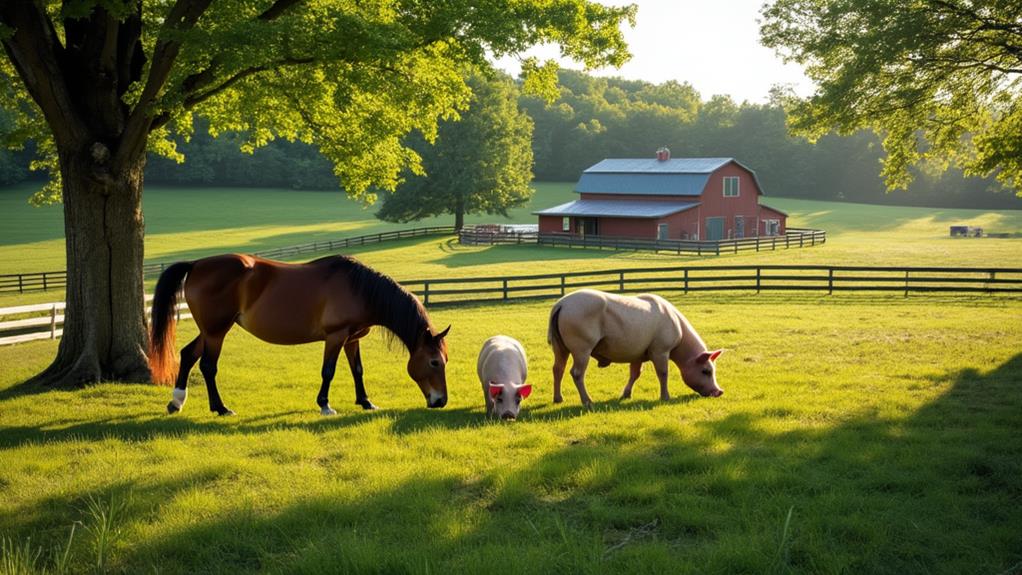
You can keep pigs and horses in the same pasture, but you'll need to be cautious and diligent. Introduce them gradually and monitor their interactions closely since individual temperaments vary. Separate their feeding areas to prevent aggressive competition over food. Be wary of pigs' rooting behavior, which can damage pasture and create tripping hazards for horses. Regularly check and manage the pasture's condition to avoid overgrazing and nutritional deficiencies. Effective fencing is essential to contain pigs' natural roaming instincts and protect horses. Keeping these factors in mind will help maintain a safe and compatible environment for both animals. Investigate these considerations further.
Key Takeaways
- Gradual introductions and close monitoring are essential to ensure safe and successful interactions between horses and pigs.
- Separate feeding areas are crucial to prevent competition and aggressive behavior during feeding times.
- Effective pasture management, including rotation, is necessary to prevent rooting damage and maintain forage quality.
- Adequate fencing, like hog panels or electric fencing, is vital for safely containing both pigs and horses.
- Monitoring individual temperaments and regular health assessments help identify potential conflicts early.
Understanding Horse and Pig Dynamics
In relation to horse and pig dynamics, their interactions can be as fascinating as they are complex. Pigs and horses can develop a unique relationship characterized by curiosity and even friendly behaviors like grooming and nose touching. However, this doesn't happen overnight. You've got to take into account their individual temperaments and introduce them gradually. Some horses might initially react with fear or aggression, especially if they're unfamiliar with pigs. It's vital to monitor interactions closely during this period.
A significant aspect to manage is their feeding areas. Pigs can become territorial and aggressive over food, which might stress horses. To prevent conflicts, it's best to feed them separately. This not only reduces tension but also guarantees both animals have adequate access to resources without feeling threatened.
Challenges of Shared Pastures
While understanding the dynamics between horses and pigs is important, keeping them in the same pasture presents its own set of challenges. Pigs' rooting behavior can wreak havoc on pasture quality, leaving behind holes that aren't just unsightly but dangerous. These holes become tripping hazards for horses, increasing the risk of injury. Additionally, the degradation of forage due to pigs' activities means less available food for both species, which can lead to nutritional deficiencies if not properly managed.
During feeding times, competition for food can escalate tensions. Pigs tend to be more aggressive, which can stress horses and even lead to injuries. To mitigate these issues, you need to establish separate feeding areas. This approach not only prevents conflicts but guarantees that each animal receives the nutrition they require.
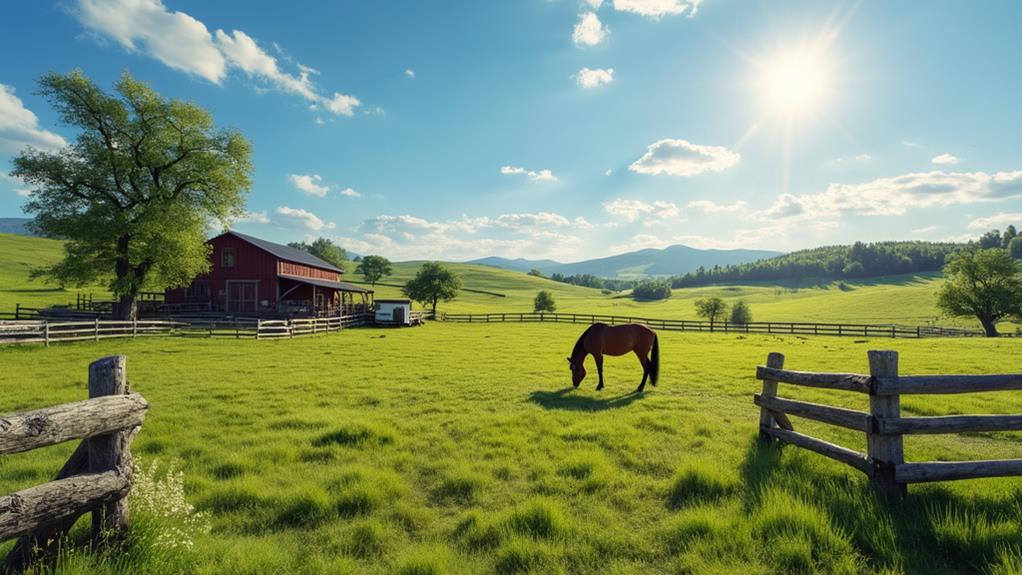
Effective pasture management is fundamental to prevent overgrazing, especially since pigs can rapidly deplete available forage. Without careful monitoring, there's a risk of starvation for both pigs and horses. Regular assessments of the pasture's condition are crucial. This helps maintain a safe and healthy environment, making sure the behaviors of one species don't negatively impact the other.
Managing Diet and Nutrition
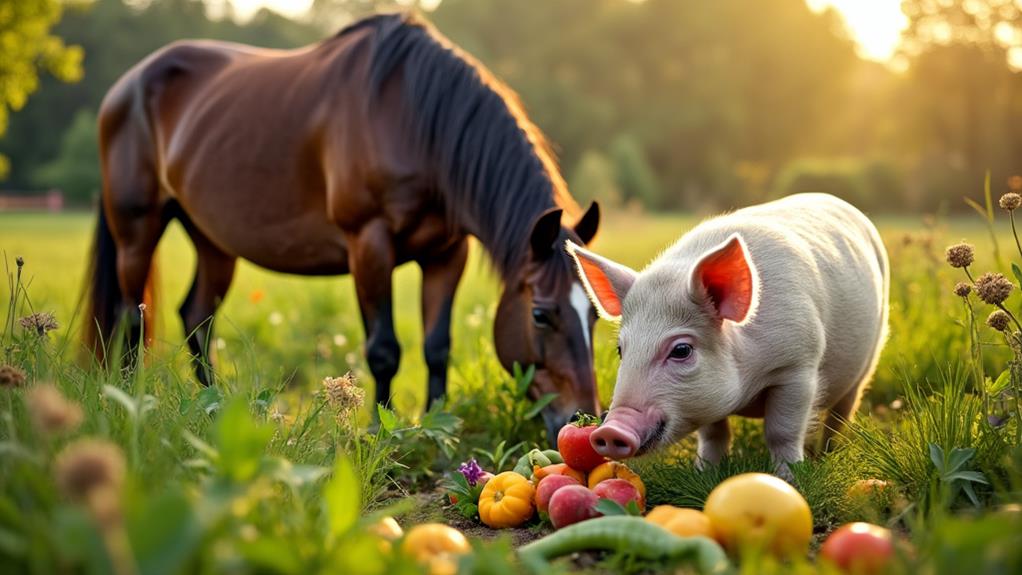
Balancing the dietary needs of both horses and pigs in a shared pasture demands careful planning. Horses, being herbivores, thrive on a diet of grass and hay. Meanwhile, pigs, as omnivores, require a more varied diet that includes pasture grasses, roots, and supplemental feed. To maintain a harmonious environment, it's vital to establish separate feeding areas. This separation prevents competition and potential aggression from pigs, who can be quite possessive over food resources, especially hay.
When managing the diet of these animals, keep in mind that horses need ample forage to stay healthy. If pigs' rooting behavior disrupts the pasture, it can reduce the quality and availability of nutritious forage for horses. As a result, monitoring pasture conditions is fundamental. You might need to rotate grazing areas or provide extra forage to guarantee horses' dietary needs are met.
Simultaneously, confirm pigs receive a balanced diet. Offering a variety of feed helps them thrive and keeps them from monopolizing the pasture. By understanding and catering to the distinct dietary needs of both species, you can effectively manage a shared pasture, keeping both horses and pigs healthy and well-nourished.
Ensuring Safety and Compatibility
Guaranteeing the safety and compatibility of pigs and horses in the same pasture hinges on careful observation and management. When pigs and horses are living together, it's essential to monitor their interactions closely. Pigs can become territorial, especially during feeding times, which might lead to aggressive behaviors. To prevent these conflicts, provide separate feeding areas. This simple step can greatly reduce competition for resources and lower stress levels for both species.
Individual compatibility varies, so introducing pigs and horses gradually is imperative. Pay attention to each animal's temperament and make certain they're comfortable around each other. By doing this, you'll be able to identify any potential issues early on and address them before they escalate.
Fencing plays a fundamental role in maintaining safety. Use adequate fencing like hog panels and electric fencing to keep pigs contained and prevent them from escaping. This guarantees that your animals remain secure and reduces the risk of accidents. Regular health assessments and monitoring of their interactions are also essential. These measures help you spot any emerging conflicts or behavioral issues, allowing you to maintain a harmonious environment where pigs and horses can coexist peacefully.
Effective Pasture Strategies
To create a successful environment for pigs and horses sharing a pasture, you'll need effective strategies that balance their needs. Begin by setting up separate feeding areas to minimize competition and avoid aggressive behavior between the animals. Pigs, especially free range pig breeds, have different dietary requirements and feeding habits compared to horses, so distinct spaces guarantee they each get the nutrients they need without conflict.
Regularly rotating pastures is another key strategy. Pigs are notorious for their rooting behavior, which can quickly damage the land. By rotating the pastures, you can limit the damage and maintain high-quality forage for both species. This practice also prevents overgrazing, allowing the land to recover and thrive.
Investing in sturdy fencing is vital to keeping pigs contained. Hog panels or electric fencing work well to prevent pigs from escaping or causing harm to the horses. Monitoring interactions between the animals is important, especially during initial introductions. Gradually introducing pigs to horses can ease wariness and reduce aggression.
Related posts