Can Carrying a Puppy Harm It? What Every Pet Owner Should Know

Carrying a puppy improperly can harm them due to their fragile, developing skeletal systems. Always support their chest with one arm and hindquarters with the other to prevent neck and back strain. Avoid lifting by the front legs or neck, which can cause injuries. Watch for signs of discomfort like squirming or whining, indicating the need for a different approach. Over-carrying can impact their socialization and behavior, limiting their opportunities to investigate and learn. Encourage walking to promote physical health and confidence. There's so much about ensuring your puppy's well-being you might find beneficial to understand fully.
Key Takeaways
- Improper lifting can cause long-term spinal and neck injuries in puppies.
- Support a puppy's chest and hindquarters to ensure safe lifting.
- Carrying limits environmental exploration, impacting social skills and behavior.
- Excessive carrying can lead to anxiety and hinder cognitive development.
- Regular walking supports physical fitness and psychological health in puppies.
Understanding Puppy Anatomy
When you're considering how to handle a puppy, understanding their anatomy is fundamental. Puppies have developing skeletal systems that are particularly vulnerable to injury. Their spines are composed of flexible cartilage that hasn't yet hardened into bone. This means improper lifting can lead to significant and long-term spinal issues. Because of this, it's imperative to be aware of how you lift and carry them.
In puppy anatomy, weight distribution is different compared to adult dogs. A higher percentage of a puppy's body weight is concentrated in their heads. This imbalance makes proper support critical to prevent any undue stress on their neck and back. If you don't account for this, it could disrupt their balance and potentially cause harm.
Furthermore, carrying puppies for long periods can impede fundamental muscle growth and joint health. Since their soft tissues and joints are still maturing, they're more susceptible to strains and injuries from improper handling techniques. It's significant to let them move and exercise naturally to promote healthy development. Being mindful of these factors will guarantee your puppy grows into a healthy adult dog, free from preventable injuries.
Safe Lifting Techniques
Properly lifting your puppy is crucial to guarantee their safety and comfort. Using safe lifting techniques helps prevent injuries and assures a positive experience for both you and your furry friend. Always support your puppy's chest with one arm while securing the hindquarters with the other. This technique prevents strain on their spine, offering a secure hold that keeps them stable.
For smaller puppies, under 25 lbs, slide your dominant arm beneath their chest. Tuck their back end against your body for added security. This position provides excellent support to both the front legs and hind legs, minimizing the risk of any strain. For larger puppies, use two hands: one under the chest, and the other under the hind legs. Bend at your knees to maintain balance and avoid injury to yourself during the lift.
Before you begin lifting, use a gentle verbal cue to prepare your puppy. This simple step can reduce anxiety and make the entire process smoother and more comfortable for them. By following these safe lifting techniques, you're safeguarding your puppy's well-being while strengthening the bond between you and your pet.
Common Mistakes to Avoid

While mastering safe lifting techniques is essential, being aware of common mistakes can help you avoid causing harm to your puppy. One mistake many make is lifting a small dog by its front legs or armpits. This can lead to dislocation and strain on their developing joints and muscles. Always remember to lift your dog in a way that supports both the front and hindquarters, using a supportive technique that maintains their natural posture.
Another pitfall to avoid is picking up a dog by the scruff of its neck. Though mother dogs do this with their young, it's only brief and can lead to neck injuries if you attempt it. Instead, make sure you're using methods that don't place undue stress on any part of their body.
Carrying a dog by its collar is another common mistake. This can choke your puppy and damage delicate neck organs. It's important to use supportive techniques when you carry your dog to guarantee their safety and comfort.
Recognizing Signs of Discomfort
Recognizing signs of discomfort in your puppy is crucial to guarantee their well-being and prevent harm. When picking up and carrying your puppy, observe their behavior closely. Small dogs, in particular, may experience stress on the lumbar region if held improperly. Look for signs of discomfort like yawning, lip licking, or a stiff stance. These subtle cues often indicate anxiety or pain, even if your puppy doesn't vocalize distress.
If your puppy leans away or shakes while you carry a dog, it's a clear signal they're not comfortable. Reevaluate how you're holding them to assure their safety and comfort. A puppy that cowers, whines, or nips at your hands is expressing distress, signaling a need for a change in how you're picking your dog up.
Squirming or attempting to escape from your hold suggests they want to be put down. Always respect these signals to prevent increased anxiety or potential injuries. Ignoring a puppy's cues can lead to negative experiences and make them fearful of being carried in the future. By being attentive, you can foster a positive and safe environment for your furry friend.
Impacts on Puppy Socialization

Understanding how to carry your puppy is just one aspect of ensuring their comfort. While carrying a dog can be convenient, it's significant to recognize how it affects their socialization. Puppies need the chance to investigate their environment, soaking in the sights, sounds, and smells around them. This exploration is essential for developing their natural sniffing instincts and social skills. When you carry your puppy too often, you limit their ability to interact with other dogs and learn important canine behavior and social cues.
Letting your puppy walk independently helps foster their confidence. It encourages them to engage with their surroundings and develop better social skills. Puppies that lack ground-level exposure may face behavioral issues later, such as fearfulness or aggression. These issues often stem from missing out on crucial socialization opportunities due to being carried too much.
Psychological Effects of Carrying
Carrying your puppy frequently can inadvertently shape their psychological well-being in ways you might not expect. Excessive carrying can suppress their natural fight or flight response, which is critical for developing confidence and autonomy. When you're constantly carrying your dog, they may become overly dependent on you, leading to increased anxiety or aggression as they struggle to handle situations independently. This reliance can stunt their ability to build fundamental behavioral skills, making it difficult for them to interact appropriately with other dogs and people.
Over time, puppies that are often carried might develop insecurities and a diminished sense of discovery. They miss out on significant ground-level experiences that are key for their cognitive development. Without the opportunity to investigate their environment, sniff around, and engage in natural behaviors, your puppy's ability to navigate the world confidently can be compromised.
As a pet owner, it's imperative to strike a balance. While occasional carrying is fine, allowing your puppy to investigate their surroundings on their own fosters independence and helps them build important social and behavioral skills. By reducing excessive carrying, you support your puppy's psychological health and their ability to grow into a well-adjusted adult dog.
Importance of Regular Exercise
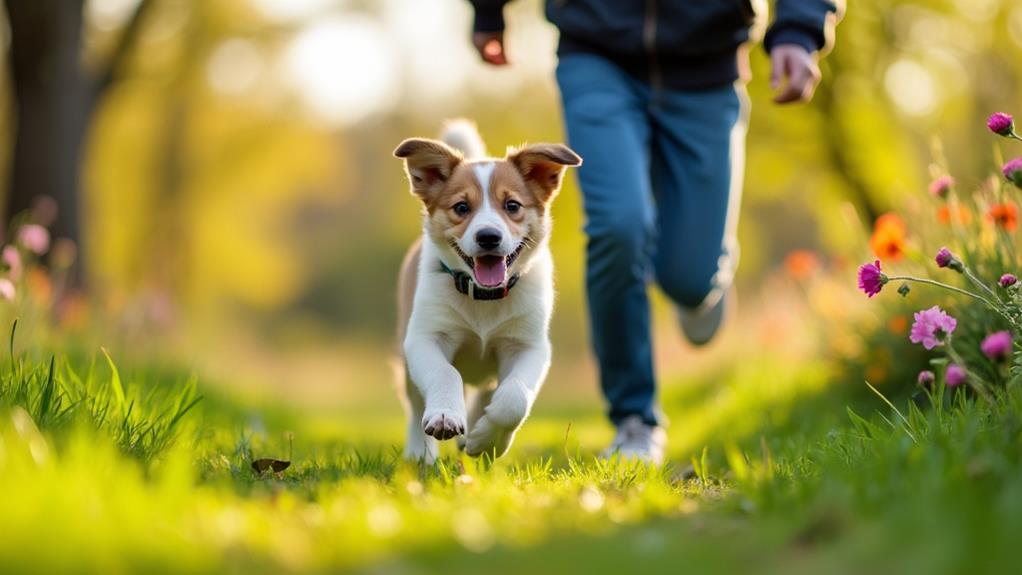
To keep your puppy healthy and happy, regular exercise is key. Engaging in daily physical activities supports healthy joint development, which is important for preventing conditions like hip dysplasia as your puppy grows. You'll want to guarantee your puppy gets plenty of movement to build strong muscles and joints, minimizing the risk of future problems.
Regular exercise also plays a significant role in preventing behavioral issues. Without enough physical activity, puppies can become anxious, hyperactive, or even destructive, as they need an outlet for their abundant energy. By incorporating daily walks and playtime, you'll help your puppy burn off excess energy and maintain a healthy weight, combating obesity, which affects a significant percentage of dogs.
Moreover, exercise provides fundamental mental stimulation. Activities such as walking allow your puppy to engage in natural behaviors like sniffing and exploring, important for socialization and cognitive development. This mental engagement helps in developing a well-rounded and happy dog.
Training for Independent Walking
Regular exercise lays the foundation for your puppy's health, but training them to walk independently is just as essential. For small dogs, walking is a significant step toward building physical fitness and self-reliance. Start by introducing your puppy to short distances and gradually increase them as they become more comfortable. It's necessary to be patient and consistent since every puppy learns at their own pace.
Incorporate positive reinforcement techniques to motivate your puppy. Use treats and praise to encourage them to walk beside you rather than being carried. This approach helps them associate walking with positive experiences, making them more enthusiastic to investigate and learn. Exposing your puppy to different environments and surfaces during walks will also elevate their confidence and adaptability. Different textures and settings will challenge them and help them feel more at ease in diverse situations.
Schedule regular walking sessions, ideally 1-2 times daily, to promote physical fitness and decrease their reliance on being carried. This routine will not only improve their stamina but also strengthen the bond between you and your puppy. Remember, consistency and encouragement are key to successful training, so stay dedicated and patient throughout the process.
Resources for Pet Owners

For pet owners seeking guidance, a wealth of resources is at your fingertips to help guarantee your dog's safety and well-being. Whether you're looking to safely pick up your puppy or seeking training tips to prevent injuries, there's plenty of support available. Start by exploring articles and videos online that demonstrate proper dog lifting techniques and promote injury prevention. These resources can provide you with the knowledge needed to handle your furry friend with confidence.
The Veterinary Medical College of Long Island offers valuable resources on animal restraint. Understanding how to safely handle your pet is vital, and these resources can help you do just that. Moreover, subscribing to the GoodRx Health newsletter gives you regular health updates and tips specifically for dog and cat owners. Staying informed about your pet's health guarantees you're always one step ahead in their care.
For more in-depth advice, consider engaging with professional trainers or veterinarians. They can offer personalized strategies for safely handling and carrying dogs, tailored to your pet's specific needs. Don't forget the GoodRx app, available on iOS and Android, which provides easy access to pet health information and further resources to support your pet care experience.