
Budget-Friendly Horse Ownership: Tips for Managing Costs

Owning a horse doesn't have to break the bank if you employ smart budgeting techniques and savvy shopping tactics. Start by allocating a portion of your income for horse expenses and use spreadsheets to track spending. Look for discounts, bulk buying opportunities, and second-hand items. Prioritize preventive health measures like regular check-ups and vaccinations to avoid hefty vet bills later. Choose economical feeding methods and investigate cost-effective boarding options. Share resources and expenses with other horse owners to save money. By focusing on these strategic approaches, you'll manage horse ownership costs effectively while enjoying your equine companion. Discover more tips ahead.
Key Takeaways
- Allocate a monthly budget for horse expenses, prioritizing necessities over luxuries to maintain financial stability.
- Use promo codes and seasonal sales to save on horse supplies.
- Schedule regular veterinary check-ups and vaccinations to prevent costly health issues.
- Choose field board or discounted boarding options to reduce boarding expenses.
- Collaborate with other horse owners for bulk purchases and shared costs on veterinary visits.
Smart Budgeting Techniques
When you're planning to own a horse without breaking the bank, mastering smart budgeting techniques is vital. Begin by allocating a percentage of your monthly income specifically for horse-related expenses. This guarantees that important needs like feed, veterinary costs, and farrier services are covered without overspending. Utilize budgeting apps or spreadsheets to track expenditures, helping you keep an eye on where your money goes and identify areas to cut down on spending. This practice supports better financial management and makes certain you stay within your limits.
Setting aside a separate emergency fund is fundamental for unexpected veterinary costs. Aim to save at least 10-15% of your total horse care budget to safeguard against financial strain. Regularly review and adjust your budget as costs and personal circumstances change. This flexibility allows you to respond to new expenses and guarantees your budget remains effective over time.
Prioritize necessary expenses and resist the temptation to splurge on luxury items or impulse purchases. Focus on the joy of companionship with your horse rather than material goods. By being mindful of these techniques, you can enjoy horse ownership without compromising your financial stability.
Affordable Shopping Tactics
By leveraging a variety of affordable shopping tactics, you can considerably cut down on horse ownership expenses. Start by using promo codes and seasonal sales to snag discounts on horse-related items. Many vendors offer these throughout the year, so keeping an eye out can save you a lot. Free shipping offers are another great way to reduce costs while ordering supplies online.
Bulk buying is your friend regarding feed, hay, and bedding. Purchasing in larger quantities often leads to significant savings, and proper storage will guarantee that nothing goes to waste. Consider exploring second-hand tack options, which can be found at local tack exchanges or online marketplaces. These are often up to 50% cheaper than new items but still in good condition.
Always perform a price comparison between different vendors to confirm you're getting the best deal for necessary supplies. Prices can vary widely, so a little research pays off. Don't overlook community groups and local equestrian clubs, as they often facilitate tack swaps or group buying. These avenues offer excellent opportunities for discounts and savings through collective purchasing power.
Preventive Health Measures
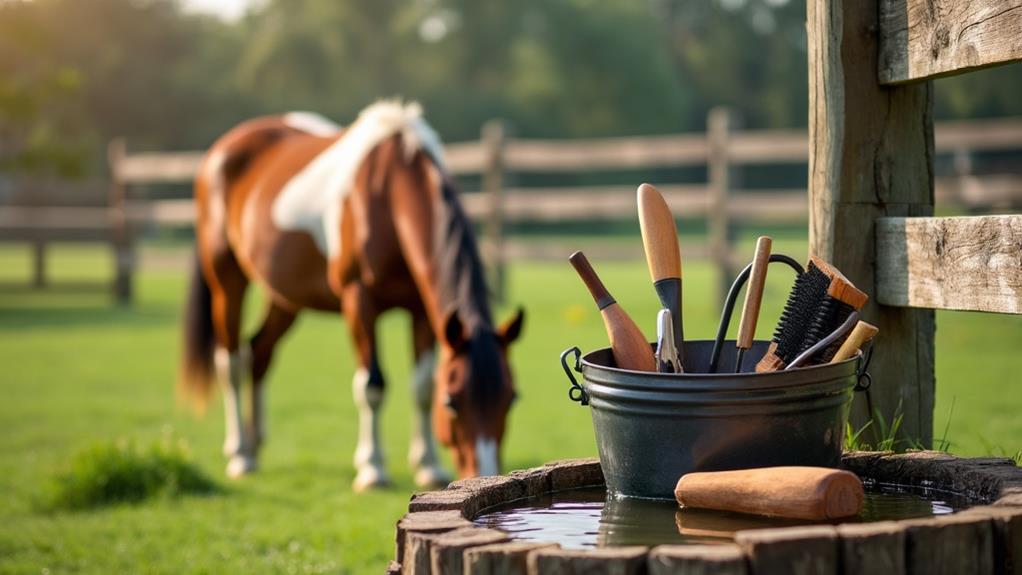
Preventive health measures are vital for keeping your horse healthy and minimizing long-term expenses. By proactively managing your horse's health, you can avoid costly treatments and maintain budget-friendly ownership. Here's how you can do it:
- Regular Veterinary Check-Ups: Schedule veterinary check-ups at least once a year. These help catch health issues early, potentially saving you from expensive treatments later. A small investment in routine care can result in significant savings.
- Up-to-Date Vaccinations and Deworming Schedule: Keep vaccinations current to prevent serious diseases. At roughly $7 a month, vaccinations are a cost-effective way to avoid major health problems. Furthermore, implement a consistent deworming schedule, tailored to your horse's needs, to prevent health complications that could become costly.
- Dental Health and Monitoring Signs of Illness: Regular dental checks are vital. Ignoring dental health can lead to feeding issues and expensive treatments. In addition, always monitor signs of illness or injury; addressing minor health issues promptly can save on larger veterinary expenses.
Efficient Feeding Methods
Taking care of your horse's health is just one part of budget-friendly ownership; feeding them efficiently is just as important. Start by purchasing hay directly from local farmers. This bulk purchase method not only reduces costs but guarantees your horses have a steady supply of quality forage. Implement hay nets to slow down feeding, which minimizes waste and offers a constant forage supply, critical for preventing colic.
Monitoring your horse's feed is fundamental. Weigh or measure hay to provide accurate portions—avoiding overfeeding can greatly reduce expenses. Adjust grain feeding during the summer when pasture is plentiful. Horses need less grain during this time, which helps save on costs while still fulfilling their nutritional needs.
Regular assessment of your horse's diet is essential. As their activity levels and specific needs change, adapt their diet accordingly. Consulting a veterinarian can provide tailored advice, guaranteeing your horse receives necessary supplements without overspending. Efficient feeding methods not only support your horse's health but also help manage expenses effectively. By being proactive and strategic with feeding, you can maintain a happy, healthy horse without breaking the bank.
Cost-Effective Boarding Options
Finding cost-effective boarding options is vital for budget-friendly horse ownership. One of the best choices for affordable boarding is field board, which generally costs less than stall board because it requires fewer resources and less labor. By choosing field board, you allow your horse to enjoy more natural living conditions while keeping expenses in check. To find the right place, consider exploring different avenues:
- Local classifieds and Facebook groups: These platforms can lead you to hidden gems like private farms or co-op situations that offer affordable boarding.
- Discounted board options: Some barns may reduce boarding costs in exchange for your help with chores, making it a win-win situation.
- Pasture options with run-in sheds: Opting for pastures with adequate weather protection can keep your horse comfortable and happy without breaking the bank.
It's also important to analyze local boarding costs and compare facilities to guarantee you're getting the best value for your money. By exploring these strategies, you can effectively manage your horse's needs and your budget, making sure both you and your equine companion are satisfied.
Community Cost Sharing
Community cost sharing can greatly ease the financial burden of horse ownership. By collaborating with fellow horse owners, you can take advantage of cost-saving opportunities that may otherwise go unnoticed. For instance, buying bulk feed or bedding as a group often leads to discounted rates from suppliers, allowing you to save considerably on these crucial items.
Pooling resources also extends to veterinary needs. When you share the cost of farm calls for routine check-ups or emergency visits, you can lower individual expenses, making it more affordable to maintain your horse's health. Moreover, joining local equestrian clubs can open doors to cost-sharing opportunities. Through these clubs, you can participate in group riding lessons or arrange shared transportation for events, further reducing your financial outlay.
Organizing training clinics or workshops is another excellent way to distribute costs. By inviting experienced trainers and splitting the expense among participants, you gain valuable learning experiences without breaking the bank. Lastly, consider sharing specialized equipment like trailers or high-cost tack. This practice not only minimizes expenses but also fosters a sense of community among horse enthusiasts, making the experience of horse ownership more enjoyable and financially manageable.
Maintenance and Resource Management

While sharing resources can ease the financial load, effective maintenance and resource management play an essential role in keeping horse ownership affordable. Tack cleaning and regular oiling after each use can greatly extend its lifespan, reducing the need for costly replacements. Moreover, storing grain and supplements in rodent-proof containers prevents spoilage, ensuring your feed budget stretches further. By implementing energy-efficient practices, like switching to LED light bulbs in the barn, you can also save on utility bills over time.
To better manage costs, consider these practical steps:
- Preventive Care: Schedule annual veterinary checkups and vaccinations. This proactive approach helps avoid expensive emergency treatments and keeps your horse in good health.
- Monitoring Feed: Regularly adjust feed portions based on your horse's consumption. This minimizes waste and helps you stay within your feeding budget.
- Grain Storage: Use rodent-proof containers to store grains and supplements, reducing spoilage and waste.
Related posts