Boxer: The Intelligent and Loyal Family Dog

When you're looking for a family dog that's both intelligent and loyal, consider a Boxer. They're perfect for active families, thanks to their energetic and playful nature. Boxers are incredibly affectionate, making them great companions for children, and their protective instincts offer a sense of security. With a lifespan of 10-12 years, these medium to large dogs require daily exercise and regular vet visits to remain healthy. Their short, smooth coat needs minimal grooming, but early training and socialization are essential to harness their lively spirit. Curious about training tips or how they evolved from work to home? Keep exploring.
Boxer Breed Overview
When you're considering a family dog, the Boxer stands out as a top contender due to its admirable qualities. Known for its loyalty and intelligence, the Boxer ranks 18th out of 201 breeds in AKC popularity. As a family favorite, this breed's affectionate nature makes it a wonderful companion. Boxers thrive in environments where they receive plenty of exercise and companionship, making them ideal for active households. Their playful demeanor guarantees that they get along well with children, adding joy and energy to family life.
Boxers belong to the Working Group category, characterized by their muscular build and short coat. They're not just strong but also highly trainable. If you invest in positive reinforcement training, you'll find them responsive and keen to please. Their intelligence makes them quick learners, allowing you to teach them commands and tricks with ease.
With a life expectancy of 10-12 years, Boxers offer a long-term commitment to love and loyalty. They're more than just pets; they're family members who will stand by you through thick and thin. Choosing a Boxer means welcoming a devoted, intelligent, and playful companion into your life, enriching your family dynamic.
Physical Characteristics
Boxers are not only known for their strong loyalty and intelligence but also for their impressive physical characteristics. As a Boxer Dog owner, you'll notice their medium to large size, with males reaching 23-25 inches in height and weighing 65-80 pounds. Females typically stand 21.5-23.5 inches tall and weigh between 50-65 pounds. Their muscular, stocky build is unmistakable, highlighted by a square head, broad muzzle, and strong limbs. These physical traits contribute markedly to their powerful and athletic appearance, making them a standout among dog breeds.
Boxers have a sleek, short coat that feels smooth to the touch. You'll find them commonly in colors such as fawn, brindle, or white, often with unique markings. Their coat is low-shedding, which is a bonus for many pet owners. Their facial features are distinctive, with dark, expressive eyes and an undershot bite, giving them a characteristic look. Traditionally, Boxers had docked tails, but there's been a shift in many countries moving away from this practice. This change reflects evolving attitudes:
- Medium to large size
- Muscular and stocky build
- Short, smooth coat
- Distinctive facial features
- Changing trends in tail docking
Care and Maintenance

Caring for a Boxer involves understanding their unique needs to guarantee they thrive as healthy and happy pets. Your Boxer will require a balanced diet and regular vet check-ups to monitor their health and prevent common issues like hip dysplasia and heart conditions. Prioritizing these health issues is essential to ensuring your Boxer leads a long, active life. Daily exercise is critical—plan for at least 40 minutes of activity each day. This not only keeps them physically fit but also helps prevent behavioral problems linked to excess energy.
Grooming is another significant aspect of Boxer care. Their short coat needs regular brushing to maintain its shine and health. Don't forget to clean their ears and trim their nails routinely to avoid infections and discomfort. Early training and socialization are crucial for developing good behavior and adaptability to diverse environments and people. Start this process as soon as possible to lay a strong foundation.
Temperament and Behavior
With their lively and energetic nature, Boxers are the perfect companions for active families who love outdoor activities and games. Their temperament makes them ideal family pets, as they are both playful and intelligent, which means they thrive in environments where they can engage in physical and mental activities. Boxers exhibit strong loyalty and protective instincts, ensuring that your family feels safe and secure. Despite their guarding nature, Boxers maintain a friendly demeanor, making them approachable and loving companions.
Boxers communicate mostly through vocalizations and growling, which often signals playfulness rather than aggression. This breed isn't known for excessive barking, so you can expect a quieter environment. However, Boxers can be mischievous if not properly guided, so early socialization and training are essential to help them develop into well-behaved family pets. Their intelligence makes them highly trainable, and they respond best to positive reinforcement and consistent methods.
- Playful and energetic
- Highly trainable with positive reinforcement
- Strong loyalty and protective instincts
- Minimal excessive barking
- Early socialization is essential
Training Tips
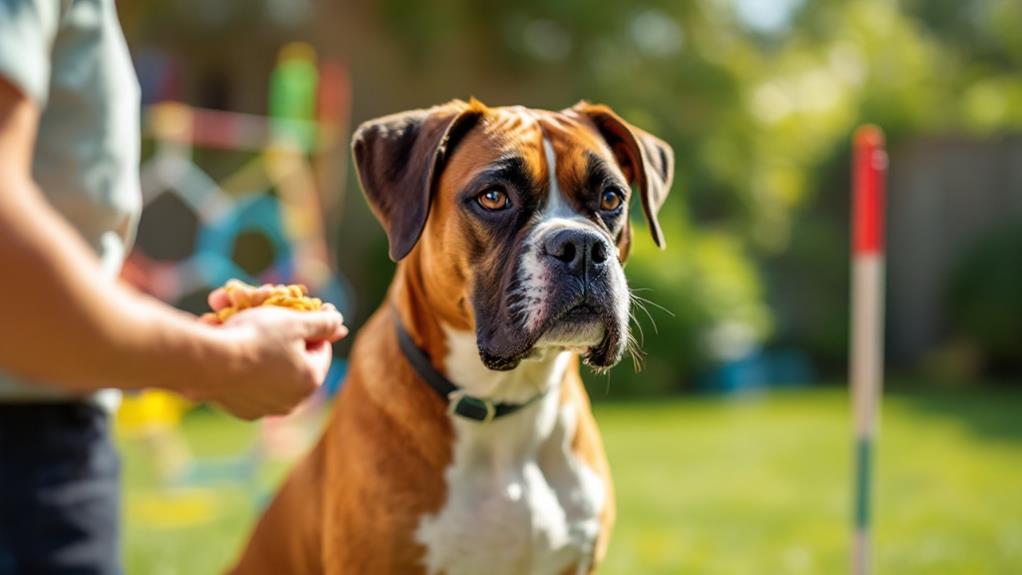
Training a Boxer can be a rewarding experience when you use the right techniques. Since Boxers are highly intelligent, they respond best to positive reinforcement. This means you should focus on using treats and praise during training sessions. Start early with your Boxer to guarantee they're well-mannered adults. Early socialization is vital to prevent hyperactivity and encourage good behavior.
When it comes to training tips, keep sessions short and engaging—aim for 5-10 minutes. This helps maintain your Boxer's focus and enthusiasm. Consistency is key, so use the same commands and routines to reinforce desired behaviors. Establishing a clear owner-pet relationship through these consistent practices will help your Boxer understand their role in the family.
Incorporate puzzle toys and interactive play into your training routine. These not only keep your Boxer entertained but also provide important mental stimulation for this energetic breed. By preventing boredom, you're helping them channel their energy positively. Remember, a well-trained Boxer is a happy and loyal companion. Stick to these training tips and your Boxer will thrive, becoming a beloved member of your family.
Health Considerations
Boxers are a cherished breed, but they come with specific health considerations that owners shouldn't overlook. Despite their average lifespan of 10-12 years, Boxers can face several health problems. Common issues include hip dysplasia and heart conditions like aortic stenosis and cardiomyopathy. Due to their short muzzle, Boxers are also susceptible to brachycephalic syndrome, which can cause breathing difficulties, especially in hot weather. To manage these potential issues, regular veterinary check-ups are vital. These visits can help catch problems early and guarantee your Boxer remains healthy.
To keep your Boxer in top shape, consider the following:
- Balanced Diet: Prevent obesity and related health problems by maintaining a nutritious diet.
- Adequate Exercise: Regular physical activity is important for their general well-being.
- Thyroid Testing: Boxers are at risk for hypothyroidism, so testing is recommended.
- Responsible Breeding: Genetic diversity and responsible breeding practices help mitigate hereditary issues.
- Monitor Breathing: Keep an eye on their breathing, especially during hot weather.
Living With a Boxer
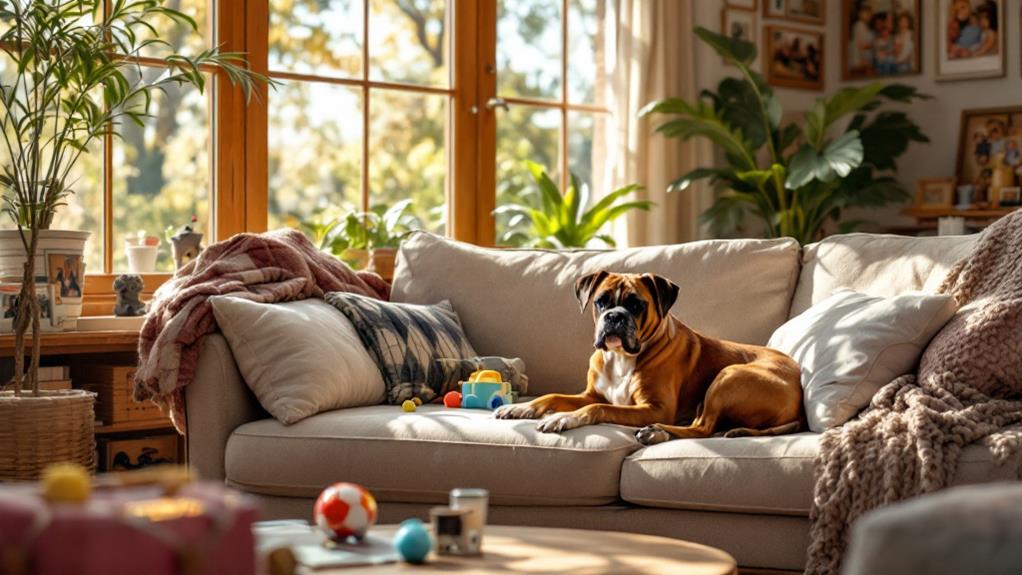
While keeping your Boxer healthy is vital, understanding what daily life with this breed entails is just as significant. Boxers are high-energy dogs, and they need at least 40 minutes of exercise each day. Without this, they might channel their energy into less desirable activities. You'll find that Boxers are good with children, making them fantastic companions for families. Their playful and affectionate nature means they bond well with kids, often becoming gentle protectors.
Living with a Boxer means you're never alone—they thrive on companionship. Leaving them alone for too long could lead to destructive behavior, so it's necessary to make them feel included in daily activities. Regardless of whether you're playing in the yard or taking a walk, they'll enthusiastically join in.
Despite their adaptability to different living settings, Boxers need regular mental and physical stimulation to stay happy. They're expressive dogs, often using vocalizations like barking or growling to communicate rather than to show aggression. Understanding these cues will help you build a stronger relationship with your Boxer. With the right care and environment, living with a Boxer can be a joyful and rewarding experience for the whole family.
Historical Background
In the late 19th century, breeders in Germany developed the Boxer by crossing the Bullenbeisser with the English Bulldog. This breed was initially used for hunting, tasked with holding prey until hunters could arrive. The Boxer's name stems from its unique play style, where its paw movements mimic a boxer's punch. Beyond hunting, Boxers showcased their strength, intelligence, and bravery as military and police dogs during the World Wars.
The American Kennel Club officially recognized the Boxer in 1904. This acknowledgment laid the foundation for the breed's rise in popularity, particularly as family pets, a trend that soared after 1940. From their early roles in bull baiting and cattle control, Boxers have evolved into beloved companions and versatile working dogs.
Consider the following highlights about Boxers:
- Origin: Cross of Bullenbeisser and English Bulldog
- Name: Derived from their boxing-like play
- Roles: Hunting, military, and police work
- Recognition: AKC recognized in 1904
- Evolution: From work to cherished family companions
Today, Boxers continue to be celebrated for their loyalty and adaptability, seamlessly fitting into a variety of roles within society.