Boston Terrier: The American Gentleman Dog

You're about to learn why the Boston Terrier is often called the 'American Gentleman.' This charming breed originated in late 19th-century Boston and features a distinctive tuxedo-like coat that's as low-maintenance as it is eye-catching. With an affectionate, friendly nature, they're perfect companions for families and adapt well to apartment living. Their playful nature and minimal barking make them great with kids and other pets. Regular exercise and positive reinforcement training keep them healthy and happy. If you're curious about this elegant breed's history and unique traits, there's much more to explore about the beloved Boston Terrier.
History and Origin
The Boston Terrier's history is a fascinating tale of breed development that began in the late 19th century in Boston, Massachusetts. You might find it intriguing that this breed emerged from a unique cross between the English Bulldog and the now-extinct White English Terrier. This strategic combination aimed to create a compact, friendly, and intelligent companion dog.
The story of the Boston Terrier wouldn't be complete without mentioning Judge, a significant figure in the breed's lineage. Judge was a dog purchased by Robert C. Hooper, and he played an essential role in the breed's genesis. Judge was bred with a bulldog-type female named Gyp, setting the foundation for what would become the modern Boston Terrier. This lineage laid the groundwork for a breed that would soon capture the hearts of many.
In 1891, the Boston Terrier Club was established, marking a noteworthy milestone for enthusiasts. Just two years later, in 1893, the American Kennel Club recognized the Boston Terrier, making it one of the initial non-sporting breeds in the United States. This recognition solidified the breed's status and contributed to its soaring popularity in the early 20th century.
Physical Characteristics
After investigating the rich history of the Boston Terrier, let's now focus on what makes them stand out physically. Boston Terriers are renowned for their compact and muscular build, weighing between 12 to 25 pounds and standing 10 to 12 inches tall. This sturdy structure is perfectly balanced, making them agile and confident in their movements.
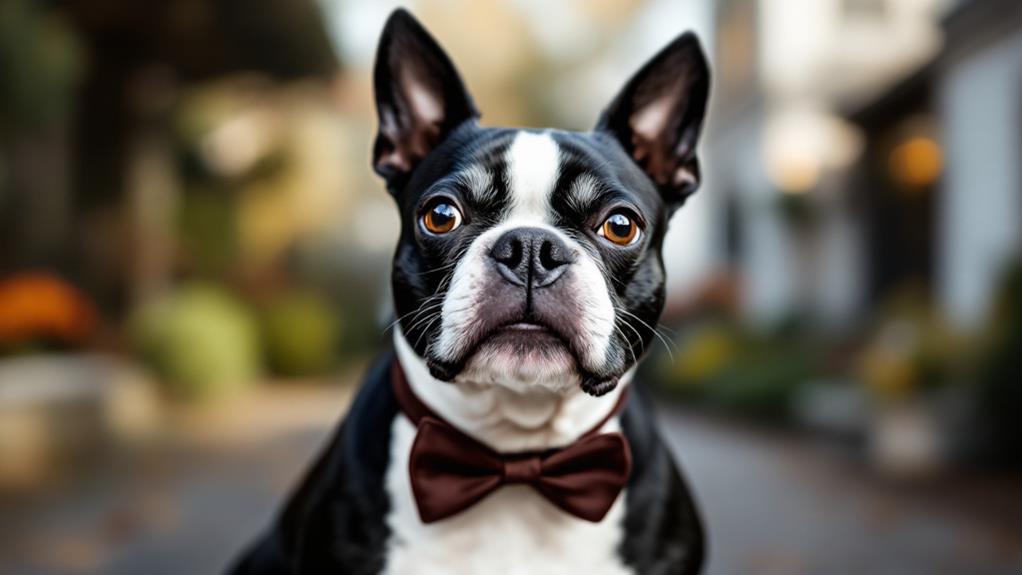
Their most striking physical characteristic is the square, flat head adorned with large, round, dark eyes. These eyes not only reflect intelligence but also exude a friendly and curious demeanor that draws people in. The well-defined stop and short, wide muzzle give Boston Terriers their distinctive brachycephalic appearance, adding to their charmingly unique look.
You'll notice their distinctive tuxedo-like appearance, although details on their coat and colors will be examined later. Despite their elegant looks, Boston Terriers are quite low-maintenance due to their short, smooth coat that requires minimal grooming. This makes them an ideal choice for those who prefer a pet that doesn't demand extensive upkeep. These physical characteristics, combined with their compact and muscular build, make Boston Terriers a truly remarkable breed, embodying both elegance and strength in a small package.
Coat and Colors

Boston Terriers boast a distinctive tuxedo-like coat that truly sets them apart. This breed of dog features a short, smooth coat that is easy to care for, requiring minimal grooming. Their unique appearance primarily comes in three classic colors: black, brindle, or seal, each complemented by specific white markings. These markings, including a white chest, a band between the eyes, and a muzzle band, are fundamental for maintaining the breed's characteristic look.
The American Kennel Club highlights the significance of these traditional coat patterns in defining the Boston Terrier's identity as "The American Gentleman." Any deviation from these patterns, such as solid or unlisted colors, doesn't meet the breed standard. This standard emphasizes the classic tuxedo pattern, which contributes to the Boston Terrier's refined and elegant appearance.
Thanks to their short coat, Boston Terriers are low-maintenance regarding shedding, making them an appealing choice for those preferring a clean home. You'll find that their grooming needs are straightforward and manageable. Understanding these coat characteristics is vital in evaluating this breed, as their unique appearance is a defining feature of their charming and distinguished personality.
Temperament and Behavior
With their friendly and affectionate nature, Boston Terriers form strong bonds with family members and make excellent companions. You're likely to find that these delightful dogs are great with children and coexist well with other pets. Their temperament is characterized by playful and clownish behavior, ensuring they bring joy and laughter to your home. As a companion dog, a Boston Terrier thrives on social interaction and is keen to be part of family activities.
Despite their small size, they possess a protective instinct, which can sometimes lead to territorial behavior. However, they're typically quiet and will only bark when they feel it's necessary. This trait makes them ideal for those preferring a calm, peaceful environment. Boston Terriers also adapt well to diverse living situations, including apartments, thanks to their moderate activity levels and easy-going nature.
Training your Boston Terrier is generally straightforward, as they respond well to positive reinforcement. While they can be a bit stubborn at times, their willingness to please makes them relatively easy to manage. Boston Terriers' friendly demeanor and adaptable temperament make them perfect companion dogs, bringing warmth and companionship to any home.
Training Tips

Understanding the temperament and behavior of Boston Terriers sets the stage for effective training. These intelligent and enthusiastic dogs are best trained when you start early. Their receptiveness to basic obedience commands and socialization techniques guarantees a solid foundation. Using positive reinforcement is key; Boston Terriers thrive on reward-based training. Offer treats or praise to encourage desired behaviors, making training a positive experience for them.
Incorporate short, engaging training sessions into their daily routine. Keeping sessions between 5-10 minutes maintains their interest and attention. This breed responds well to consistency, so guarantee regularity in your training efforts. To further enrich their training, involve them in different dog sports and activities. This not only provides much-needed mental stimulation but also physical engagement, making learning fun and effective.
Consistent training and socialization prevent stubbornness and nurture well-rounded behavior. This makes Boston Terriers excellent companions, regardless of a family or an individual. Here are a few practical tips to improve your training sessions:
- Start early: Begin training and socialization during puppyhood.
- Use positive reinforcement: Encourage good behavior with treats and praise.
- Keep it short: Limit sessions to maintain focus and enthusiasm.
Health and Lifespan
When caring for a Boston Terrier, it's important to be aware of their health and lifespan considerations. The average lifespan of a Boston Terrier is approximately 11 to 13 years, which aligns with other small dog breeds. However, they can face specific health issues that require your attention. As a brachycephalic breed, Boston Terriers are prone to breathing difficulties, especially in hot or humid weather. It's imperative to monitor their breathing and avoid strenuous activities during these conditions.
Common health issues include patellar luxation, cataracts, and dermatitis. Regular veterinary check-ups are critical for early detection and management of these conditions. By staying proactive with their health, you can guarantee your Boston Terrier leads a happy and comfortable life. Furthermore, dental care is a must, as Boston Terriers are susceptible to periodontal disease. Routinely brushing their teeth will help maintain their oral health and prevent future complications.
Due to their physical structure, Boston Terriers have a high rate of caesarean sections, with 80% of litters in the UK delivered via C-section. Being informed about these potential challenges enables you to provide the best care for your Boston Terrier.
Care and Maintenance

For the care and maintenance of a Boston Terrier, you'll find that their short coat requires minimal grooming, though regular brushing will help reduce shedding and keep their coat healthy. Incorporating a consistent grooming routine is advantageous, as it not only maintains their appearance but also strengthens the bond between you and your dog. Beyond grooming, exercise is vital. Boston Terriers thrive on moderate exercise and enjoy daily walks and interactive play to stay both physically and mentally stimulated. This helps prevent obesity and guarantees they remain energetic and happy.
When considering their diet, providing high-quality dog food suitable for their size is fundamental. It guarantees they have the energy needed for play and exercise while also preventing weight gain. Regular veterinary check-ups are similarly significant, as Boston Terriers can be prone to certain health issues, including brachycephalic syndrome and patellar luxation.
Additionally, dental care should not be overlooked. Boston Terriers are susceptible to periodontal disease, so their teeth need regular brushing alongside professional dental check-ups. To summarize, key aspects of Boston Terrier care include:
- Regular coat brushing and grooming
- Consistent exercise routine
- Balanced, high-quality diet and dental care
Socialization Benefits
Beyond their physical care, Boston Terriers also benefit greatly from socialization. It's vital for developing their friendly and affectionate nature, making them wonderful companions for families and children. By engaging your Boston Terrier in early socialization, you can help them become more adaptable and confident in different environments. This process reduces the chances of fear or aggression towards unfamiliar people and animals, ensuring they grow into well-rounded pets.
Introducing your Boston Terrier to diverse settings, people, and other pets during their formative months is fundamental. This exposure improves their adaptability, allowing them to handle new situations with ease. Regular activities like playdates and obedience classes not only stimulate their intelligent nature but also promote mental well-being. These experiences can lead to calmer behavior, especially beneficial for apartment living, as they reduce potential barking or territorial issues.
Notable Boston Terriers
Boston Terriers have a storied history marked by several notable individuals who played key roles in the breed's development. Pioneers like Barnard's Tom and Atkinson To-by were instrumental in refining the breed during the late 19th century, setting the stage for what the Boston Terrier Club would later formalize in breed standards. Their influence is still seen today in the distinct characteristics of the breed.
Another significant figure in the Boston Terrier world is Ch. Haggertys King. Bred by Mrs. Dan Haggerty in 1916, this dog sired numerous champions despite facing controversy for his color at dog shows. His legacy is an example of the breed's resilience and adaptability. Then there's Ch. Million Dollar Kid Boots, a star from the Million Dollar Bostons kennel. With impressive wins like Best of Breed at Westminster in 1930 and 1932, his achievements elevated the breed's notoriety and popularity.
Here are three key points about these notable Boston Terriers:
- Barnard's Tom and Atkinson To-by: Pioneered early breed refinement.
- Ch. Haggertys King: Overcame color controversy, siring champions.
- Ch. Million Dollar Kid Boots: Enhanced breed's popularity in the 1920s.
Breed Popularity Trends
The breed's popularity isn't a recent phenomenon. It surged in the late 19th century, quickly becoming a favorite at dog shows in Boston and New York by the early 20th century. In 1893, the American Kennel Club recognized the Boston Terrier as the primary American breed, solidifying its status as a cherished companion. Over the years, Boston Terriers have maintained their appeal, with recent trends showing a renewed interest.
However, this rising popularity raises concerns about irresponsible breeding practices. As the breed gains recognition for its friendly temperament, especially in therapy and service roles, it's vital to guarantee ethical breeding standards. Despite being a minority breed in the UK and Europe, Boston Terriers continue to gain followers. As you consider a Boston Terrier, prioritize reputable breeders to uphold the integrity of this remarkable breed.