Bombay Cat: The Mini Black Panther of the Feline World
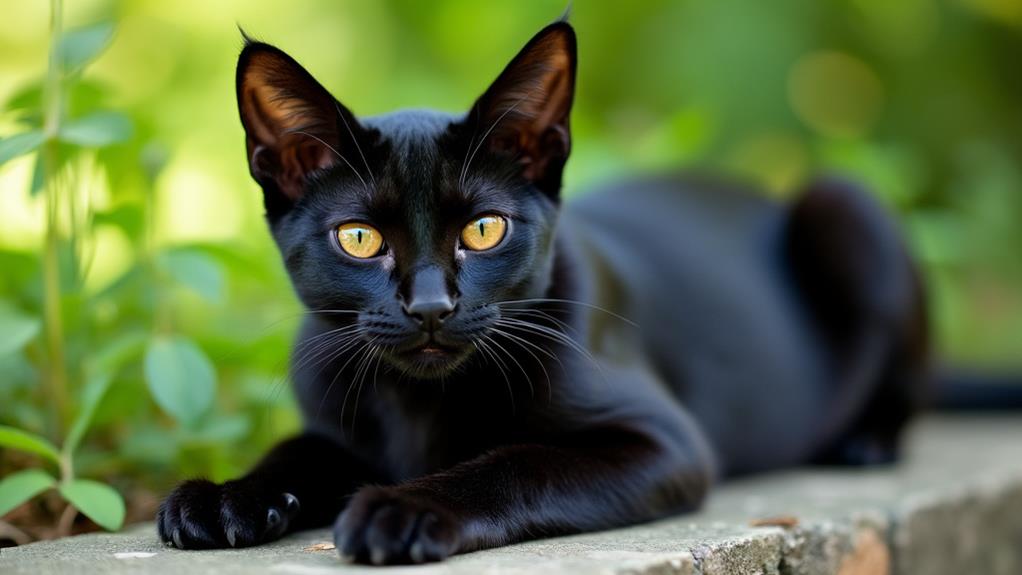
You'll find Bombay cats, often called the 'mini black panther', to be enchanting companions with their glossy black coats and mesmerizing copper or golden eyes. Developed in 1958, these cats have a compact, muscular build and a playful, affectionate nature, making them perfect for families. They're intelligent and sociable but need company; they don't enjoy being alone for long. Grooming is simple with weekly brushing, but their health does require regular vet check-ups, especially for heart and dental care. In general, if you're looking for a sleek, loving, and energetic feline friend, the Bombay could be your perfect match. Uncover more.
Key Takeaways
- Bombay cats are known for their sleek, glossy black coats resembling miniature black panthers.
- Developed in 1958 by crossing sable Burmese cats with black American Shorthairs.
- Bombay cats are affectionate "Velcro cats" that thrive on companionship and social interaction.
- Regular grooming and playtime are essential to maintain their health and happiness.
- They are prone to health issues like hypertrophic cardiomyopathy and require regular veterinary care.
Origin and History
Although the Bombay cat might seem like a recent addition to the feline world, its origins date back to 1958 when breeder Nikki Horner set out on a mission in Louisville, Kentucky. Her goal was to create a breed that resembled a miniature black panther, a vision she achieved by crossing sable Burmese cats with black American Shorthairs. This careful breeding resulted in the distinctive Bombay cat, known for its sleek black coat and striking resemblance to the wild felines of Mumbai, India.
In 1970, the breed gained official recognition from the Cat Fanciers Association (CFA), marking a significant milestone in its history. Seven years later, in 1977, the International Cat Association (TICA) also recognized the Bombay cat, further establishing its presence in the feline community. Despite these achievements, the breed remains rare, particularly in Europe, where superstitions surrounding black cats could play a role in its limited popularity.
As you investigate the Bombay cat's history, you'll appreciate the dedication and vision of Nikki Horner and the unique blend of Burmese and American Shorthair traits that culminated in this enchanting breed. The Bombay cat's progression from conception to recognition is as fascinating as its alluring appearance.
Physical Characteristics
Having traveled through the rich history of the Bombay cat, you can now appreciate its stunning physical characteristics that truly set it apart. This black cat boasts a sleek coat, entirely black and glossy, resembling the mini black panther it's often compared to. The coat's short, shiny nature makes it a striking feature, as it's colored to the roots, enhancing the cat's overall charm.
The Bombay's copper-golden eyes are large and round, set wide apart on a rounded face with a smooth contour. These eyes are not only expressive but also a hallmark of the breed, drawing you in with their enchanting gaze. The shorter snout compared to other domestic cat breeds gives the Bombay a distinctive and unique look.
In terms of build, this breed has a compact and muscular body, averaging between 8-15 lbs, with muscular shoulders supporting its graceful posture. The overall structure is well-proportioned, featuring a medium-length tail that tapers to a rounded tip. This combination of features results in the Bombay cat's elegant and powerful presence, making it an extraordinary example of feline beauty and strength.
Personality Traits
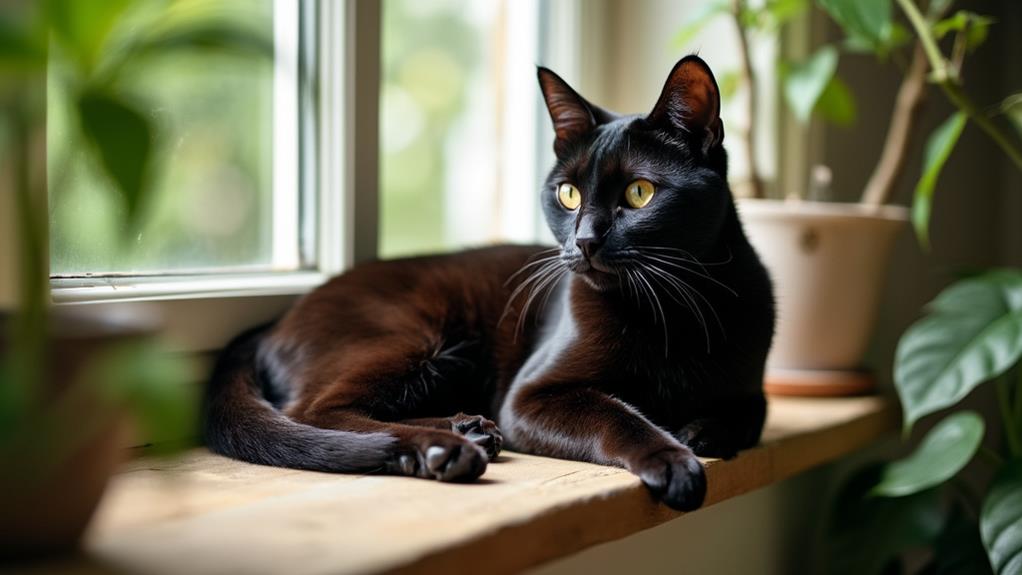
In regard to personality, the Bombay cat stands out with its affectionate and sociable nature. Often dubbed "Velcro cats," they love to stick close to their owners, seeking companionship and involvement in your daily life. Their extroverted demeanor makes them highly suitable for families, as Bombay cats get along well with children and other pets. They thrive on social engagement, so you'll find them enthusiastic to join in family activities or simply cuddle up on the couch.
These playful and energetic felines require regular playtime to stay happy, so be prepared to engage them with toys and interactive games. Their Bombay cat personality shines through with their need for mental stimulation, making them not just fun, but also a joy to train. Their intelligence allows them to learn commands and tricks easily with positive reinforcement.
However, Bombay cats don't fare well when left alone for long periods. They crave interaction and companionship, emphasizing their need for a household where someone is usually around. With their affectionate, intelligent, and extroverted nature, Bombay cats are a delightful enhancement to any family seeking a loving and engaging feline friend.
Care and Maintenance
Caring for a Bombay cat involves a blend of attention and routine to guarantee they lead a healthy and fulfilling life. Start with regular grooming to maintain their glossy coat, even though Bombay cats are low shedders. Weekly brushing not only keeps them looking sleek but also strengthens your bond with them. Since these cats are highly energetic and playful, provide them with scratching posts and interactive toys. This setup prevents boredom and keeps them physically and mentally stimulated.
To make sure your Bombay cat remains happy, allocate daily playtime. They'll thrive on interaction, and neglecting this need can result in anxiety or destructive behavior. Don't forget about dental care—brushing their teeth weekly helps ward off gum disease, safeguarding their general health. Regular veterinary check-ups are another vital component of their care routine. These visits help monitor potential health issues that Bombay cats might face, such as respiratory problems and hypertrophic cardiomyopathy (HCM).
Here's a quick checklist to keep your Bombay cat thriving:
- Grooming: Weekly brushing for a shiny coat
- Scratching posts: Important for physical engagement
- Playtime: Daily interaction to prevent anxiety
- Dental care: Weekly teeth brushing for health
Health Considerations
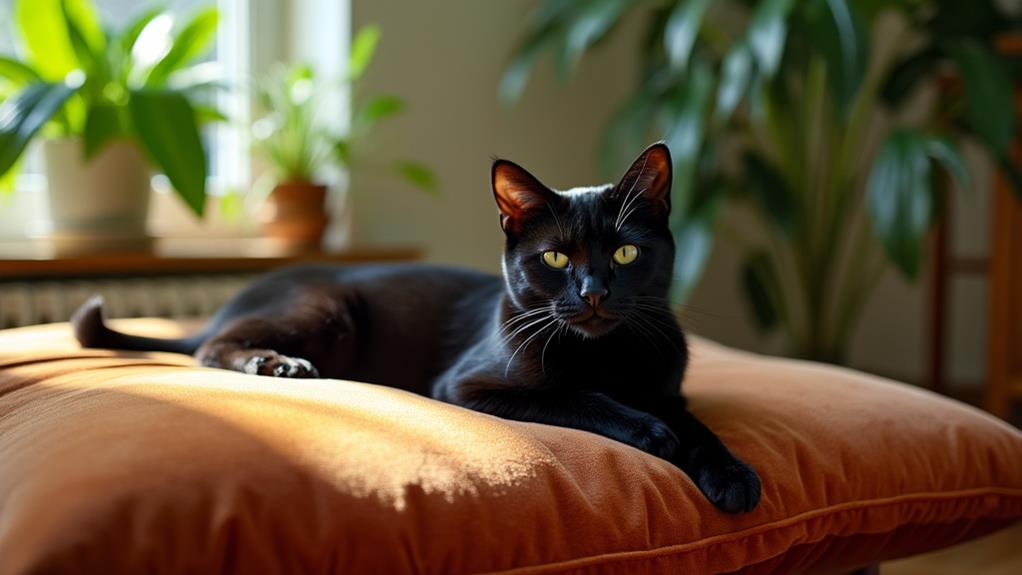
While maintaining a Bombay cat's coat and playtime routine, it's just as essential to focus on their health needs. Bombay cats have an average lifespan of 12 to 18 years, and with proper care, some live into their 20s. To achieve this, understanding potential health issues is key. Hypertrophic cardiomyopathy (HCM) is a significant health risk for these cats and requires regular veterinary check-ups to monitor heart health. Dental diseases, like gingivitis, are common too, so routine dental care, including teeth brushing, should be part of your cat's health regimen.
Obesity is another concern for Bombay cats. A balanced diet and consistent exercise are imperative to maintaining a healthy weight and preventing related health problems. You can keep your Bombay active with engaging play sessions, which also strengthen your bond. Awareness of breed-specific health risks, combined with preventive care and vaccinations, guarantees your cat's long-term well-being.