Bloodhound: The Friendly and Independent Scenthound
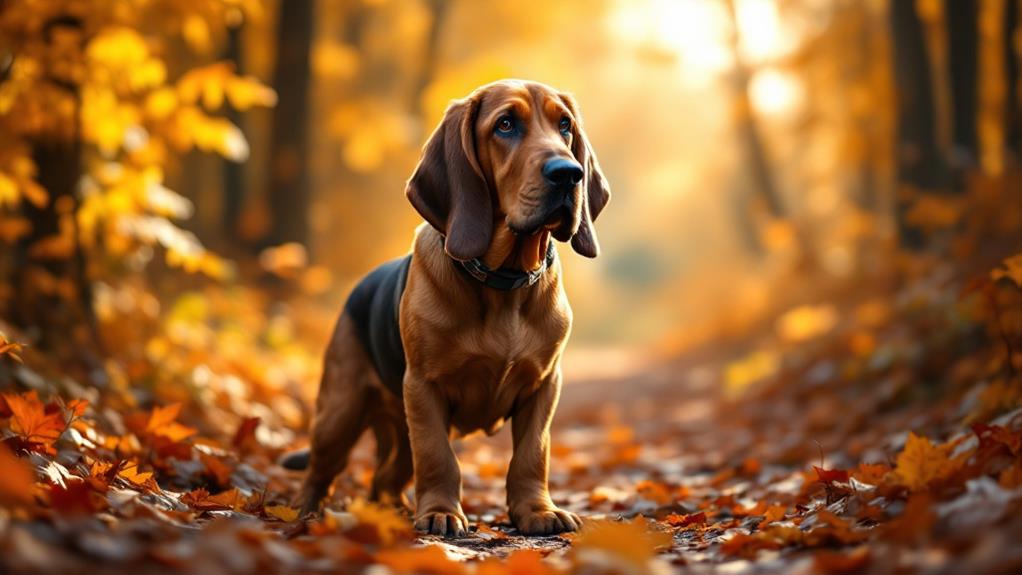
You'll find that Bloodhounds are a unique blend of friendliness and independence, making them both loving family pets and exceptional trackers. With their unmatched sense of smell, they can detect scents over 130 miles away. These dogs are gentle and laid-back but require consistent exercise and early training to manage their stubborn streak. Regular grooming is a must, especially with their long ears, and they often need about 4-8 cups of high-quality food daily. Keep an eye on their health with routine vet visits. Immerse yourself in more details to uncover how they can be perfect for your family dynamics.
Bloodhound Breed Overview
The Bloodhound, a remarkable member of the Hound Group, stands out with its unparalleled scent-tracking prowess. As a large dog, the Bloodhound has a storied history that dates back centuries, originally bred for tracking animals and, later, people. It's the quintessential scent hound, boasting over 300 million scent receptors, which makes it unrivaled in locating lost individuals.
If you're considering a Bloodhound as a family pet, be prepared for its unique needs. Despite its endearing docility when off-duty, this breed requires consistent exercise and mental stimulation to thrive. Without adequate physical activity, Bloodhounds can become mischievous. You'll need to incorporate obedience training early on, as their stubborn nature during scent-tracking tasks requires a firm yet gentle hand.
Health issues are something to watch out for in this breed. Bloodhounds are prone to certain conditions due to their size and build, so regular veterinary check-ups are crucial to guarantee a lifespan of 10-12 years. Their distinctive long jowls and droopy faces require regular grooming to prevent skin problems. Despite these challenges, the Bloodhound's loyal and gentle nature makes it a cherished family member.
Unique Traits and Abilities
Renowned for their unmatched scent-tracking capabilities, Bloodhounds exhibit unique traits and abilities that set them apart from other breeds. As a member of the Bloodhound Dog Breed, these dogs possess an extraordinary sense of smell, with over 300 million scent receptors. This makes them champions in the world of scent detection. Their ability to follow a scent for over 130 miles and detect scents nearly two weeks old is nothing short of remarkable. You might be amazed at how these dogs are often employed in finding people, earning them the title of world-famous Sleuth Hound.
Bloodhounds' long ears and loose skin aren't just for show; they play an essential role in trapping scents, enhancing their tracking abilities across diverse terrains. Despite their strong instincts to follow a scent, Bloodhounds are generally docile and friendly when not on the job. Their independent nature means they can work tirelessly without constant supervision, though a professional trainer can help harness their potential. When off-duty, you'll find them to be excellent companions, balancing their remarkable tracking skills with a gentle demeanor. Their unique traits make Bloodhounds not only exceptional working dogs but also beloved pets.
Health and Care
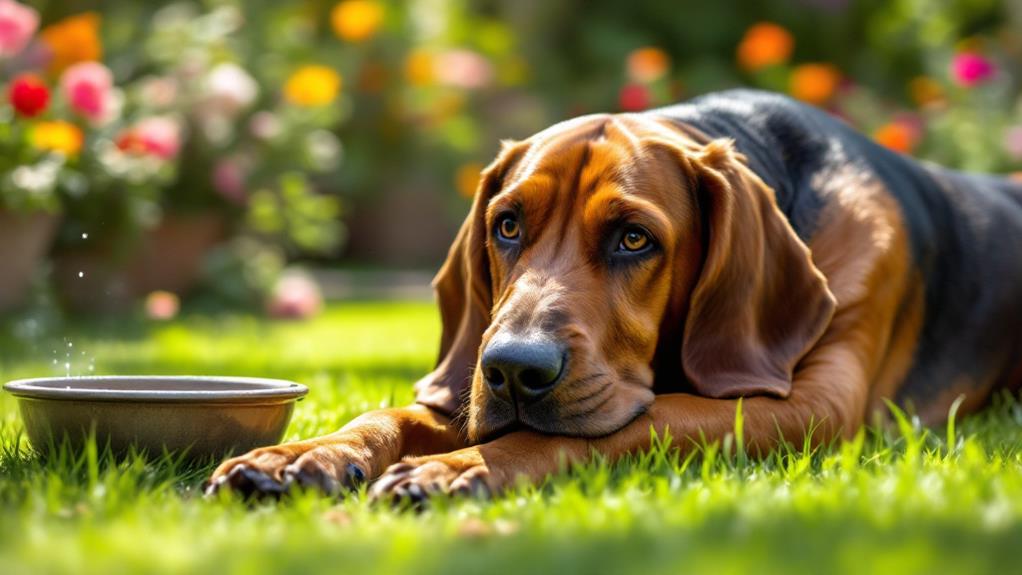
Caring for a Bloodhound involves understanding their specific health needs and ensuring they remain healthy and happy. These loyal companions are prone to health issues like hip/elbow dysplasia, bloat, and ear infections, making regular veterinary check-ups vital. Keeping an eye out for symptoms and staying proactive with vet visits can help manage these concerns effectively.
A balanced diet is critical for their well-being. Bloodhounds typically need 4-8 cups of high-quality dog food daily, but you should consult with your vet to tailor the diet to your Bloodhound's activity level and stage of life. Regular exercise is also significant. Aim for at least 30 minutes of daily walks and outdoor play to maintain their physical fitness and prevent any destructive behaviors that may arise from boredom.
Grooming is another key aspect. Brush their dense, short coat 2-3 times a week, wipe their face daily to prevent dermatitis, and clean their ears weekly to avoid infections. Bloodhounds thrive on routine socialization and training, which help manage their independent nature. Early obedience training is vital for a well-adjusted Bloodhound, so invest time in teaching commands and encouraging positive interactions.
Temperament and Behavior
Understanding Bloodhounds' temperament and behavior can improve your bond with these unique dogs. Known for their laid-back, friendly nature, Bloodhounds make fantastic companions for families, especially when socialization starts early. Their easygoing demeanor guarantees they get along well with children and can tolerate other pets. However, their independent streak is quite pronounced. As a scent-driven dog, a Bloodhound might follow its nose, sometimes ignoring your commands when it locks onto an intriguing scent. This independence demands a mindful approach to their behavior.
Bloodhounds are vocal creatures, known for baying and howling. While their vocal tendencies might alert you to strangers, don't expect them to be reliable guard dogs. Their gentle temperament means they're more likely to greet strangers than ward them off. To keep your Bloodhound happy and prevent boredom-induced destructive behavior, regular exercise and mental stimulation are vital. This dog thrives on activity due to its high energy levels.
Early socialization and patient training are important in shaping a well-rounded Bloodhound. While they may show stubbornness, consistent effort pays off in managing their behavior. Accept their quirks, and you'll enjoy a loyal, loving companion.
Training Essentials
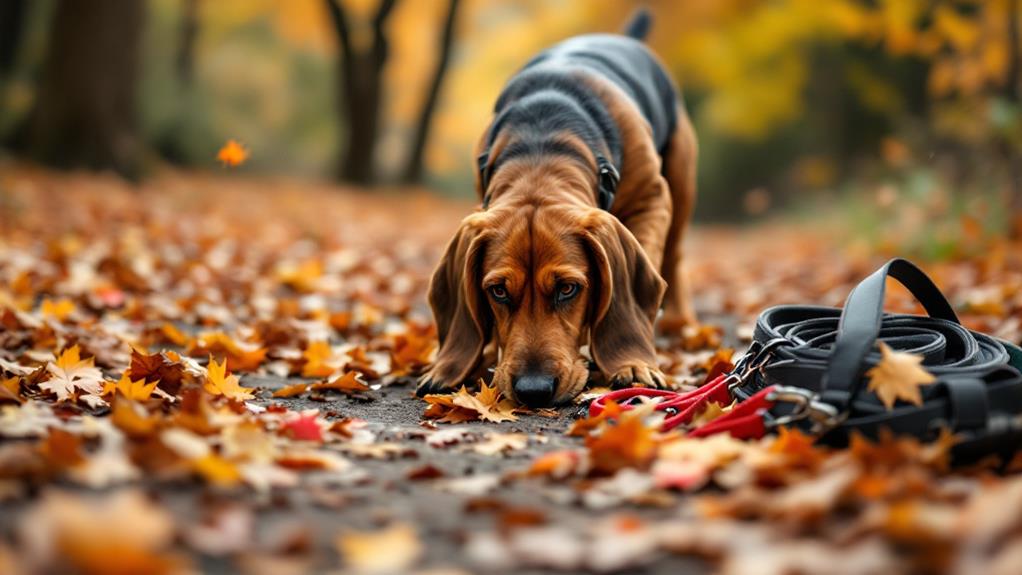
When training your Bloodhound, starting early is crucial to manage their independent nature and strong scent-tracking instincts effectively. Engaging in early obedience training helps channel their remarkable abilities into positive behaviors. Bloodhounds thrive on Positive Reinforcement, so use treats and praise to encourage good habits. Their stubbornness means you'll need consistency in training sessions to maintain focus and reinforce learning over time.
Socialization plays a significant role during their important learning period. Introducing them to different people, pets, and environments will guarantee they grow into well-rounded companions. Here's how to approach training your Bloodhound:
- Early Obedience Training: Instill basic commands like sit, stay, and come to curb their independent streak.
- Positive Reinforcement: Employ treats and verbal praise as effective motivators for your Bloodhound.
- Consistency in Training Sessions: Keep sessions regular and engaging to reinforce commands and maintain interest.
- Advanced Training Opportunities: investigate activities like mantrailing, agility, or therapy roles to channel their energy and intelligence positively.
Notable Facts
With an extraordinary sense of smell, Bloodhounds stand out as unparalleled scent trackers. These dogs boast over 300 million scent receptors, making their tracking abilities second to none. Historically, Bloodhounds have been invaluable to law enforcement, famously tracking down criminals like Jack the Ripper. Their name, stemming from "blooded hound," pays homage to their noble lineage and pure breeding by monks for scent tracking.
Bloodhounds aren't just exceptional trackers; they also make wonderful family pets. Known for their gentle temperament, they're great with kids and adapt well to family life. However, their independent nature means you'll need to provide consistent training. Without it, their strong instinct to follow scents might lead them astray.
Their scenting ability is truly remarkable, as Bloodhounds can follow trails over 130 miles and detect scents up to two weeks old. This incredible prowess makes them both fascinating and challenging companions. When considering a Bloodhound, keep in mind their specific health needs. Regular veterinary checks are essential to maintaining their health, given their unique physiology. With a Bloodhound, you gain not only a skilled tracker but also a loyal friend.