Birman: The Sacred and Elegant Cat of Burma
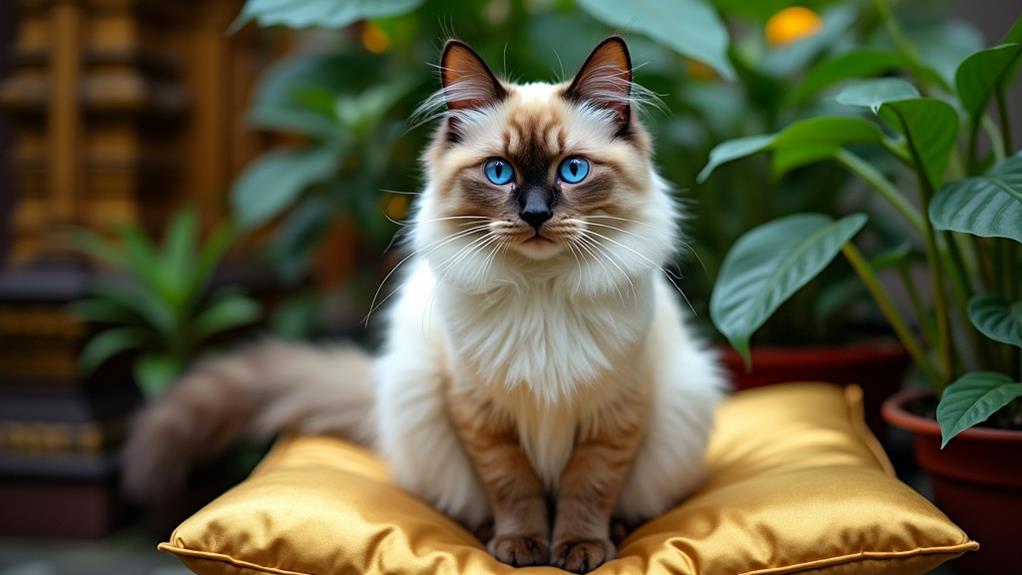
Uncover the elegant Birman, the Sacred Cat of Burma, adored for its striking blue eyes and affectionate nature. Legend ties these cats to Buddhist temples where they were companions to priests. With a medium build and semi-long silky fur, they're low maintenance and perfect family companions, remaining gentle and loyal. Birmans boast distinctive white "gloves" on their paws, enhancing their enchanting look. Their calm demeanor and playful spirit make them ideal for serene homes. Regular grooming and health check-ups guarantee a long, healthy life. Investigate the fascinating blend of their cultural history and unique traits.
Key Takeaways
- Birman cats are known as the Sacred Cat of Burma, linked to Buddhist temples and revered by Kittah priests.
- They have striking deep sapphire blue eyes and white "gloves" on paws, symbolizing purity and divinity.
- Birmans possess a gentle, affectionate nature, making them ideal companions for families and children.
- Originating in France in the 1920s, Birmans gained international recognition in Britain and the United States by the 1960s.
- Their semi-long, silky fur and medium-sized, muscular build contribute to their elegant appearance.
Origins and History
The Birman cat, often called the Sacred Cat of Burma, boasts a fascinating history tied to Buddhist temples in northern Burma. You'll find its origins deeply intertwined with the spiritual practices of Kittah priests, who revered these cats as companions of the goddess Tsun-Kyan-Kse. Legend has it that a white cat named Sinh transformed during a temple attack, enhancing the breed's mystical aura.
Fast forward to the 20th century, the modern development of the Birman began in France around 1920. A significant female cat named Sita played a vital role in establishing the breed there. The breed's official registration in France came in 1925, marking the start of its formal recognition. However, World War II nearly wiped out the Birman, leaving only two survivors, Orloff and Xenia de Kaabaa, who were essential to the breed's restoration.
Thanks to dedicated breeding efforts, the Birman cat gained international recognition, reaching Britain in 1965 and the United States in 1966. This renaissance sparked a newfound appreciation for the breed's elegance and mystical heritage, cementing its place in feline history and expanding its popularity worldwide.
Distinctive Physical Traits
Boasting a multitude of distinctive physical traits, Birman cats are truly alluring. As a medium-sized cat, the Birman possesses a muscular build with a semi-cobby body structure, typically weighing between 3.5-6 kg. Their semi-long fur, characterized by a silky texture, sets them apart from other breeds. This luxurious coat lacks an undercoat, reducing matting and making grooming a breeze. You'll appreciate this unique feature, as it keeps these cats looking pristine with minimal effort.
One of the most fascinating aspects of a Birman cat is its deep sapphire blue eyes. These striking eyes retain their lively color throughout the cat's life, adding to their allure. Similarly mesmerizing are their pure white "gloves" that adorn all four paws. These gloves must be symmetrical and confined to the paws, especially if you're considering showing them at cat shows.
When they're born, these Sacred Cats are completely white. However, as they mature, their color points develop, revealing darker markings on the ears, face, paws, and tail. This transformation begins around 1-2 weeks old, creating a stunning contrast that highlights their elegance and charm.
Personality and Behavior
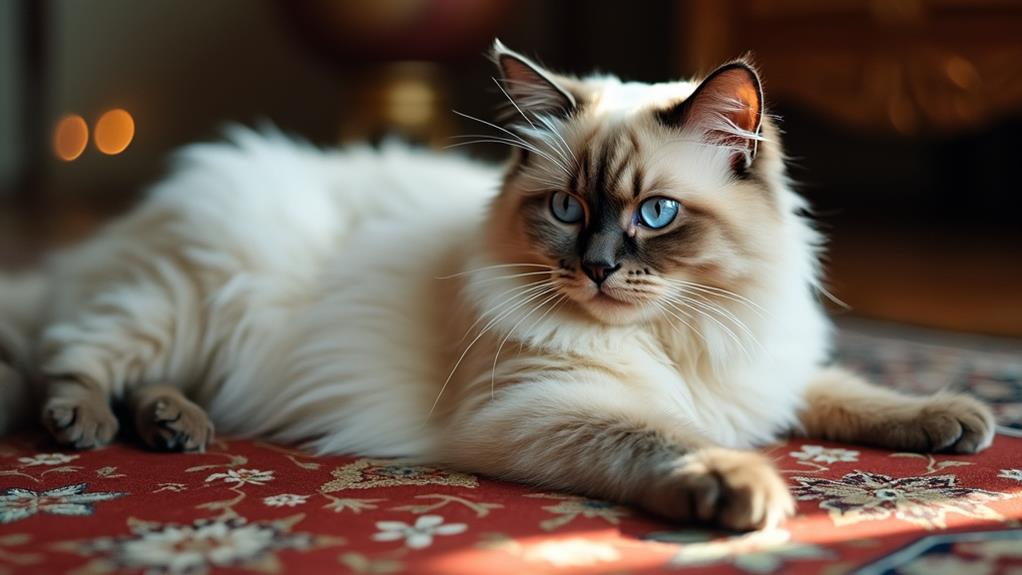
Renowned for their affectionate and gentle nature, Birman cats often form strong bonds with their human companions. You'll find that they're particularly loyal, sometimes favoring one specific family member. Their sociable and playful disposition means they thrive on interaction, making them ideal for families with children or other pets. Birmans enjoy being part of the family dynamic, engaging in playful antics that bring joy to your household.
Despite their playful side, Birmans maintain a calm demeanor and a quiet personality. They're not the type to be overly vocal; instead, they communicate with soft, chirp-like sounds, adding to their peaceful presence. This makes them well-suited for those who appreciate a more serene household environment.
Birmans are not just affectionate companions; they're also highly intelligent and inquisitive. You'll need to provide them with mental stimulation and interactive play to keep them engaged and content. Their patience and tolerant nature make them fantastic with children, as they're generally unfazed by the chaos that comes with young kids. Regardless of whether you're seeking a gentle friend or a playful partner, the Birman cat's personality and behavior make them a perfect choice.
Health and Well-being
When considering a Birman cat's health and well-being, it's vital to be aware of their specific needs and potential health risks. With an impressive life expectancy of around 14.39 years, Birmans often outlive the average cat. However, they face several health challenges that require your attention. One significant concern is chronic kidney disease. To catch any issues early, you should regularly monitor their creatinine and SDMA levels. This proactive approach helps maintain their renal function and general health.
Birmans are also more prone to feline infectious peritonitis, a disease that can further affect their kidneys. Regular veterinary check-ups are important to stay ahead of these potential problems. Your vet can provide guidance tailored to your cat's needs, ensuring their well-being.
Beyond medical vigilance, a balanced diet plays a key role in your Birman's health. Proper nutrition supports their body, reducing the risk of urate urolithiasis, a condition where Birmans are particularly over-represented. Don't forget the importance of grooming. Their silky fur requires routine care to prevent matting and skin issues. By focusing on these aspects, you can help your Birman lead a healthy and fulfilling life.
Cultural Significance
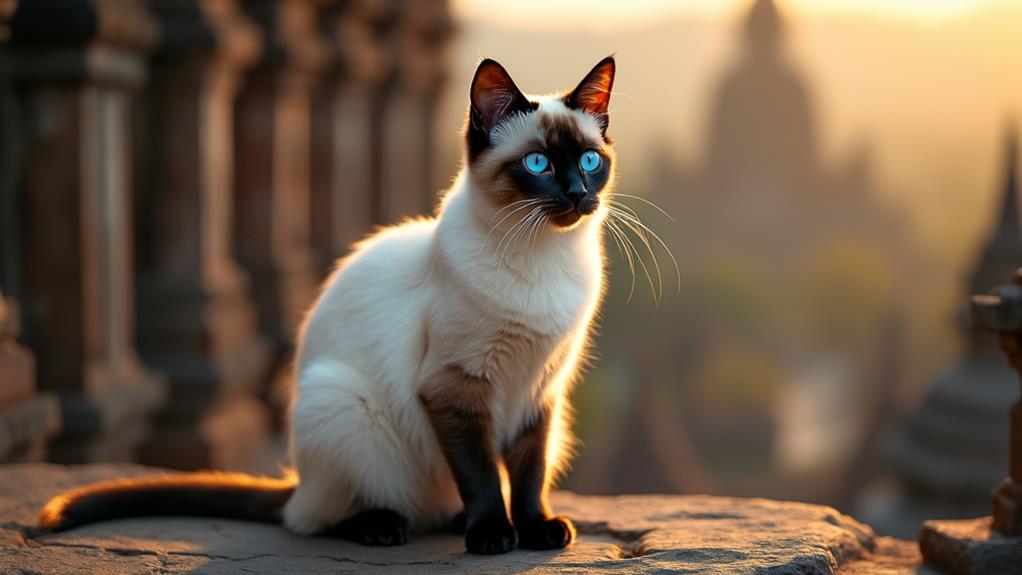
Although the Birman cat's charm lies in its striking appearance, its cultural significance is likewise enchanting. Known as the Sacred Cat of Burma, this elegant cat holds a venerable place in Buddhist mythology. You might find it fascinating that Birmans are believed to embody the souls of deceased companions, offering protection in the afterlife. Their connection to the Kittah priests is profound, as these priests revered Birmans as sacred guardians of their temples in Burma.
The Birman's unique color-pointed coat and mesmerizing blue eyes aren't just aesthetically pleasing—they're steeped in symbolism. Often linked to themes of purity and divinity, these features contribute to the cat's mystique across diverse cultures. This elegant cat's odyssey beyond Burma began in the early 1900s, when it was initially introduced to Europe. Its recognition in France in 1925 marked the start of its international allure.
Reflecting on its historical significance, the Birman cat symbolizes a rich blend of cultural influences. It bridges ancient traditions from Burma with the European regions where it thrived, creating a tapestry of history and elegance that continues to captivate cat enthusiasts worldwide.