Bengal Cat: The Active and Agile Mini-Leopard of the House
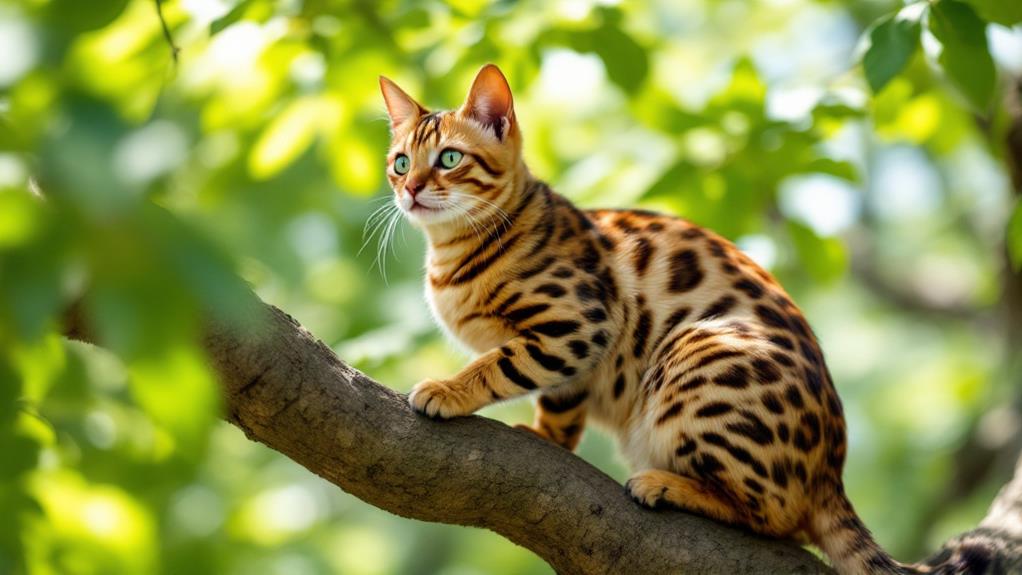
You're considering a Bengal cat, aren't you? This energetic, agile feline brings a touch of the wild indoors with its striking mini-leopard spots and shimmering coat. Bengals boast an impressive blend of lively intelligence and playful nature. They love climbing and enjoy activities like fetching, making them perfect for active homes. These social cats need heaps of interaction and a protein-rich diet to thrive. Invest in vertical spaces and interactive toys to keep them happy. Bengal cats thrive on adventure, and their curious nature means there's always something new to explore about them. There's more to uncover about these enchanting felines.
Origins and Development
Through a blend of intentional breeding and genetic exploration, Bengal cats emerged in the USA, capturing the allure of their wild ancestry. This enthralling breed owes its origins to the hybridization between domestic cats and the Asian Leopard cat. It was Jean Mill who initially successfully bred Bengals in 1963, setting the stage for their development. Her vision was to create a breed that would embody the beauty of wild cats with the temperament of domesticated ones.
The development of Bengals gained momentum in the 1970s when geneticist Willard Centerwall initiated hybrid breeding for feline leukemia research. These efforts were crucial in refining the Bengal breed, contributing to their distinctive leopard-like spots and rosettes, which echo their wild lineage. By 1983, the Bengal cat's unique characteristics were formally recognized by The International Cat Association (TICA), allowing these mini-leopards to compete in shows and establishing breed standards.
Bengal cats were also part of a broader movement to reduce the demand for leopard-skin products. By promoting Bengal ownership, breeders like Jean Mill provided an ethical alternative, thereby supporting wildlife conservation efforts while offering you a companion with undeniable exotic charm.
Unique Physical Traits
In the world of feline companions, Bengal cats stand out with their unique physical traits that echo their wild heritage. Unlike many domestic cats, the Bengal cat boasts a robust appearance thanks to its medium to large size, weighing between 8 to 15 pounds and standing 13 to 16 inches tall. This size, combined with their muscular build and longer hind legs, gives them a powerful and graceful stride reminiscent of their Asian Leopard ancestors.
One of the most striking features of the Bengal cat is its coat, which comes in a range of colors and patterns, showcasing leopard-like spots or rosettes. This exotic look is improved by a shimmering quality that makes their fur appear glittery in the light. Their small, round heads and large, expressive eyes add to their enchanting appearance, with eye colors ranging from green to gold, hazel to amber.
To sum up the unique physical traits of Bengal cats:
- Medium to large size with a robust appearance
- Leopard-like spots or rosettes in diverse colors
- Glittery, shimmering fur in the light
- Longer hind legs for a graceful stride
- Large, expressive eyes in mesmerizing colors
These features make the Bengal cat a truly extraordinary and visually stunning pet.
Energetic Temperament
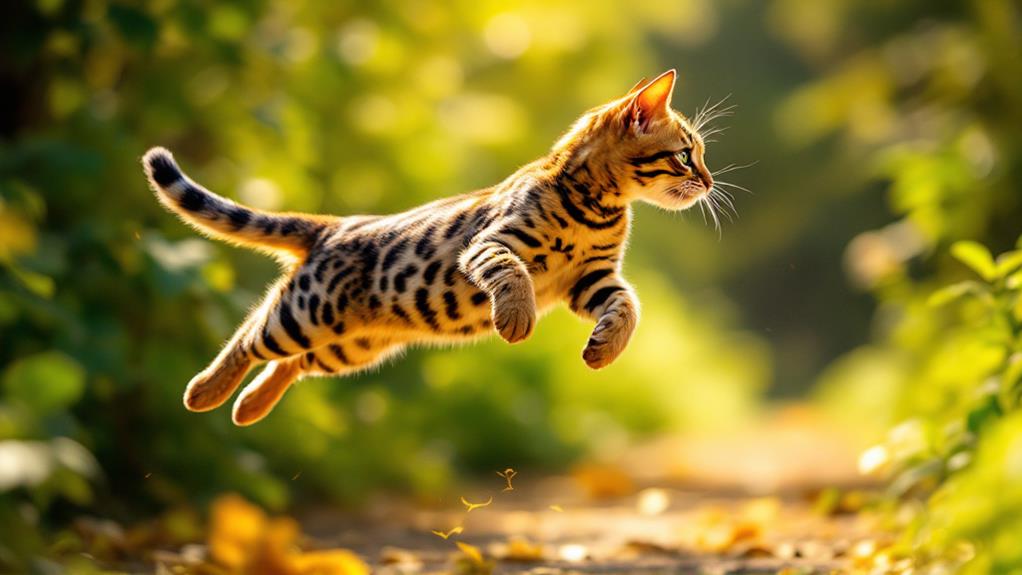
Bengal cats don't just enchant with their striking looks; they also possess an energetic temperament that sets them apart. Their high energy level means they require regular interaction and engagement. Without proper care, they can quickly become bored, leading to undesirable behaviors like scratching or excessive meowing. Their playful nature makes them love activities such as fetch and learning tricks, highlighting their intelligence and enthusiasm to engage in stimulating tasks.
To cater to their active lifestyle, it's crucial to provide Bengal cats with interactive toys. These toys not only keep them entertained but also help channel their high prey drive. Bengals love to climb, so offering vertical spaces like cat trees or shelves can satisfy their curiosity and need to investigate. They often display a confident and alert disposition, frequently getting into playful mischief as they explore their surroundings.
Furthermore, Bengal cats thrive in homes where they receive ample attention and stimulation. Their sociable nature makes them ideal companions for active families. By incorporating fun activities and regular exercise into their routine, you'll guarantee your Bengal remains happy, healthy, and well-behaved, making them the perfect mini-leopard of the house.
Essential Care Tips
Caring for a Bengal cat involves understanding their unique needs to guarantee they thrive. As a member of the Bengal breed, your cat requires specific attention to their diet, grooming, and mental well-being. A high-quality diet rich in protein is fundamental to support their active lifestyle and muscular build. Despite their low shedding tendencies, regular brushing helps maintain their coat, preventing matting and keeping their fur in top shape.
Providing mental stimulation is crucial to prevent boredom and the development of troublesome behaviors. Engaging your Bengal with puzzle toys and interactive play sessions keeps their agile minds occupied and satisfied. These cats are natural climbers, so offering vertical spaces like climbing trees and scratching posts enriches their environment and allows them to enjoy high vantage points.
Routine veterinary check-ups are another significant aspect of Bengal care. These visits help address any breed-specific health concerns and guarantee a long, healthy life, typically ranging from 12 to 16 years. To summarize, here are fundamental care tips for your Bengal cat:
- Offer a high-quality diet with balanced protein.
- Brush regularly despite their low shedding.
- Engage with puzzle toys and interactive play.
- Provide climbing trees and vertical spaces.
- Schedule routine veterinary check-ups.
Choosing the Right Bengal
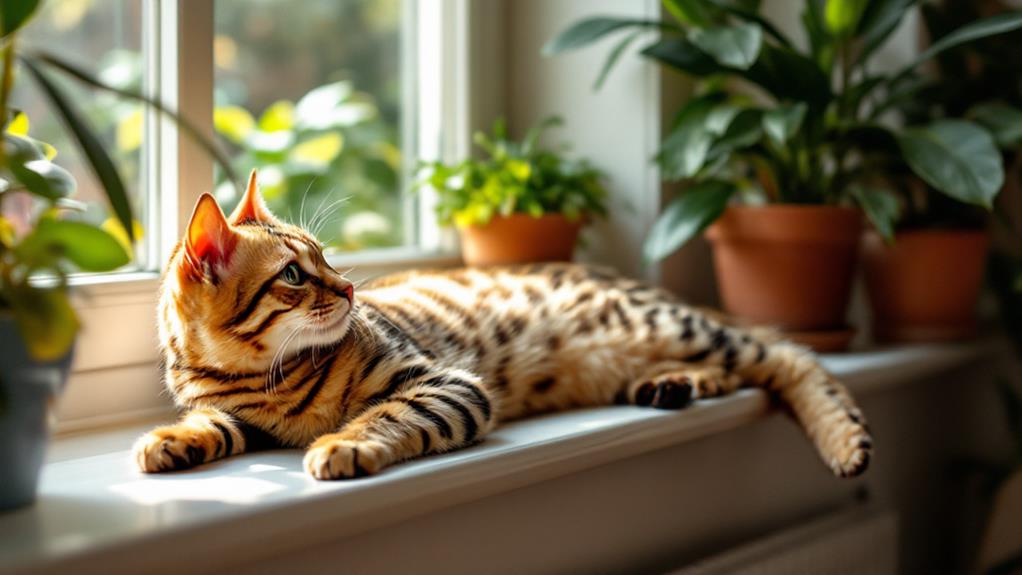
Understanding your Bengal cat's care needs guides you toward choosing the right one for your home. Bengals are not your average domestic cat; they're a bundle of energy with a playful nature. When selecting a Bengal kitten, take into account their need for regular interaction to keep boredom and destructive behaviors at bay. Their energetic spirit means they thrive in environments where they can play and investigate.
Bengals are also highly intelligent, making them quick learners for tricks and games like fetch. You'll want a Bengal that matches your desired level of interaction and training. Size is another factor; males usually weigh around 10 pounds, while females range between 7 to 9 pounds. Make certain the size fits your living environment comfortably.
Their striking coat patterns are another aspect to reflect on. Bengals come in a range of colors, including brown, silver, and snow variants. Choosing a pattern and color that appeals to you can improve your enjoyment of their beauty. It's essential to research breeders thoroughly, guaranteeing you're adopting a Bengal at least four generations removed from its wild ancestors. This guarantees a well-socialized cat with a temperament suited for domestic life.
Fun Facts and Trivia
Plunge into the fascinating world of Bengal cats, where their unique love of water sets them apart from most felines. Imagine a cat that joyfully splashes in puddles or joins you in the shower; that's the Bengal for you. Their playful nature is coupled with an energetic disposition, making these little leopards a delight to have around. Bengalis are a smart bunch, often engaging in games like fetch and learning tricks with ease.
- Bengal colors: Their coats, inspired by the Asian Leopard cat, often glitter in the sunlight, with distinct rosettes and spots.
- Vocal cats: These felines are known for their expressive range of sounds, including chirps and trills, making them quite the conversationalists.
- Playful nature: Bengals thrive on playtime, requiring ample activities to keep their energetic spirits satisfied.
- Unique love of water: Unlike many cats, Bengals enjoy water, making bath time less of a hassle.
- Health issues: While generally healthy with a lifespan of 12 to 16 years, they're susceptible to hereditary health issues, so regular vet visits are essential.