Basenji: The Clever and Endearing African Hunting Dog
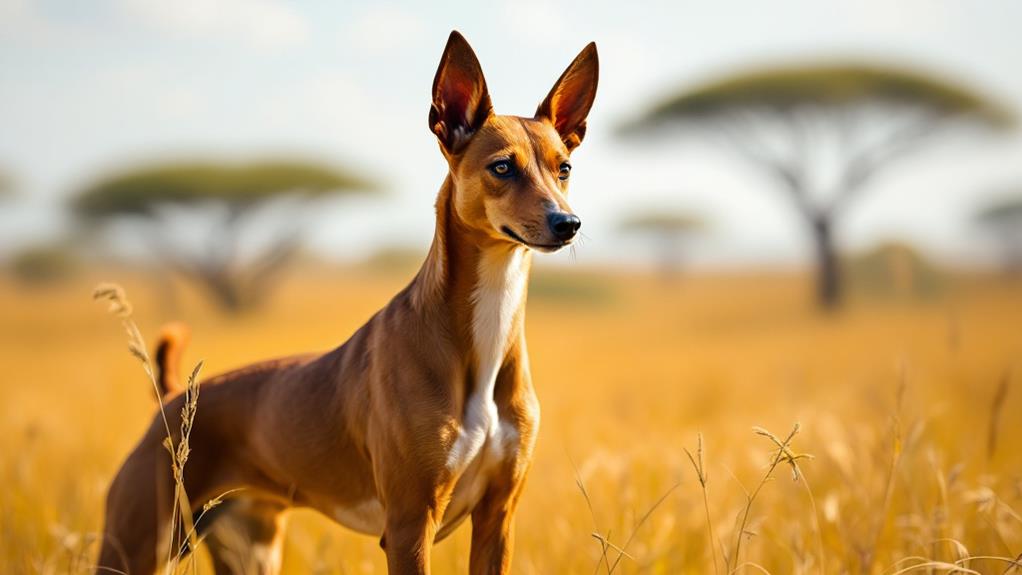
Uncover the Basenji, a clever and charming African hunting dog known for its silence and agility. This medium-sized breed doesn't bark but communicates with unique howls and yodels. With an athletic build, expressive dark eyes, and a curled tail, Basenjis are both endearing and independent. They bond deeply with families, requiring daily exercise and mental challenges to prevent mischief. However, their independence can be challenging for novice owners. Health check-ups are crucial, and their grooming is easy. Secure your home, as their prey drive and escape tendencies are notable. There's much more to reveal about this fascinating breed.
Breed Overview
In the world of canine companionship, the Basenji stands out as a distinctive blend of intelligence and independence. This medium-sized breed, often referred to as the "African Barkless" dog, is truly one of a kind among dog breeds. Males typically weigh around 24 pounds while females average 22 pounds, with both standing between 16 to 17 inches tall. Despite their compact size, Basenjis are known for their robust and athletic build.
Unlike other dog breeds, the Basenji dog is famous for its lack of barking. Instead, they communicate through unique vocalizations that include howls and yodels, thanks to their flattened larynx. This feature sets them apart and adds to their charm as companions. With a life expectancy of 13 to 14 years, these dogs offer many years of loyalty and adventure.
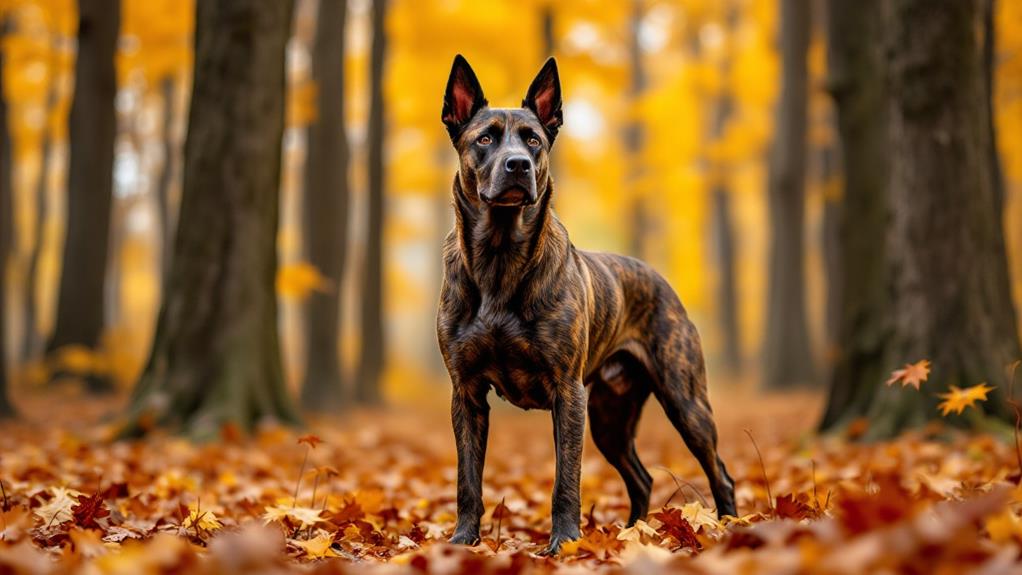
Their short, fine coat comes in stunning varieties like chestnut red, black, tricolor, or brindle, all adorned with striking white markings on their feet, chest, and tail tip. As members of the Hound Group according to the American Kennel Club, Basenjis are best suited for active owners who can provide the exercise and mental stimulation they crave.
Unique Traits
With their distinctive features and behaviors, Basenjis truly stand out among dog breeds. Known as Africa's barkless dog, they produce unique vocalizations like howls and yodels instead of barking. This is due to a flattened larynx, setting them apart from other dogs. If you're ever around Basenji-like dogs, you'll notice these sounds create a delightful and unusual atmosphere. Their compact, athletic build, coupled with a wrinkled forehead, curled tail, and dark eyes, makes them visually striking. These features aren't just for show; they're functional hunters.
Basenjis possess a strong prey drive, so they require significant exercise and mental stimulation. Activities like lure coursing and agility training are ideal for keeping them engaged and preventing destructive behavior. You'll find them highly intelligent, but their catlike behavior can make training a challenge. They often resist commands that don't align with their interests, demanding patience and creativity from their owners.
Their affectionate nature towards select individuals, combined with aloofness around strangers, highlights their unique independence and loyalty. These traits make them enchanting companions, offering a blend of charm and challenge that's hard to resist. Owning a Basenji is truly a unique experience.
Ownership Considerations
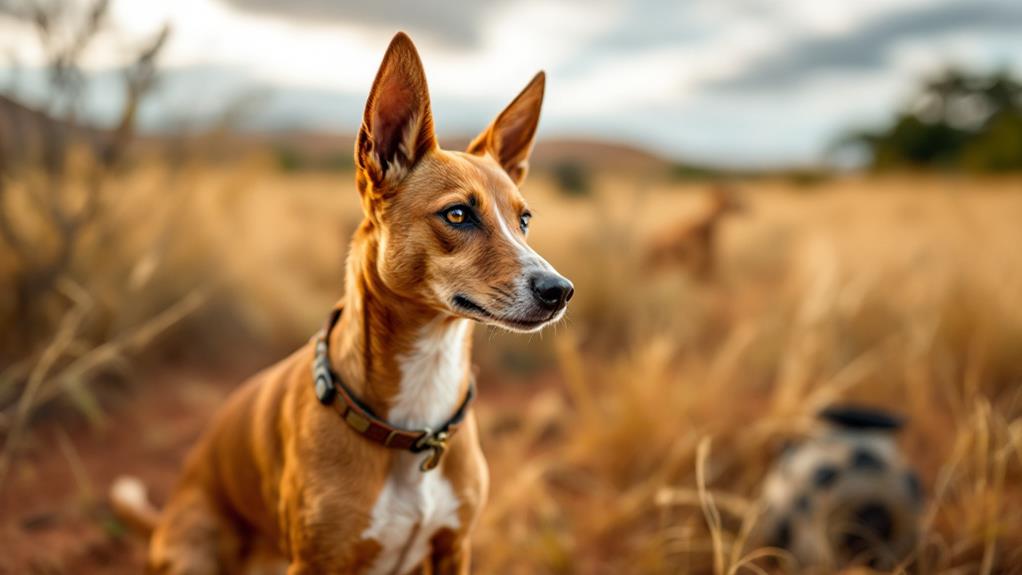
Owning a Basenji requires a commitment to meeting their high energy and mental stimulation needs. This dog breed thrives with active owners who can dedicate at least two 30-minute exercise sessions daily. They're not the best fit for novice dog owners due to their independent and sometimes stubborn nature. You'll need to be consistent with training and socialization to manage these traits effectively.
Basenjis have a high prey drive, so they're prone to chase after small animals, making them less suitable for homes with small children or smaller pets. Their aloofness and potential for destructive behavior if not adequately exercised mean they need a structured and stimulating environment. Secure fencing in your yard is vital, as Basenjis are notorious escape artists. They require supervision during outdoor activities to prevent any unplanned adventures.
Understanding a Basenji's behavior is imperative. If you're considering this breed, be ready to invest time in training and engaging activities. Their unique characteristics demand an owner committed to meeting their specific needs. With the right approach, a Basenji can be a wonderful and fulfilling enhancement to your life.
Physical Characteristics
When you initially lay eyes on a Basenji, its distinct features immediately stand out. This medium-sized dog boasts a short, fine coat that can sport several colors, including a striking chestnut red. The coat often includes white markings on the feet, chest, and tail tip, adding to its unique look. You'll notice the Basenji's compact, muscular build, which showcases its athletic roots. Males typically weigh in at around 24 pounds and reach a height of 17 inches, while females are slightly smaller, averaging 22 pounds and standing 16 inches tall.
A defining characteristic of the Basenji is its erect ears, which contribute to its alert and poised appearance. These ears, coupled with a wrinkled forehead and dark almond-shaped eyes, give the Basenji an expressive and intelligent look. Another hallmark of the breed is its tightly curled tail, which rests elegantly over one hip, a feature that's hard to miss.
The Basenji's agility is evident in its swift trot and effortless stride, reflecting its hunting capabilities. This breed's physical traits are not just for show; they're perfectly aligned with its roles and history.
Personality and Temperament
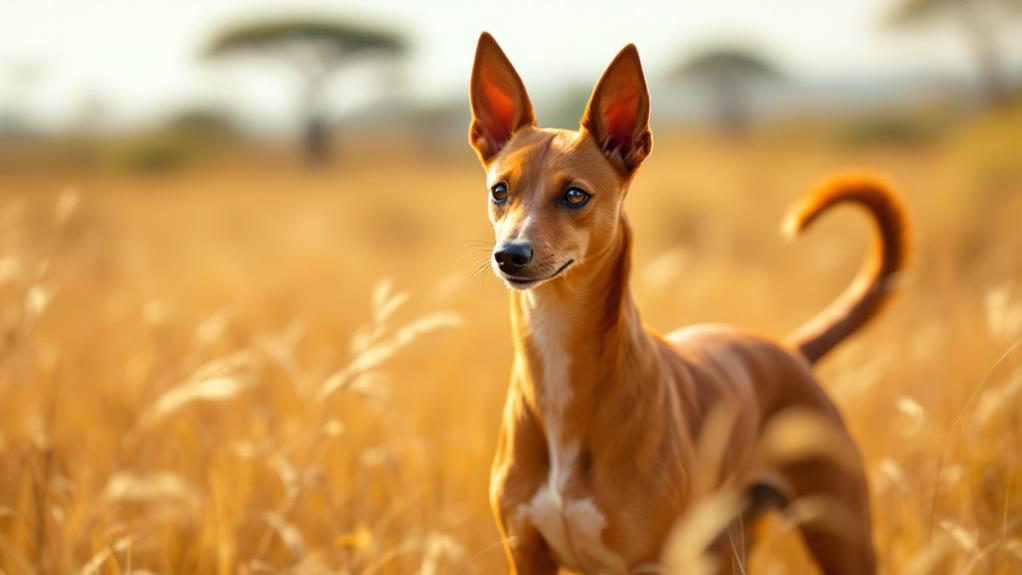
The Basenji's personality is as distinctive as its appearance. You'll find this breed to be a fascinating mix of intelligent problem-solving and independent thinking. Although their cleverness can make them challenging to train, it's also part of their charm. Basenjis often weigh if a command aligns with their interests before deciding to comply. This independent streak means they thrive in environments where their minds are constantly engaged.
Despite their aloofness with strangers, Basenjis are deeply affectionate with their families. They form strong bonds and often seek out physical affection, curling up next to you on the couch or following you around the house. However, their independent nature means they enjoy their own space too, blending dog-like loyalty with feline grace.
To understand a Basenji, consider these emotional highlights:
- Curiosity Released: Their inventiveness can turn into trouble if they're not mentally stimulated.
- Loyal Companions: While they're not fans of strangers, they love their families deeply.
- Aloof Yet Affectionate: They crave your company but also value their independence.
Keep in mind, a Basenji may not be the best fit for homes with small children, but with proper socialization, they can thrive with older kids.
Health and Grooming
Caring for a Basenji involves keeping an eye on a few key health and grooming aspects to guarantee they live a long and happy life. With a life expectancy of 12 to 14 years, regular health check-ups are vital for monitoring their well-being. Basenjis are predisposed to certain health issues, like Fanconi syndrome, so monthly urine tests to monitor glucose levels are important. A proper diet also plays a significant role in maintaining their health. Feed them high-quality dry food, about ¾ to 1 cup daily, to prevent weight gain and make sure they stay fit and active.
When it comes to grooming, Basenjis are relatively low-maintenance. Their short, fine coat requires only occasional brushing to keep it looking sleek and healthy. Baths are needed only sporadically, as they're naturally clean dogs. However, regular nail trimming is vital as overgrown nails can cause discomfort and affect their mobility. Keeping their nails at an appropriate length guarantees they move comfortably and remain active. By paying attention to these health and grooming aspects, you'll help your Basenji thrive, giving them the best chance to enjoy a long, happy life as your clever and endearing companion.
Training and Activities

Proper care for a Basenji doesn't stop at health and grooming; their intelligent and independent nature demands a thoughtful approach to training and activities. You'll find that consistent training is vital for these clever companions. Positive reinforcement works wonders, helping them understand and respond better. With high energy needs, Basenjis require daily exercise, ideally two 30-minute sessions, to keep them happy and prevent destructive behavior. They excel in advanced obedience when given the chance to engage in lure coursing and nosework, thanks to their speed and sharp sense of smell.
Early socialization is significant to guarantee your Basenji grows into a well-adjusted companion. It helps mitigate potential food guarding behaviors, making interactions smoother. Advanced obedience training, combined with patience, can lead to impressive results. Watch as your Basenji navigates agility courses with their athletic prowess, turning training into an engaging activity for both of you.
Consider these moments that capture the Basenji spirit:
- The joy of a Basenji mastering a new trick, eyes gleaming with pride.
- The thrill of watching them chase a lure, agile and determined.
- The bond strengthened through shared adventures and training triumphs.