Australian Cattle Dog: The Alert and Curious Herding Companion
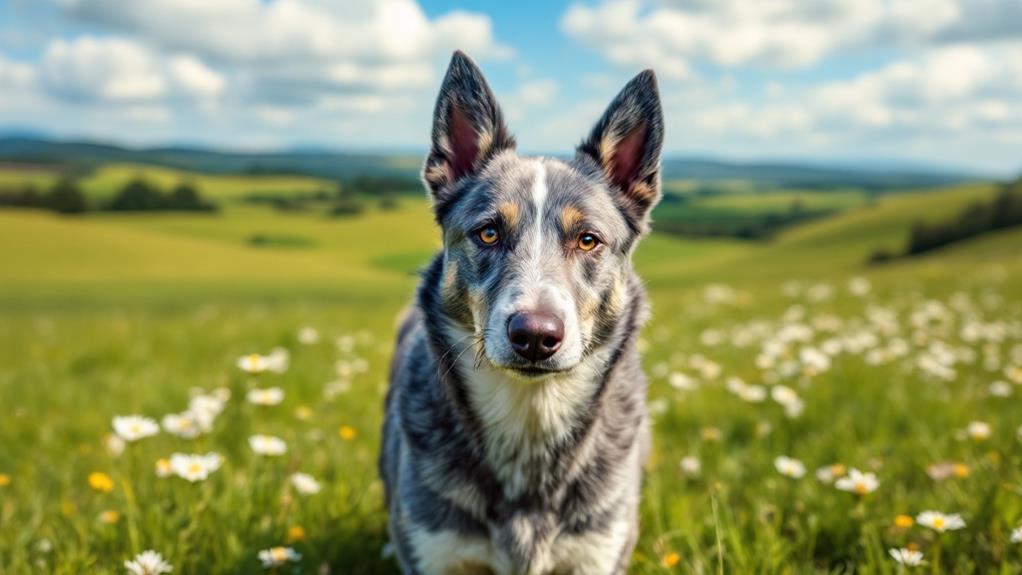
You'll love the Australian Cattle Dog for its alertness and curiosity, making it a splendid herding companion. Bred for the rugged Australian outback, these dogs are energetic and intelligent, requiring daily engagement. Their muscular build and striking blue or red coats make them stand out, while their loyalty and protective instincts make them devoted friends. They thrive with consistent training and vigorous exercise, and they're happiest in active households. Keep them mentally stimulated to avoid boredom. For those keen to understand these traits better, uncover how this breed balances work, companionship, and spirited nature.
History and Development
The Australian Cattle Dog, developed in the early 19th century, is a demonstration of innovation in breeding for specific needs. You might be fascinated to learn that this breed was specially crafted to thrive in the harsh conditions of the Australian outback. To achieve this, Blue Merle Collies were crossed with Dingoes, and later mixed with Dalmatians, Bull Terriers, and Kelpies. The aim was to create a dog with intelligence and resilience—traits Australian Cattle Dogs require to manage cattle efficiently.
When you look at the role these dogs played, it's clear they were indispensable to the burgeoning beef industry. Bred to herd cattle across vast and unforgiving landscapes, they became known for their unmatched herding capabilities. It's no surprise that their influence was so profound that the American Kennel Club recognized the breed in 1980, placing them firmly in the Herding Group.
These dogs, often called Blue Heelers or Queensland Heelers, reflect their origins and color variations. Their history is a reflection of the ingenious crossbreeding efforts to meet the needs of the time, showcasing how necessity can drive innovation.
Physical Traits
When you observe an Australian Cattle Dog, you'll notice their robust physical presence immediately. This breed typically weighs between 30 to 50 pounds and stands 17 to 20 inches tall. Males are usually larger than females, but both genders share a muscular build that closely resembles their Dingo ancestors. This compact and powerful physique contributes considerably to their agility and strength, making them excellent herding companions.
Their coat is another remarkable physical trait. It's short, dense, and weather-resistant, perfectly suited for different climates. You'll often see them in striking colors like blue or red, with unique speckled or mottled patterns that add to their distinctive look. Notably, Australian Cattle Dog puppies are born all white and gradually develop these characteristic colors as they mature.
Distinctive upright ears and a strong, broad head define their facial features. The breed's oval dark eyes reflect their intelligence and alertness, crucial traits for their herding duties. These physical traits not only improve their appearance but also equip them for the demanding tasks they were bred to perform. Observing an Australian Cattle Dog, you'll appreciate their blend of beauty, strength, and functionality.
Temperament and Behavior
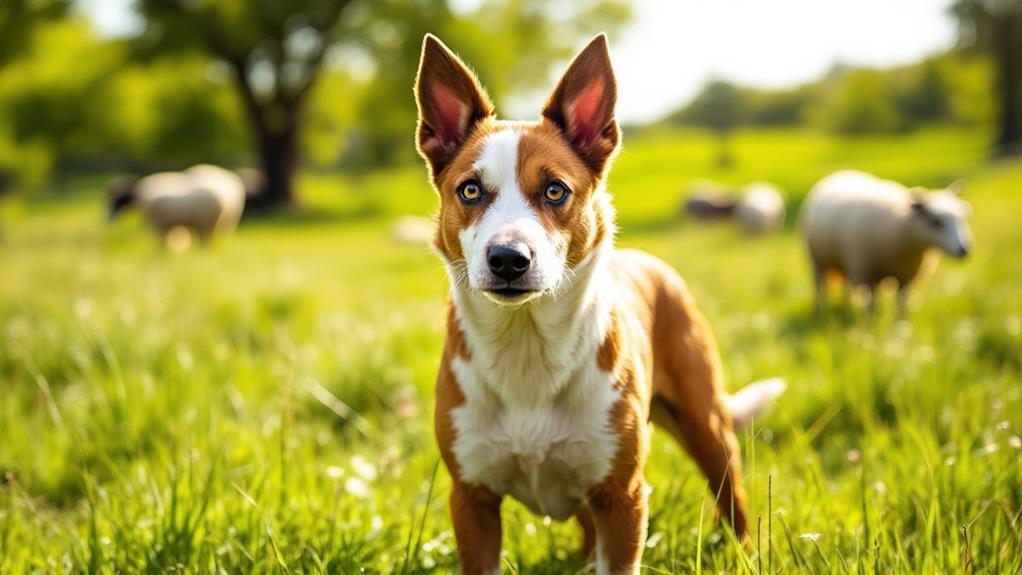
Known for their spirited and intelligent nature, Australian Cattle Dogs (ACDs) demand both mental and physical engagement to truly thrive. Their high energy levels mean they're always ready for action, requiring activities that challenge both their bodies and minds. Without this stimulation, they can become bored and may develop unwanted behaviors. You'll find that they have an independent streak, a trait that makes them both intriguing and sometimes challenging companions.
ACDs are incredibly loyal, often forming deep bonds with their primary owner. This loyalty earns them the nickname "shadow dogs," as they love to stay close by your side. Their protective instincts can make them wary of strangers, so early socialization is vital. This helps prevent potential aggression and guarantees they're comfortable in different situations.
Proper training is key to manage their herding instincts, which can manifest as nipping, especially towards children and other pets. With the right guidance, you can redirect this behavior positively. Keep in mind that these dogs don't do well when left alone for extended periods. Without companionship and engagement, they might develop separation anxiety, leading to destructive behaviors in your absence.
Health Considerations
Many Australian Cattle Dogs (ACDs) enjoy a long and healthy life, typically ranging from 12 to 16 years, when given proper care. To guarantee your ACD thrives, it's important to stay vigilant about potential health issues. While they're generally robust, ACDs can be prone to genetic conditions like hip dysplasia and Progressive Retinal Atrophy (PRA). PRA is an eye disorder that can lead to vision loss over time. Responsible breeding practices are crucial to minimize these risks, so choosing a breeder who conducts thorough health screenings is significant.
Another concern for ACDs is color-related deafness. Reputable breeders will conduct hearing tests on puppies before they're adopted to make sure you're informed about any hearing impairments. Regular veterinary check-ups are fundamental for early detection of health issues, helping to maintain your dog's general well-being.
Diet plays a significant role in your ACD's health. A balanced diet tailored to their activity level supports their energy needs and keeps them in peak condition. Don't overlook dental care—regular brushing and check-ups can prevent dental issues, guaranteeing your ACD's mouth stays as healthy as the rest of them.
Training and Exercise
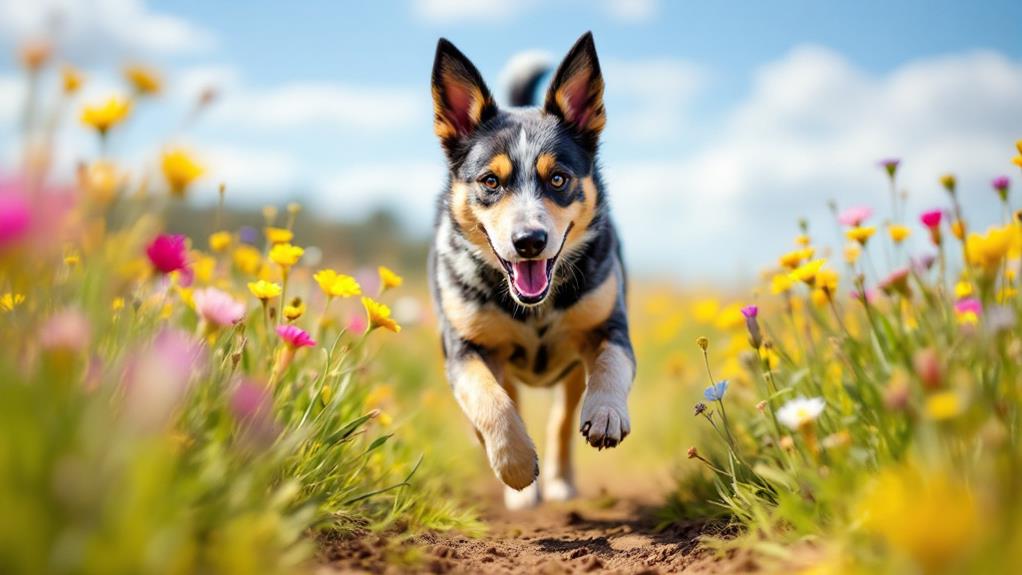
Australian Cattle Dogs (ACDs) demand an active lifestyle, making daily rigorous exercise a necessity to satisfy their high energy levels and prevent behavioral problems. You should aim for at least 60 minutes of vigorous exercise each day. This isn't just about keeping them fit; it's vital for their mental health too. ACDs thrive on mental stimulation, so incorporating agility training and interactive play can channel their energy productively. Here's how you can engage them:
- Agility Courses: Set up a backyard course or take them to a local club. It challenges their mind and body.
- Herding Activities: If possible, introduce them to herding trials. It's in their nature, and they'll love it.
- Interactive Toys: Use puzzle toys to keep their minds sharp during downtime.
Training should be consistent and based on positive reinforcement, capitalizing on their intelligence and strong work ethic. Start obedience training early to instill good manners and focus their energies positively. Don't forget socialization from a young period. Expose your ACD to different environments, people, and animals to counteract their natural wariness of strangers. Engaging in structured activities like obedience competitions not only meets exercise needs but also strengthens your bond.
Choosing the Right Companion
While training and exercise are fundamental to keeping your Australian Cattle Dog (ACD) happy and healthy, choosing the right companion starts before you even bring them home. Consider their high energy levels and the need for constant activity; they're best suited for active families or individuals who enjoy an active lifestyle. You should look for a reputable breeder who prioritizes health and temperament. Make certain the puppy has undergone health screenings for common genetic issues like hip dysplasia and Progressive Retinal Atrophy (PRA).
Early socialization is essential, so prepare to expose your ACD to a variety of people, pets, and environments early on. This exposure helps them develop into well-rounded adults. ACDs thrive in homes with large, securely fenced yards, giving them ample space to run and play. As a result, they're not well-suited for apartment living.
Don't overlook the option of adopting from rescue organizations. This can provide a loving home for an ACD while making sure you're ready for the breed's unique needs and characteristics. Thorough research and preparation will guarantee that both you and your ACD have a fulfilling and active life together.