Are Muzzles Necessary Today? When and How to Use Them Safely
Muzzles are vital today for managing canine behavior and ensuring safety in any situation where a dog might feel stressed or threatened. Proper use involves a well-fitted basket muzzle, allowing your dog to pant, drink, and receive treats comfortably. They're important during vet visits, training for aggressive tendencies, or even legally required for some breeds in public spaces. Avoid using muzzles as long-term solutions for underlying issues or punishment, as this could induce anxiety. Introduce them gradually with positive reinforcement to foster acceptance. If you're aiming for a deeper understanding, there's much more to investigate on using them effectively.
Key Takeaways
- Muzzles are necessary for managing aggressive behavior and preventing bites in stressed or injured dogs.
- Properly fitted basket muzzles allow dogs to pant, drink, and accept treats, ensuring safety and comfort.
- Muzzles are beneficial during vet visits, grooming, and legally required situations for certain breeds.
- Incorrect use can escalate anxiety; muzzles should not replace behavioral modification training.
- Gradual introduction with positive reinforcement normalizes muzzle use and prevents negative associations.
Understanding Dog Muzzles
Dog muzzles are often viewed as simple tools, yet their role extends far beyond just managing aggressive behavior. You might think muzzles are only for aggressive dogs, but they can be a beneficial tool for any dog, including those that could bite when stressed or injured. Muzzle training is vital for ensuring that your dog doesn't associate the muzzle with punishment. When you introduce the muzzle gradually and use positive reinforcement, you help your dog see it as a normal part of their routine.
Understanding that muzzles contribute to the safety of the dog is fundamental. A properly fitted basket muzzle allows your dog to pant, drink, and even accept treats, which is key to maintaining comfort. It's also significant to keep in mind that muzzles shouldn't be used as a solution for behavioral problems. Instead, they serve as a temporary safety measure in specific situations, such as vet visits or when handling a dog with a history of aggression.
Appropriate Muzzle Situations
In many situations, muzzles play a crucial role in guaranteeing safety for both dogs and those around them. When dealing with aggressive dogs, a muzzle can be an important tool to prevent bites, especially in emergencies. If your dog is injured or scared, their natural reaction might be to bite, so using a muzzle can protect both you and the professionals handling them. Muzzles also come into play during vet visits or grooming sessions, where the environment may cause anxiety and stress, leading to potential biting incidents.
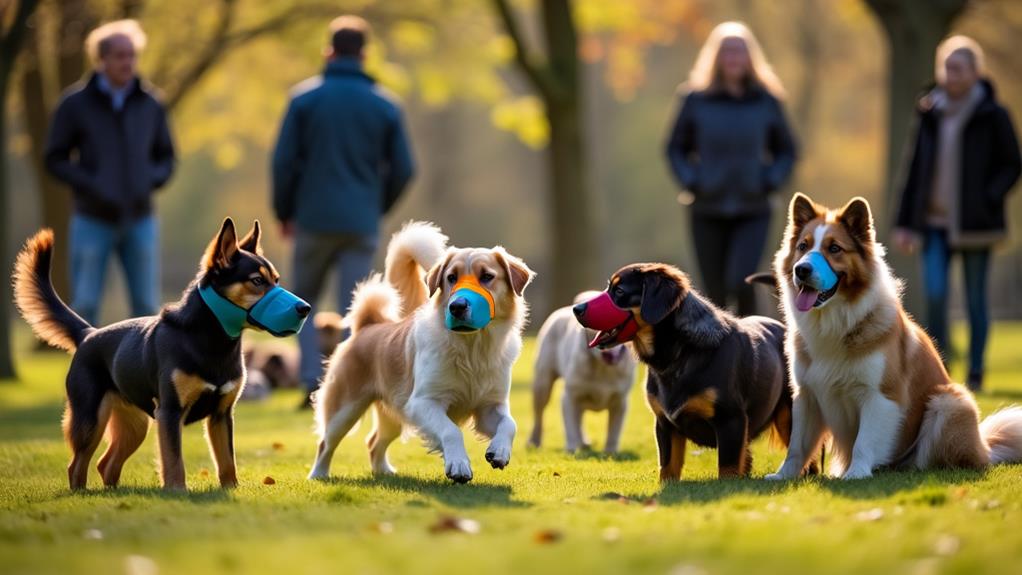
For dogs with a history of aggression, muzzles are not just a precaution but also an effective training tool. They create a safer environment for behavior modification efforts, allowing trainers to work on reducing aggression without the risk of injury. Furthermore, some breeds are legally required to wear muzzles in public due to breed-specific legislation. This guarantees community safety and helps prevent incidents in crowded areas.
Consider using muzzles in these situations:
- Handling emergencies with injured or frightened dogs
- Training aggressive dogs in a controlled setting
- Complying with breed-specific legislation in public spaces
Inappropriate Muzzle Use
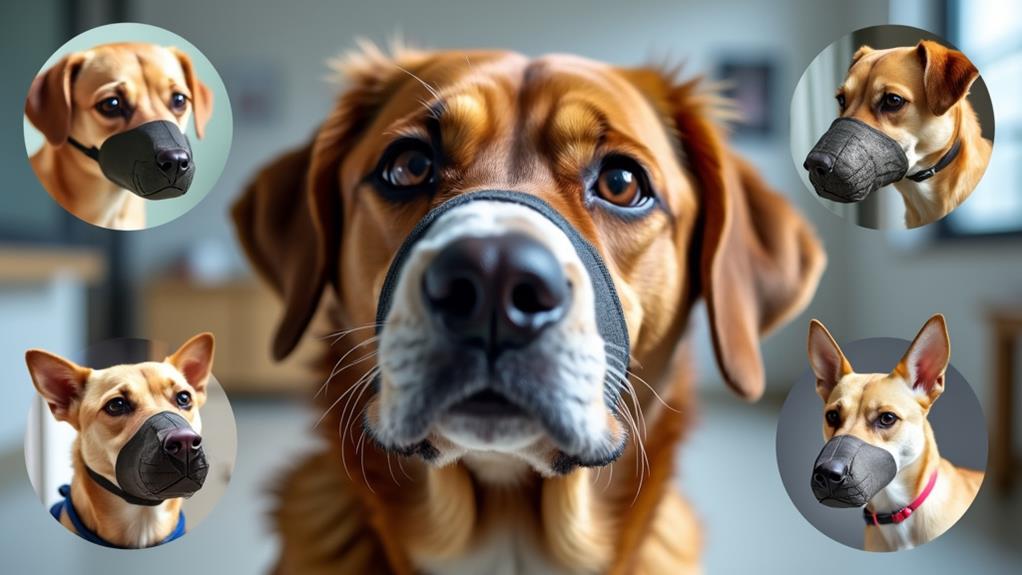
Misuse of muzzles can lead to significant problems. When you use a muzzle incorrectly, it can escalate your dog's anxiety, potentially causing more aggressive behavior. It's essential to understand that relying on muzzles as a form of punishment is considered inappropriate muzzle use. This tactic not only fails to solve the issue but can also worsen it by making your dog more fearful and stressed.
Instead of relying on muzzles to tackle behaviors like barking or chewing, focus on behavioral modification through consistent training. Muzzles are not a magic fix and shouldn't be seen as a substitute for addressing the root causes of your dog's behavior. Using them as a quick fix can mask underlying issues, preventing you from finding a long-term solution.
Muzzles are designed for short-term use and must be used under supervision. If you put one on your dog during inherently stressful situations, you're likely to create negative associations with the muzzle. This can make future attempts to use it even more challenging. Remember, muzzles are tools meant for specific scenarios, not a replacement for proper training and behavior management. Prioritize your dog's comfort and safety by using muzzles appropriately.
Types of Dog Muzzles
Having addressed the pitfalls of inappropriate muzzle use, let's investigate the different types of dog muzzles and their applications. Understanding the distinct features of basket muzzles and soft muzzles can guide you in making the right choice for your dog. Basket muzzles are an excellent option for longer activities like walks or park visits. They allow your dog to pant, drink, and even accept treats, guaranteeing muzzle fit and comfort. This makes them a preferred choice for situations requiring extended wear.
In contrast, soft muzzles are designed to close your dog's mouth, restricting panting. They're best for short durations, such as a brief vet visit. It's essential to ascertain that the fit allows some room for comfort, such as one finger's width under the straps, to minimize distress.
For emergencies, a homemade muzzle can be crafted using available materials. However, this should only be a temporary solution until you can obtain a proper muzzle.
Consider these points when selecting a muzzle:
- Basket muzzles provide comfort and allow natural behavior.
- Soft muzzles are suitable for short-term use.
- Proper fit and comfort prevent distress and guarantee safety.
Muzzle Training Basics

To guarantee your dog is comfortable with a muzzle, start by introducing it in a positive and stress-free manner. Begin muzzle training by letting your dog sniff the muzzle, rewarding them with treats to establish a positive association. This initial step sets the foundation for a successful experience.
Next, gradually progress by gently touching the muzzle to your dog's face. Reward calm behavior, helping them acclimate without stress. Make certain this process is slow and patient, as your dog's comfort is key to successful muzzle training. Encourage your dog to insert their nose into the muzzle voluntarily, offering treats each time they do. Repeat this step until they show comfort and willingness to wear it.
Once your dog is comfortable with the muzzle on their nose, secure it briefly and provide treats through the muzzle. This reinforces the experience positively, highlighting that wearing a muzzle leads to rewards. Increase the duration of muzzle wear gradually over time, guaranteeing that training sessions remain short and frequent. This gradual increase keeps your dog's interest and reduces anxiety. By following these steps, you'll guarantee that your dog views the muzzle as a positive and rewarding part of their routine.
Proper Muzzle Fit
For your dog's comfort and safety, getting the proper muzzle fit is vital. A well-fitted muzzle guarantees your dog can still pant, drink, and even enjoy treats. The basket muzzle is highly recommended for these reasons, making it comfortable for your dog while providing security. To achieve the proper fit, measure your dog's snout length and circumference accurately. This helps you select the right size, preventing discomfort and chafing. Remember, there should be enough space for one finger between the muzzle and your dog's face. This guarantees comfort and prevents any rubbing or sore spots.
Checking the fit regularly is also significant. Your dog's face shape might change due to weight fluctuations or maturation, affecting how the muzzle fits. Adjustments may be needed to keep it comfortable for your dog. Keep these tips in mind:
- Measure your dog's snout length and circumference before purchasing.
- Regularly check the fit, especially if your dog's weight or maturity changes.
- Choose a basket muzzle for maximum comfort and functionality.
Proper muzzle fit isn't just about safety; it's about guaranteeing your dog's overall well-being while wearing it.
Professional Training Advice
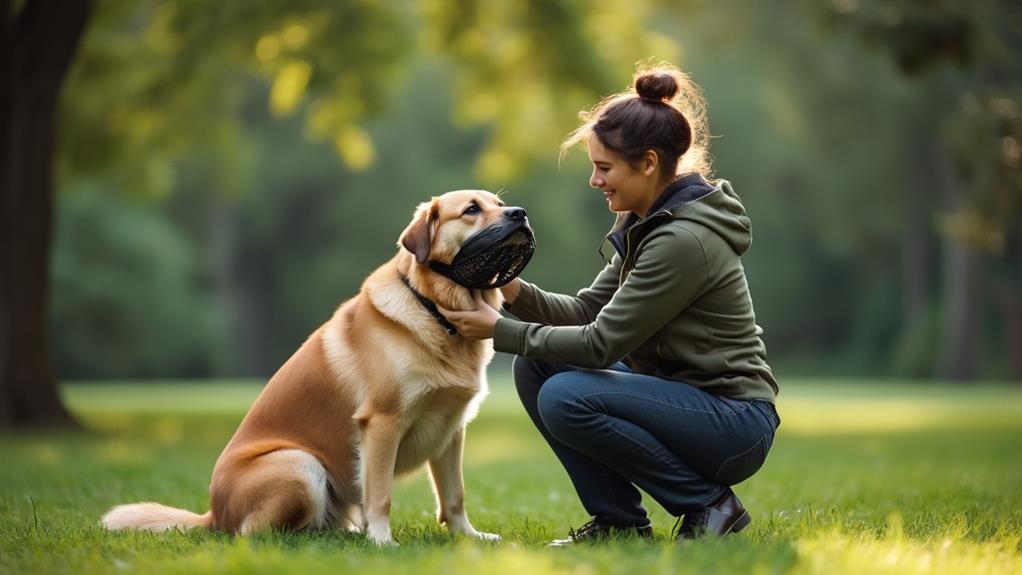
Ensuring a proper fit is just one part of the equation regarding muzzle use. Professional training advice is vital to help your dog accept a muzzle without stress. Trainers suggest early exposure paired with positive reinforcement techniques. This approach can greatly reduce any anxiety your dog might feel, making muzzle use a more positive experience.
Customized training plans crafted by experts can address your dog's unique needs, ensuring that the acclimation process is both effective and comfortable. These plans often incorporate methods to help your dog associate the muzzle with positive experiences, like treats or playtime, making the adjustment smoother.
Proper fitting is fundamental. Trainers advise that the straps should allow for one finger's width for comfort, ensuring that the muzzle isn't too tight. Accurate measurements are vital before you select a muzzle, to guarantee a snug yet comfortable fit.
Moreover, professional guidance helps you understand the appropriate situations for muzzle use, such as during vet visits, grooming, or behavior modification. Regular consultations with trainers provide ongoing support, ensuring that muzzles supplement, and don't replace, consistent training efforts with your dog. This holistic approach promotes safety and well-being for both you and your pet.
Common Muzzle Misconceptions
While many people think muzzles are only for aggressive dogs, they're actually useful for non-aggressive dogs too. A muzzle on your dog can prevent dog bites and keep your pet from ingesting harmful objects during walks. Let's address some common muzzle misconceptions.
A prevalent misunderstanding is that a dog wearing a muzzle has a history of biting. In truth, muzzles often serve as a preventive measure for dogs that have never bitten anyone. It's about ensuring safety and preventing potential issues, not necessarily about past behavior.
Another misconception is that muzzles are cruel. When you choose a well-fitted muzzle, your dog can still pant, drink, and accept treats. This makes muzzles a comfortable option, especially during stressful situations such as vet visits or grooming.
Lastly, people often believe muzzles are only for short-term use. However, basket muzzles, when properly fitted, can be worn comfortably for longer periods. This allows your dog to engage safely in different environments without feeling restricted.
- Prevention is key: Muzzles help prevent accidents before they happen.
- Comfort matters: A well-fitted muzzle allows natural behaviors.
- Proactive use: Conditioning your dog to a muzzle can reduce anxiety.
Additional Behavior Resources

Understanding the proper use of muzzles is just one step in fostering a positive relationship with your dog. To effectively address behavior issues, accessing a variety of behavior resources is essential. You can find valuable information in online articles and training videos that explore behavior modification techniques. These resources can guide you in understanding and training your dog more effectively.
Engaging with a professional dog trainer provides more personalized support. Trainers can offer insights into behavior modification tailored to your dog's needs, ensuring you're using the most effective methods. Don't hesitate to consult with experts, especially if you encounter challenges that seem difficult to manage on your own.
The behavior pet helpline is another excellent resource offering expert advice on muzzle training and addressing behavior issues. This service can provide you with tailored support, helping you tackle specific challenges you might face with your dog.