Are Cats Really Afraid of Water? Myths and Facts
You might think cats are afraid of water, but it's more about aversion than actual fear. Cats come from ancestors in dry regions, so they prefer to stay dry. They instinctively groom themselves, reducing their need for water. Still, some cats enjoy playing with water, especially running water, which intrigues them. Although domestic cats often avoid water, their wild relatives like tigers and jaguars are avid swimmers. Physical factors like wet fur can cause discomfort, affecting a cat's behavior around water. Understanding these nuances can help if you're curious about how cats truly interact with water.
Nature of Cats and Water
Cats have a complex relationship with water, often misunderstood as fear. However, it's more accurate to say that cats hate getting wet because of their evolutionary background. Originating from arid regions, cats didn't rely on water for hygiene; instead, they evolved to groom themselves using their tongues. This self-cleaning behavior means they naturally avoid water, not out of fear, but due to a lack of necessity. While it's a myth that cats are afraid of water, they generally exhibit an aversion to it, preferring to keep dry.
Despite this aversion, cats are quite capable swimmers. If a cat finds itself in water, it can instinctively swim to safety. This shows that their dislike isn't about an inability to swim but rather a personal choice shaped by instinct and evolution. Notably, individual preferences can vary. Some cats might surprise you by enjoying playful interactions with water. They might splash around or prefer drinking from a running faucet. So, while many cats hate being submerged or wet, it's essential to understand that this behavior is more about personal preference and evolutionary conditioning than fear.
Wild Cat Relatives
While domestic cats often avoid water, their wild relatives demonstrate a fascinating array of water-related behaviors. Big cats like tigers, leopards, and lions not only tolerate water but actually enjoy swimming. They often take a dip to cool off or even engage in water-based activities like hunting. Tigers, in particular, are known for their love of water and can often be seen leisurely swimming across rivers.
Jaguars, another member of the big cats family, are exceptional swimmers. They frequently use water to their advantage, catching prey and maneuvering through their wetland habitats with ease. Their agility in water is unmatched, and it plays a significant role in their hunting strategies.
Fishing cats take water adaptability to another level. These felines are specialized for aquatic environments, thriving in wetlands. They're capable of swimming long distances, showcasing remarkable swimming skills.
The varied water behaviors of these wild cat relatives highlight their adaptability and stand in stark contrast to the typical domestic cat's water aversion. By understanding these instincts and preferences, you can gain insights into the complex relationship between domestic cats and water, shedding light on their unique behaviors.
Ancestry and Evolution
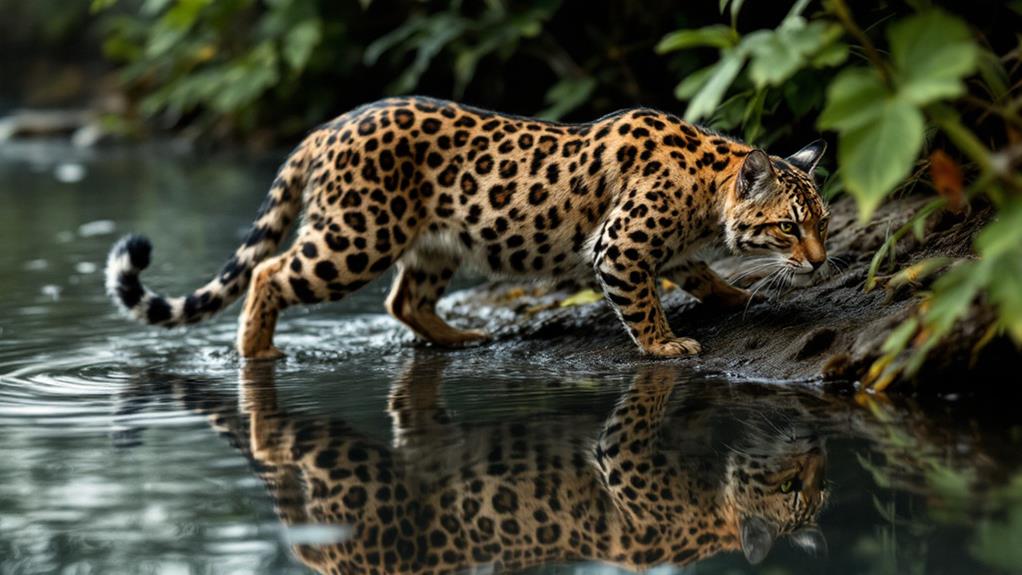
Originating from the dry, arid regions of Egypt and the Middle East, domestic cats developed in environments with minimal water exposure. This historical backdrop plays a significant role in their modern behavior. You might notice that many domestic cats seem to hate water, and this isn't just a coincidence. It's a trait deeply rooted in their ancestry and evolution.
Cats evolved in habitats where water wasn't a vital element for their survival. They became adept at conserving moisture and maintaining cleanliness without the need for regular baths. Their grooming habits, using their tongues to remove dirt and debris, meant they didn't rely on water the way some other animals did. As a result, their ancestors didn't need to adapt to swimming or frequent water exposure.
This evolutionary background is why you see such a wide range of reactions in contemporary cats regarding water. Some might dip a paw in out of curiosity, while others steer clear entirely. Their relationship with water is more about individual preference, shaped by their lineage, rather than a universal fear. So, while not all cats hate water, their history certainly influences their behavior.
Physical Considerations
When you consider a cat's aversion to water, their physical attributes play a significant role. Long-furred cats often hate getting wet because their fur becomes heavy, impairing their swimming ability and making them less inclined to enter water. The added weight can hinder their natural agility, which is something cats value highly. On the other hand, short-furred cats face their own challenges. Once wet, they may lose body heat quickly, leading to discomfort and a resulting dislike for any water exposure.
Cats' heightened sensitivity to smells also affects their interaction with water. They can detect chemical odors that we might miss, and these unfamiliar or unpleasant smells can deter them from wanting to get close to water. This sensitivity is part of their instinctual behavior, guiding them in evaluating environmental safety, including the risks associated with water.
Moreover, the sensation of wet fur can be quite uncomfortable for cats. It can hinder their mobility and warmth, essential factors for their comfort and survival. This general discomfort contributes to a widespread aversion, or even hate, of getting wet, explaining why many cats prefer to stay dry.
Individual Preferences
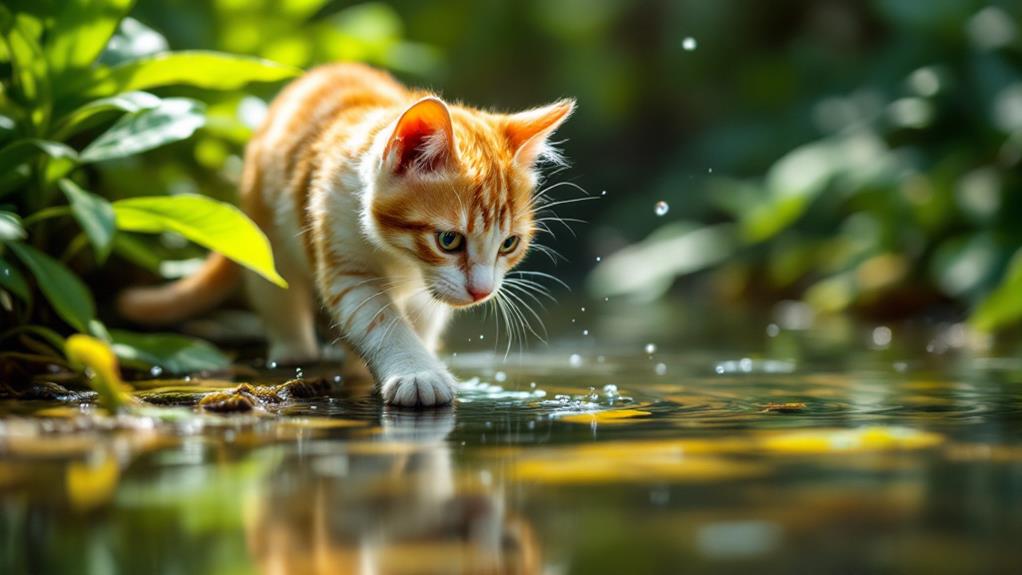
Cats' interactions with water can vary widely, demonstrating that individual preferences play a significant role. You might notice that some cats are fascinated by water, jumping at the chance to bat at droplets or splash around. Others, however, might avoid it entirely. Each cat's personal history influences their relationship with water. A cat that's had negative experiences might develop an aversion, leading to a fear reaction. Conversely, gradual exposure can help build positive associations, making them more comfortable over time.
Understanding these unique preferences is essential for managing their well-being. Not all cats, even within the same breed, share the same affection for water. For example, one Turkish Van may love a swim, while another might prefer staying dry. Here's what you should consider:
- Varied Reactions: Some cats enjoy water, while others don't.
- Past Experiences: Cats with negative water experiences may show fear.
- Breed Differences: Preferences can differ even among the same breed.
- Gradual Exposure: Slowly introducing water can change a cat's perception.
- Respect Preferences: Always honor your cat's comfort levels with water.
Attraction to Running Water
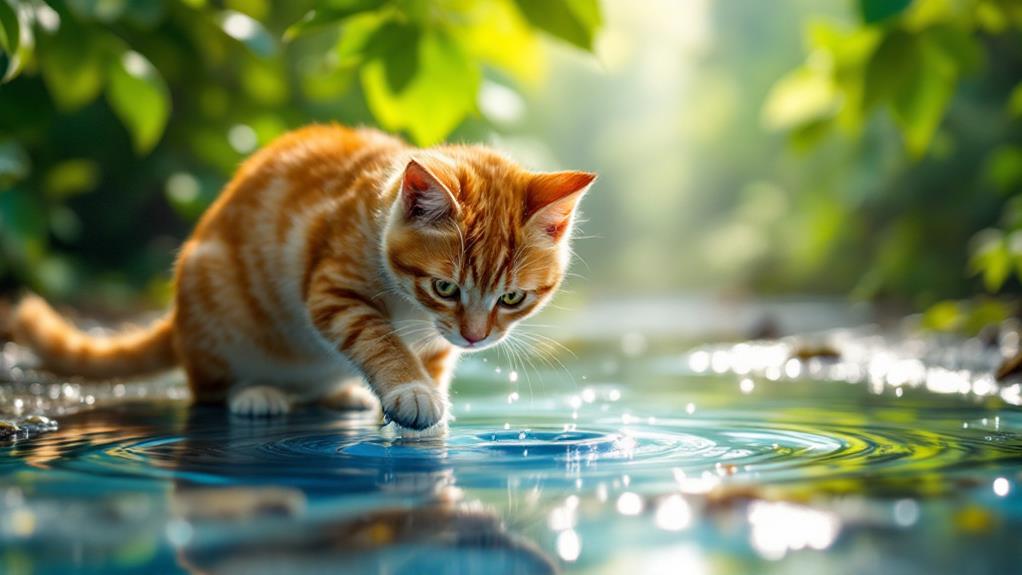
Due to their natural instincts, many cats are drawn to running water, finding it more appealing than stagnant water in bowls. This preference stems from an instinctual belief that running water is fresher and safer. When you see a cat enthusiastically lapping at a faucet or playing near a trickling stream, it's their way of seeking out what they perceive as cleaner water sources. The sound and movement of running water captivate them, triggering their curiosity and prompting playful behavior.
Cats are often seen splashing about or interacting with water, especially when it's moving. This behavior highlights their enjoyment of water play, which is far from the common belief that cats dislike all water. The shimmer and reflections created by running water can be mesmerizing for them, drawing them closer and encouraging exploration. Watching your cat engage with running water is a reminder of their evolutionary traits, where moving water indicated safety and cleanliness.
Discomfort With Getting Wet
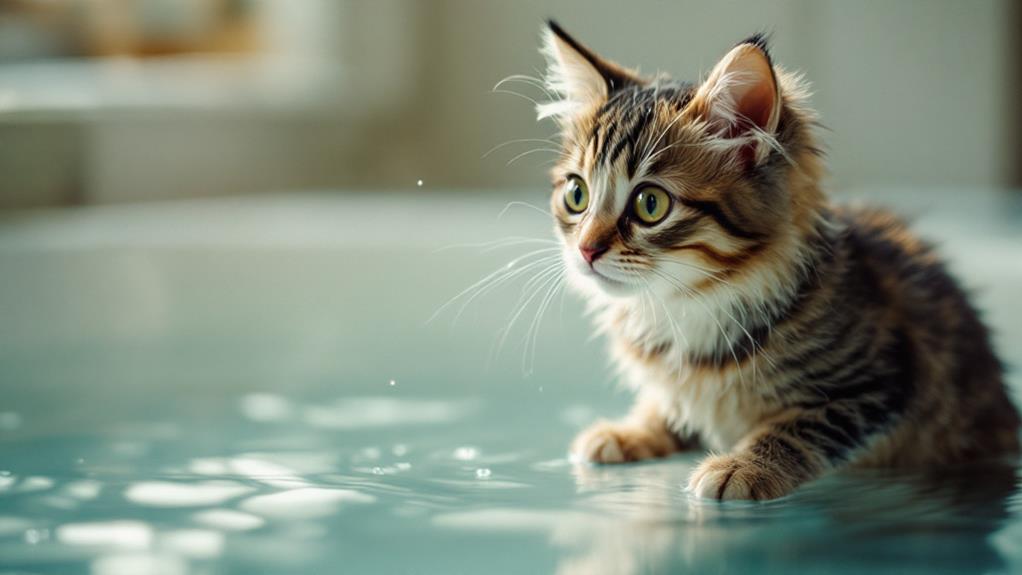
Many cats find getting wet quite uncomfortable, primarily because it disrupts their sense of control and can lead to stress or anxiety. Imagine a cat's sleek, dry coat suddenly drenched—it's not just a matter of feeling wet. Wet fur can hinder their graceful movements and cause them to lose body heat faster than when dry. This loss of control over their environment can make even the calmest cat feel uneasy. Most cats prefer to interact with water on their terms, like playing with a dripping faucet or sipping from a fountain. Being forced into water can provoke negative reactions.
Here are some reasons why cats might experience discomfort with getting wet:
- Loss of Mobility: Wet fur can weigh cats down, limiting their swift movements.
- Temperature Regulation: Cats lose body heat quickly when wet, making them feel cold and uncomfortable.
- Cleanliness Instinct: Cats are careful groomers. Water can disrupt their efforts to keep their coat clean and tidy.
- Past Experiences: Previous negative experiences with water can heighten a cat's discomfort.
- Personal Preferences: Not all cats react the same way—some simply dislike the sensation of being wet more than others.
Understanding these aspects can help you empathize with your furry friend's aversion to water.
Behavioral Insights From Experts
Experts investigate the fascinating world of feline behavior, shedding light on why some cats might shy away from water. Dr. Carlo Siracusa highlights that a cat's aversion to water isn't a universal trait but rather a complex reaction often rooted in individual experiences. You might notice your cat avoiding water because of a past incident that was unpleasant or frightening. Each cat is unique, and their behavior around water is often shaped by these personal experiences.
Dr. Katy Nelson suggests that cats' natural grooming habits play a significant role in their water avoidance. Since they're naturally self-sufficient in cleaning themselves, getting wet could disrupt their pristine appearance, leading them to steer clear of water. For many cats, maintaining their coat's cleanliness is essential, and water might seem like an unnecessary hindrance.
Understanding your cat's behavior and comfort levels around water can help you manage their exposure. If you want to help your cat become more comfortable with water, gradual exposure paired with positive reinforcement is the key. Experts agree that creating positive associations can slowly change their perception, helping them develop a more positive relationship with water over time.
Common Misconceptions
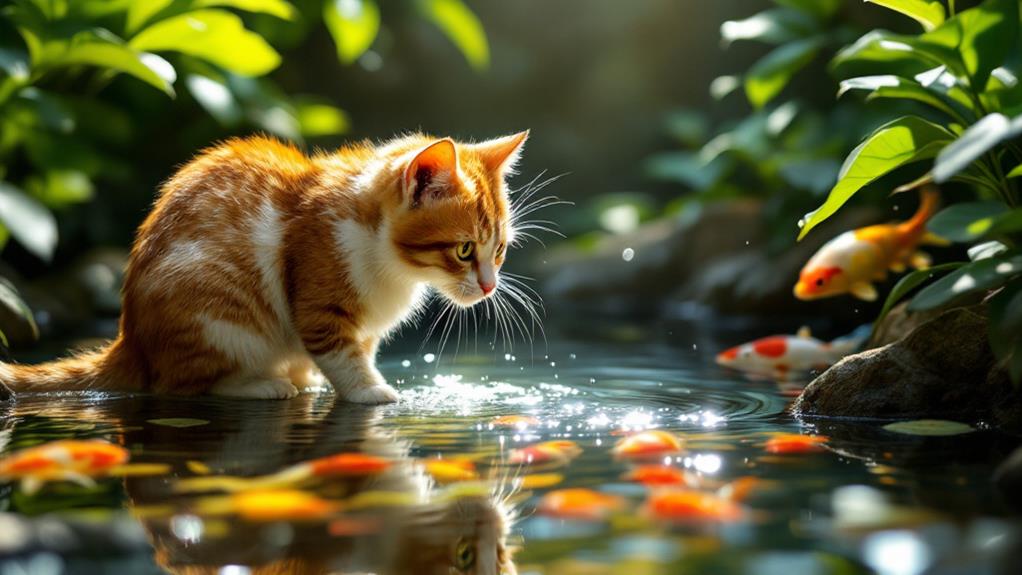
It's a common misconception that all cats despise water. In reality, cats would have diverse preferences, just like humans. While some may avoid water, others might relish in the opportunity to splash around. Understanding these nuances can help you better appreciate your feline friend. Cats often avoid water not because of fear, but due to their desire to maintain cleanliness. They take pride in their grooming, and water can disrupt that careful process. Furthermore, past negative experiences with water can cause a cat to steer clear of it, rather than any inherent fear.
Consider these common misconceptions:
- All cats hate water: Not true—some enjoy water play.
- Cats can't swim: They actually possess natural swimming instincts.
- Water aversion is instinctive: It's often learned from past experiences.
- Turkish Van cats love water: While many do, not every individual will.
- Avoidance means fear: More often, it relates to cleanliness and past experiences.
Understanding these points helps dispel myths. Next time you're around a cat, keep in mind that they might surprise you with their unique approach to water. Each cat's relationship with water is as individual as its personality.