Adopting an Older Cat: Tips for a Smooth Transition
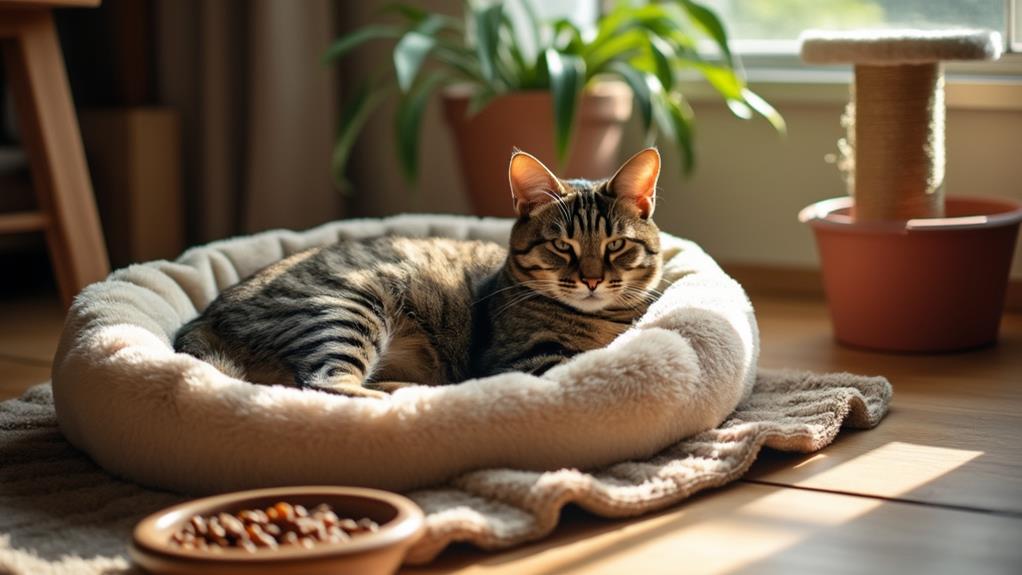
Adopting an older cat can be a rewarding and smooth experience with a little preparation. Start by creating a comfy, secure environment tailored to their needs, using items like a sturdy litter box and quiet resting spots. Initially confine your new furry friend to one room to help them adjust. Carefully introduce them to other pets by scent swapping and controlled meetings. Maintain a calm atmosphere to ease stress, and establish consistent routines for feeding and playtime. Watch for their cues to guarantee they're settling in comfortably. By following these steps, you'll foster a peaceful change and learn even more.
Key Takeaways
- Confine the new cat to one room initially to help them acclimate without feeling overwhelmed.
- Introduce existing pets by exchanging scents and using barriers for safe, gradual exposure.
- Provide a quiet, comfortable space with essentials like food, water, and a litter box.
- Maintain a calm environment and allow the cat to explore and adjust at their own pace.
- Establish a consistent routine to provide stability and reduce anxiety for the older cat.
Benefits of Adopting Senior Cats
Taking the plunge to adopt a senior cat can bring numerous benefits that you might not have considered. Older cats, typically in their sixth year and up, often come with established personalities, making it easier for you to find the perfect companion to fit your lifestyle. You'll know if the cat prefers a calm, quiet environment or if it enjoys a more active household. This predictability can lead to a smooth shift and less hassle compared to adopting a younger, more unpredictable kitten.
Senior cats usually have fewer health concerns, thanks to their strong immune systems. This means you'll likely face lower veterinary costs, making them an economical choice. Many of these cats are already litter-box trained, which eliminates the need for intensive training sessions and allows them to settle into their new homes quickly.
Preparing Your Home
Before welcoming an older cat into your home, it is essential to prepare a comfortable and safe environment tailored to their needs. Start with a sturdy litter box setup, choosing from options that fit your budget, ranging from $10 to $560. Make certain you have the appropriate litter to make this important area inviting. Next, invest in food and water bowls made of glass or ceramic, priced between $1 and $170, to provide stability and ease of cleaning, important for your cat's daily needs.
Creating a safe place is critical for your older cat's comfort. Consider cozy bedding and hiding spots where they can retreat and feel secure. This helps them adjust and feel reassured during the shift. Provide scratching posts, costing between $10 and $90, to cater to their natural instincts and protect your furniture.
Lastly, establish a quiet area in your home, free from loud noises and stressors. Older cats often need a longer adjustment period compared to younger ones, so a tranquil environment is advantageous. By preparing your home thoughtfully, you can make certain your new feline companion feels welcome and comfortable from the start.
Initial Transition Steps
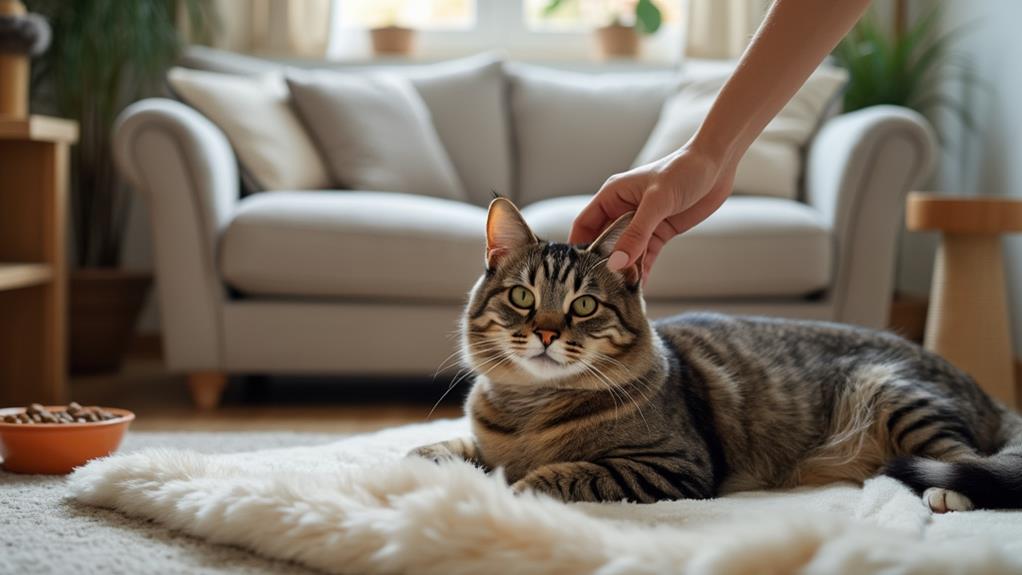
When you bring a new senior cat home, confining them to one room for several days can help them acclimate without feeling overwhelmed. This dedicated space should be equipped with necessities like food, water, a litter box, toys, and cozy hiding spots such as a cat tree or cardboard boxes. Older cats often need time to adjust, so having everything in one room can make the shift smoother and help them feel safe in their new home.
During the initial few weeks, it's vital to let adopted cats approach you at their own pace. Avoid forcing interactions, as this can build trust and comfort over time. Pay close attention to their behavior and body language. When you notice signs of relaxation, like purring or kneading, it's a good indication they're beginning to feel comfortable.
Ensure the environment remains calm and quiet. This atmosphere plays a significant role in reducing stress for older cats. Once they're showing consistent signs of comfort in their starting space, you can gradually allow them to investigate the rest of your home. By taking these steps, you'll help your senior cat settle in and truly enjoy their new surroundings.
Introducing Pets to Each Other
Harmony is key when introducing a new cat to your existing pets. Start by keeping your new cat and existing pets separated, allowing them to feel comfortable in their own spaces. You can introduce their scents by feeding them on opposite sides of a closed door, which lets them become familiar with each other without direct contact.
Once they're accustomed to each other's presence, use a baby gate to let them see and smell one another while still maintaining a safe distance. This setup guarantees privacy for each pet while you gradually bring them together. Remember to monitor interactions closely. Keep an eye out for any signs of stress or aggression. If the situation starts feeling tense, be ready to intervene to prevent any conflicts.
For cat-dog introductions, keep your dog leashed during the initial meeting. This gives you control and allows the new cat to set the pace, making the experience less overwhelming. Consider using calming aids like pheromone sprays to ease tensions and create a soothing environment. These steps can help guarantee a smoother adjustment and foster a harmonious relationship between your new cat and existing pets.
Long-term Adjustment Tips
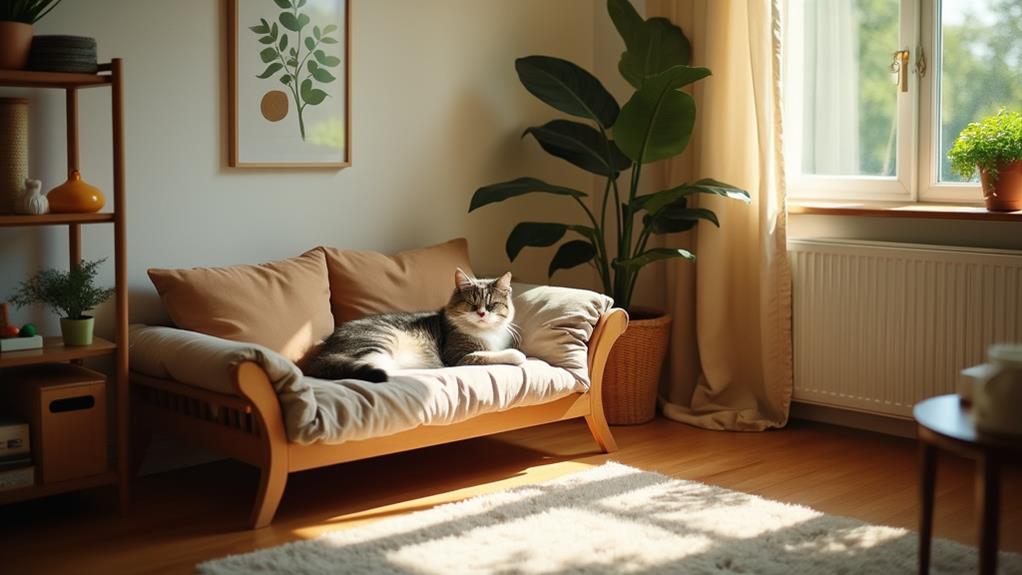
As your new cat and existing pets begin to coexist peacefully, it's time to focus on the long-term adjustment of your senior cat. As you settle your new feline into its forever home, make certain to create comfortable resting spots where your cat can truly relax. Senior cats often appreciate cozy areas for sunbathing, which can improve their quality of life. By providing these spaces, you guarantee that your cat feels secure and at ease.
Establishing a routine is essential for your senior cat's comfort. Feeding and playtimes should be consistent, helping to reduce any anxiety and build trust. Allow the dog and other pets to respect the cat's space, reinforcing a peaceful coexistence. Gentle, low-energy play activities can also strengthen the bond between you and your feline friend, keeping them physically engaged without overwhelming them.
It's significant to regularly monitor your cat's behavior. This continuous observation, combined with a loving environment, can lead to a fulfilling relationship for both you and your pet. Remember, the Privacy Policy of your home should prioritize your cat's well-being, guaranteeing they have the stability and love they need for a happy, adjusted life.
Maintaining Your Cat's Health
To guarantee your senior cat enjoys a healthy life, prioritize regular veterinary check-ups. These visits are key for monitoring their health and catching potential issues like arthritis or kidney disease early. Work with your vet to confirm your cat's balanced diet meets their nutritional needs. A diet tailored for older cats helps manage weight and reduces obesity-related health problems.
Don't overlook dental care, which is fundamental as older cats are prone to dental disease that can affect their general health. Brush their teeth regularly or provide dental treats to maintain oral hygiene. Keeping your cat physically active is similarly important. Engage them in interactive play to help maintain muscle strength and weight, which supports their mobility and general well-being.
Be vigilant for behavior changes, as they can be early indicators of health issues. Monitor shifts in appetite, litter box habits, or any other unusual behaviors. Prompt attention to these signs can lead to timely veterinary consultations, confirming your cat remains happy and healthy. By addressing these areas, you'll help your senior cat live a comfortable and fulfilling life.