Adopting a Kitten: Essential Tips for New Cat Owners
When adopting a kitten, start by preparing a small, quiet area in your home where they can acclimate. Set up a litter box away from their feeding spot and provide scratch-friendly surfaces. During the initial days, let them investigate at their own pace and offer safe hiding spaces. Engage them in interactive play to hone their natural skills. Stock up on kitten necessities like high-quality food and durable toys. Develop a consistent routine for feeding, grooming, and playtime to create a sense of security. As you understand these basics, you'll uncover more ways to guarantee a happy, healthy kitten.
Key Takeaways
- Designate a small, private area for acclimation to foster a sense of security.
- Provide high-quality kitten food rich in protein and essential nutrients for growth.
- Engage in interactive play sessions daily to channel energy and prevent boredom.
- Establish a consistent feeding and grooming routine for predictability and bonding.
- Gradually introduce the kitten to new areas, ensuring a calm and safe environment.
Preparing Your Home
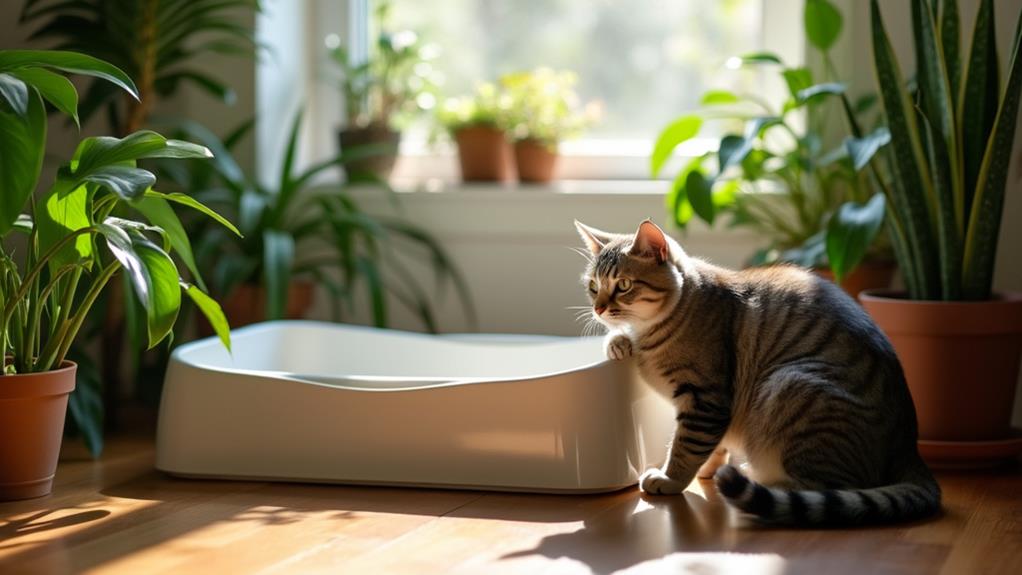
Bringing home a new kitten is thrilling, but preparation is key to ensuring a smooth changeover. To start, designate a small, private area like a bathroom or laundry room for your kitten's initial acclimation. This will provide your furry friend with a sense of security and comfort. In this space, set up a litter box with 1-2 inches of litter. Make sure it's placed away from the feeding station so your kitten can use it without any disturbances.
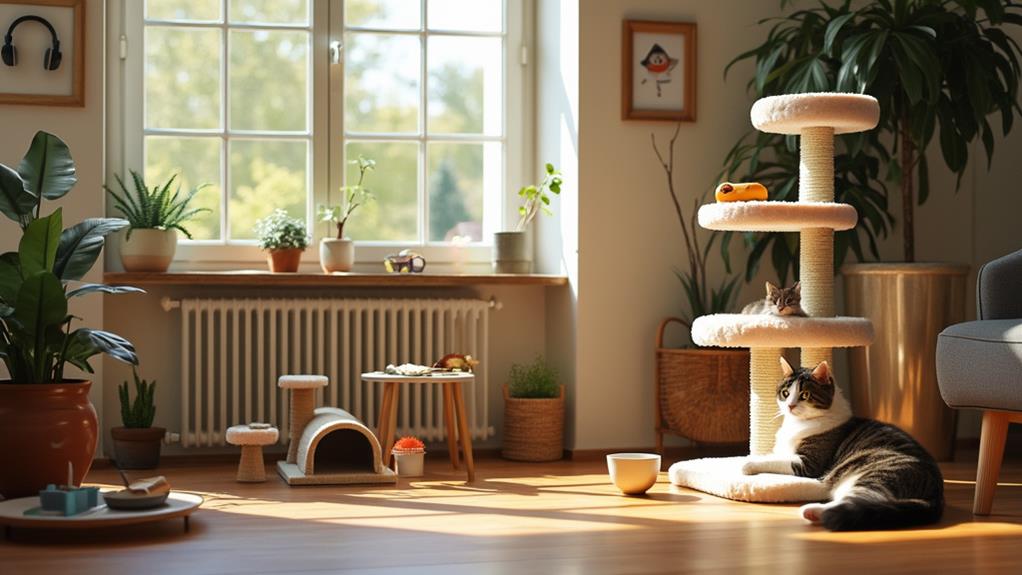
Creating a safe hiding place is also crucial. Consider using a covered cat bed or a simple cardboard box, giving your kitten a spot to retreat when feeling overwhelmed. It's significant for your home to have appropriate scratching surfaces, like scratching posts or pads. This not only helps maintain your kitten's claw health but also prevents damage to your furniture.
As your kitten becomes more comfortable, gradually introduce them to other areas of your home. Keep the environment calm to minimize stress and encourage them to investigate. By focusing on these steps in preparing your home, you'll help your kitten adjust smoothly and create a loving environment for them to thrive.
Understanding Kitten Behavior
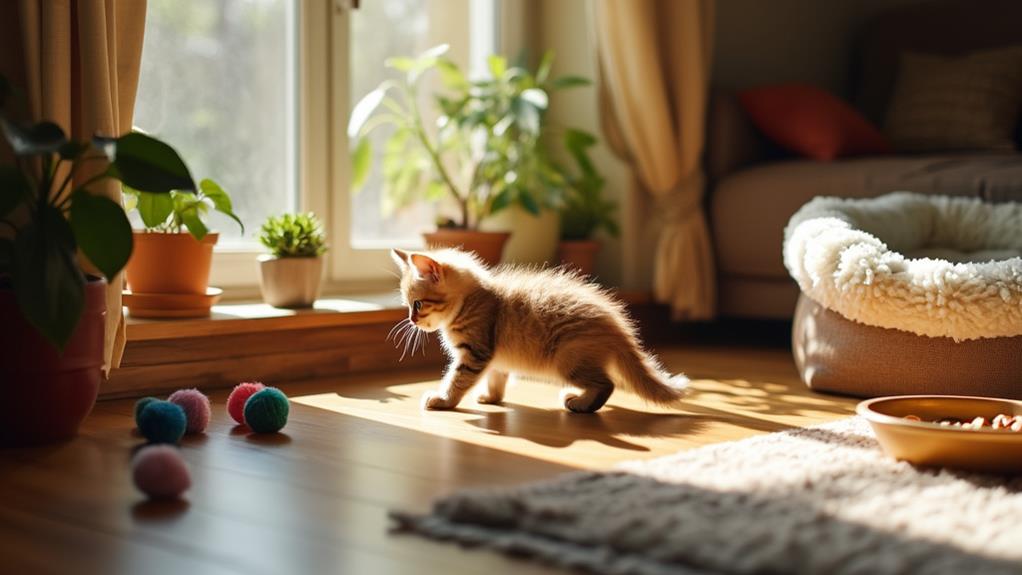
Kittens are bundles of energy and curiosity, exploring their world through play and interaction. To understand a little about their behavior, it's significant to know that play is more than just fun for them; it's a natural instinct to develop their hunting skills. You'll notice them pouncing, chasing, and batting at objects. Engaging in interactive playtime isn't just enjoyable, it's crucial for their development.
Socialization is key during those early weeks. Positive interactions with both humans and other pets shape a kitten's behavior and help reduce fearfulness as they grow. It's essential to provide multiple play sessions throughout the day. This helps channel their high energy and prevents boredom-related behaviors like scratching or biting, which can be problematic if not addressed.
Kittens might seem timid or cautious in new environments. Don't worry if they need some quiet time initially. Offering a safe space helps them acclimate and build confidence. Pay attention to their body language, like tail position and ear orientation. These cues can give you insight into their mood and needs, making it easier to understand and bond with your new furry friend.
First Days Together
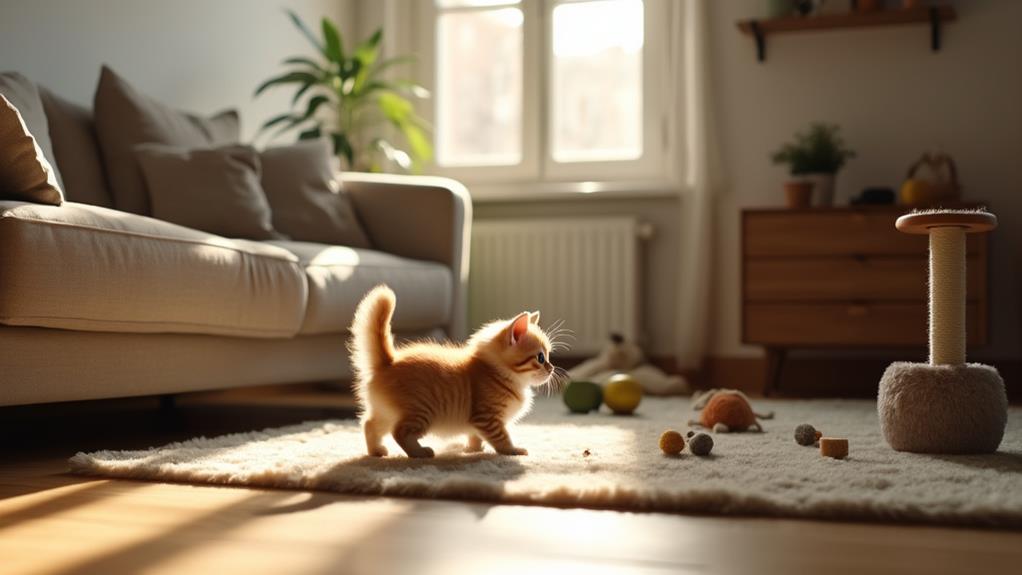
When you bring your new kitten home, it's essential to guarantee they feel secure right from the outset. Begin by designating a small, quiet space like a bathroom or laundry room for their initial acclimation. This helps them feel safe as they adjust to their new home. In this space, set up a litter box with 1-2 inches of litter and a feeding station, making sure the food and water bowls are placed away from the litter box to maintain hygiene and comfort.
During the initial few days, allow your kitten to exit their carrier on their own. This fosters a sense of control and trust, important as they're adjusting. Gradually introduce them to the rest of the house, encouraging exploration but also providing safe hiding spots they can retreat to if they feel overwhelmed. Remember, the adjustment period might last 1-2 weeks, so be patient.
Monitor their appetite and activity levels closely. Fluctuations are normal as they adapt to their new home, but make sure they're eating and staying active. With time, your kitten will grow more comfortable, and you'll both enjoy the companionship that comes with this new beginning.
Essential Kitten Supplies
Your kitten's comfort and well-being start with having the right supplies. Initially, choose a durable litter box paired with unscented cat litter to keep your home clean and your kitten comfortable. A mat under the litter box helps maintain good hygiene by catching stray pieces of litter.
Nutrition is essential, so opt for high-quality kitten food rich in protein, calcium, and DHA. These nutrients support growth and development. Begin introducing dry food gradually around 6-8 weeks to ease the shift.
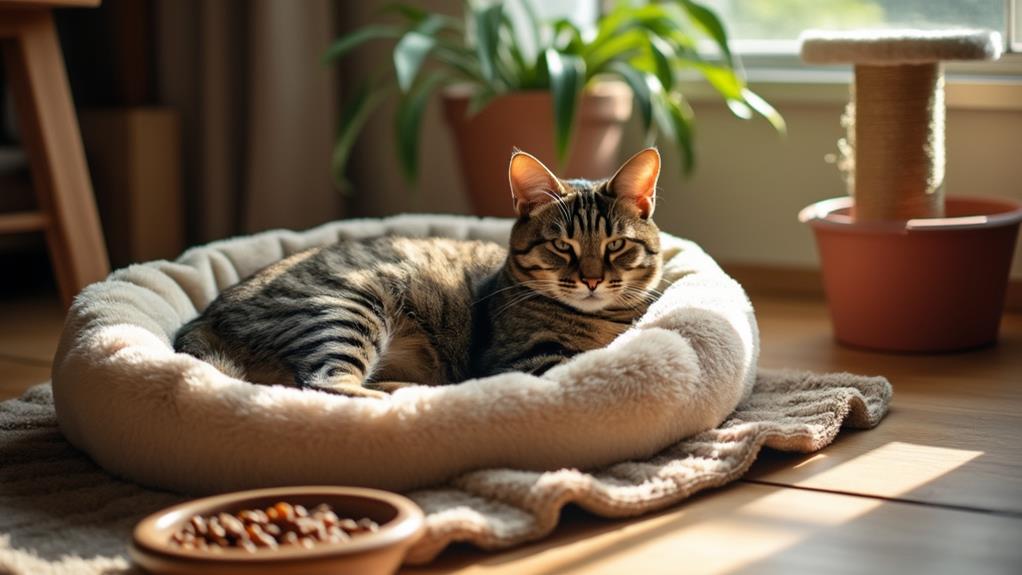
A warm, soft cat bed or blanket provides your kitten with a cozy sleeping space. This will help them feel secure in their new environment. Place it in a quiet corner where they can rest undisturbed.
To keep your kitten engaged, stock up on toys like balls, tunnels, and interactive playthings. These not only stimulate their mind but also encourage physical activity, preventing boredom.
Building a Routine
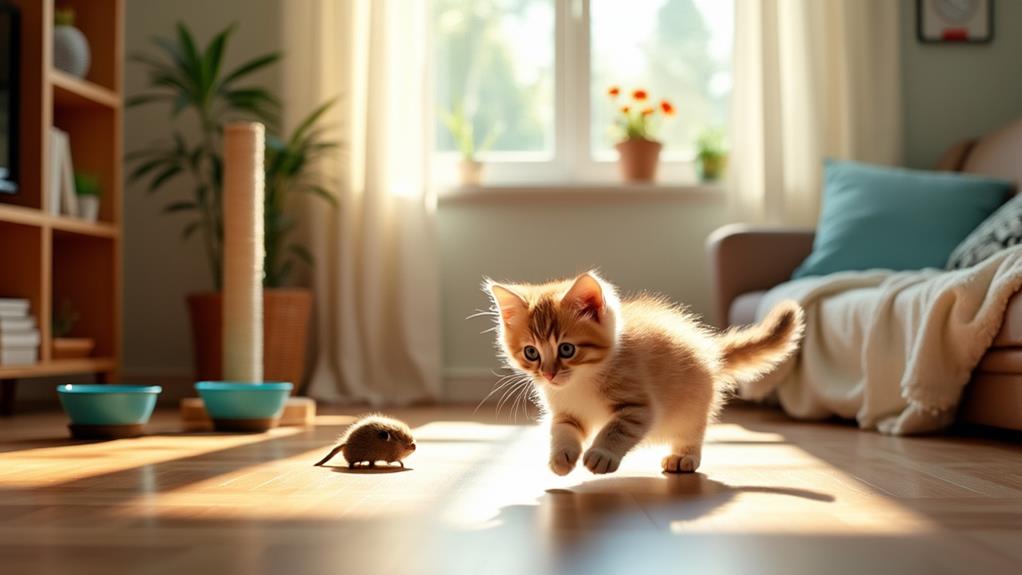
Establishing a routine is fundamental for a kitten's development and sense of security. Start by setting a consistent feeding schedule. Feed your kitten at the same times each day so they know when to expect meals. This predictability helps them feel safe and well-cared for. Next, incorporate regular grooming sessions into your daily routine. This not only keeps your kitten's coat healthy, especially if they're a long-haired breed, but also strengthens your bond with them.
Playtime is another significant component. Dedicate specific times each day for interactive play, engaging your kitten's natural hunting instincts. Toys that mimic prey can provide both physical and mental stimulation, which is crucial for their growth and development. Alongside playtime, establish a structured environment by cleaning the litter box at regular intervals. Doing so maintains hygiene and reinforces your kitten's routine.