A Guide to Different Horse Riding Styles: Which One Is Right for You?
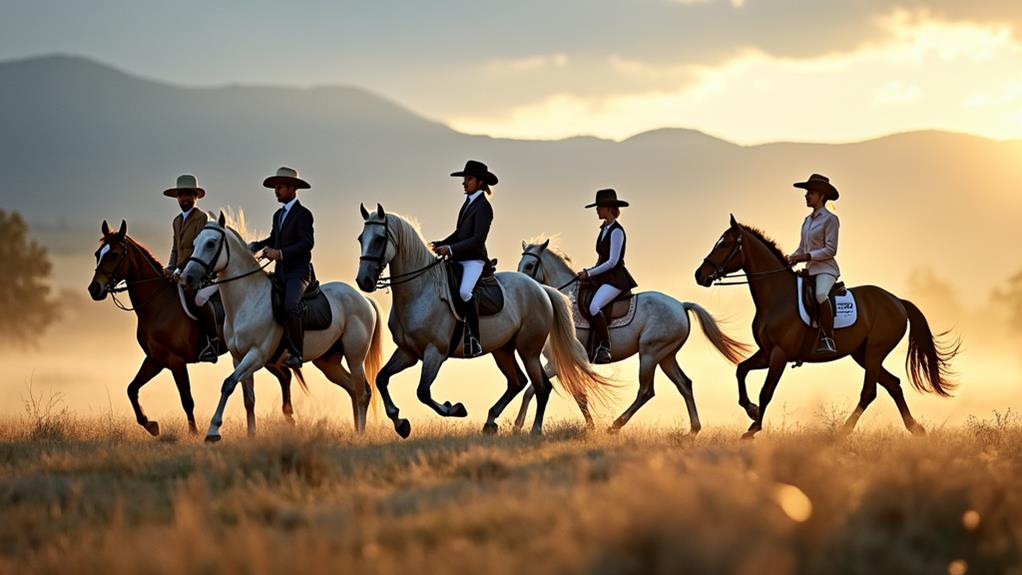
Choosing the right horse riding style depends on your interests and what you're looking for in the experience. If you love precision and elegance, dressage may be your calling. Thrill-seekers might prefer show jumping with its agility and speed. For those who crave variety and challenge, eventing offers a multi-discipline adventure. Western riding suits those drawn to traditional skills and showmanship. Trail riding provides tranquility and scenic exploration, while endurance riding tests your stamina and partnership over long distances. Each style offers unique rewards and challenges, so continue exploring to find the riding style that resonates with you.
Dressage
Dressage, often described as the ballet of horse riding, requires both horse and rider to perform a series of predetermined movements from memory. When you're diving into dressage, you'll find that precision and harmony between you and your horse are crucial. Dressage techniques focus on developing your horse's flexibility, balance, and responsiveness. You'll start with basic movements like walk, trot, and canter, gradually progressing to more advanced maneuvers such as piaffe and passage. It's all about clear communication through subtle cues and refined aids.
To get started, you'll need specific dressage equipment that improves performance and comfort. A dressage saddle, for instance, is designed to give you a closer feel of the horse, allowing for more precise communication. You'll also need a bridle with a snaffle bit, which helps refine the horse's movements. Dressage attire includes a fitted jacket, breeches, and gloves, ensuring you look as polished as your riding skills. As you practice, you'll develop a deeper connection with your horse, mastering the art of executing fluid and graceful movements. Remember, patience and consistency are key as you investigate the elegant world of dressage.
Show Jumping
When it's time to tackle the exhilarating world of show jumping, you'll find yourself facing a thrilling test of speed, agility, and precision. This discipline demands a strong partnership between you and your horse, as you navigate a series of obstacles arranged in a specific order. Mastering jumping techniques is vital; you'll need to develop a keen eye for distances and timing. Your ability to guide your horse over fences smoothly and efficiently can make all the difference in your performance.
To succeed in show jumping, you'll also need to hone your competition strategies. Understanding the course layout is fundamental—walking it beforehand allows you to plan the best path. Focus on tight turns and quick accelerations to shave seconds off your time. It's not just about clearing each jump, but doing so as swiftly as possible.
Staying calm under pressure and maintaining your horse's confidence are key components. Remember, show jumping is as much a mental game as it is physical. With practice, your skills will sharpen, and you'll find immense satisfaction in the harmony and precision of this dynamic riding style. Regardless of your motivation for fun or aiming for competition glory, show jumping offers an unparalleled thrill.
Eventing
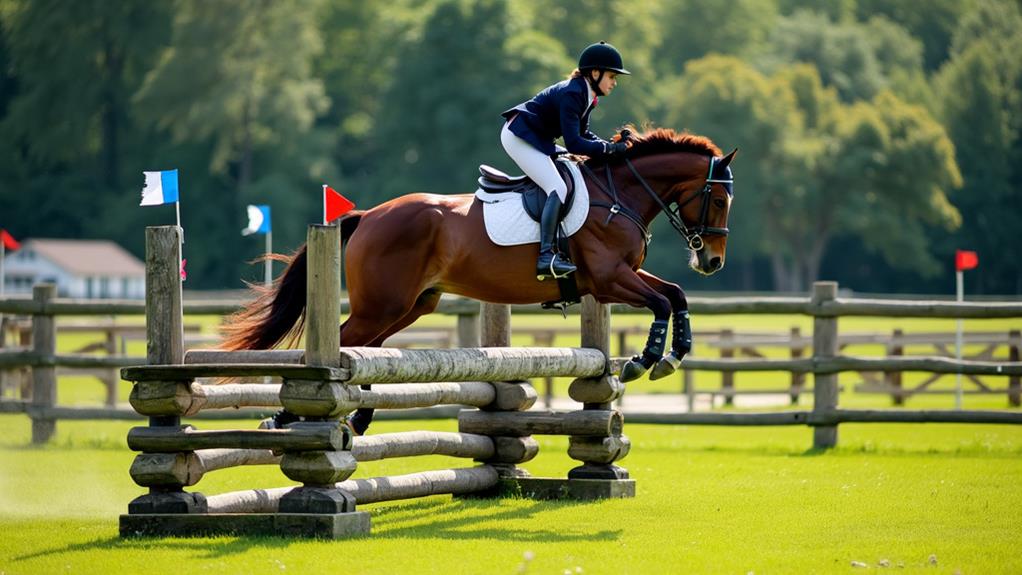
While show jumping offers its own unique thrill, eventing takes equestrian excitement to a whole new level by combining multiple disciplines into one all-encompassing competition. You'll experience the precision of dressage, the adrenaline of cross-country, and the agility of show jumping. Eventing challenges both horse and rider, testing versatility and endurance across different terrains and obstacles.
One key element is the cross country course design. This phase is all about maneuvering a course filled with natural and man-made obstacles like water jumps, ditches, and banks. These courses are carefully crafted to test your horse's bravery and your strategic riding skills. You'll need to think quickly and maintain a strong partnership with your horse to tackle these challenges effectively.
Eventing training techniques are essential to prepare for such a demanding sport. You'll focus on building your horse's stamina, balance, and confidence across diverse settings. Incorporate elements like grid work for jumping, dressage patterns for precision, and hacking out to simulate cross-country conditions. Consistent training will improve your ability to adapt to different phases seamlessly.
If you thrive on variety and a good challenge, eventing might just be the right fit for you.
Western Riding
Imagine riding through vast open landscapes, the wind in your hair, and the spirit of the Old West guiding your every move. That's the core of Western Riding. It's a style deeply rooted in tradition, offering a unique blend of practicality and flair. You'll find yourself captivated by the way it combines functional skills with a touch of showmanship.
Western Riding is more than just a style; it's a culture. You'll get to adopt rodeo techniques, which are vital for mastering this discipline. From barrel racing to calf roping, these skills test your agility and precision on horseback. They're not just about competition; they're about honing the craft that cowboys have practiced for generations.
Don't forget the western attire, a fundamental aspect of this style. You'll wear a cowboy hat, boots, and jeans, adding authenticity and comfort to your ride. This attire isn't just for looks—it's designed for durability and practicality on the range. So, if you're drawn to a riding style that challenges your skills and connects you with history, Western Riding might just be the perfect fit for you.
Trail Riding
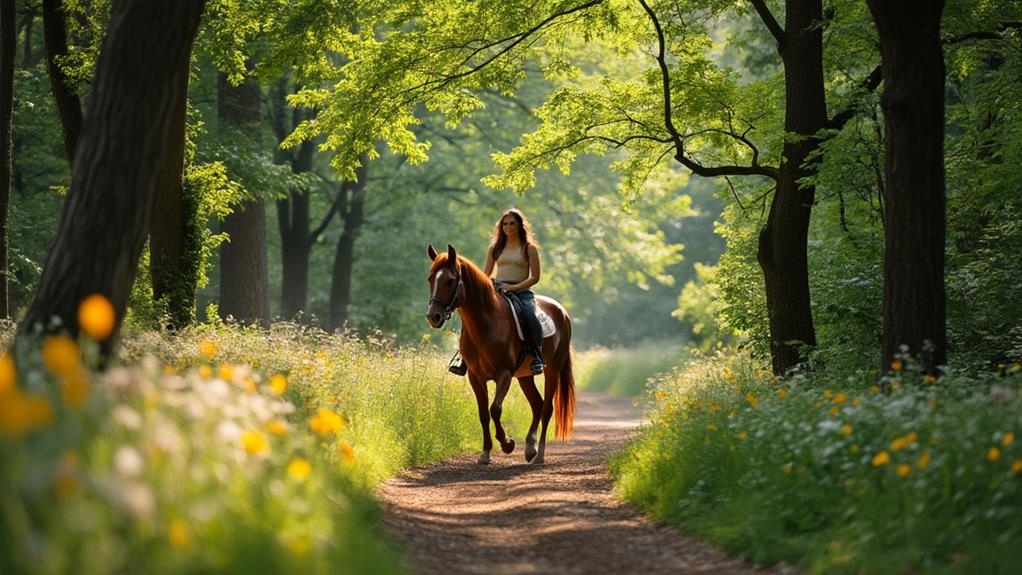
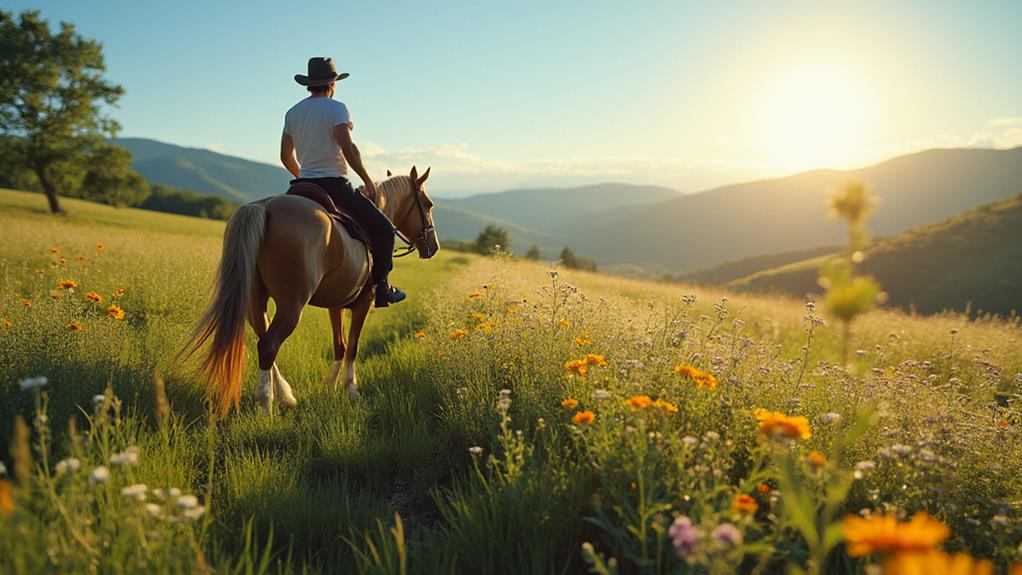
Venturing into the world of Trail Riding opens up a domain where both novice and seasoned riders can find joy and tranquility. Imagine exploring serene landscapes, winding through forests, or traversing open fields with your trusty equine companion. Trail riding is about more than just scenery, though; it's about the bond you build with your horse and the respect you show for your surroundings.
Trail safety is paramount when initiating these adventures. Always wear a helmet and make certain your horse's tack is secure and well-fitted. Carry a primary aid kit for both you and your horse, and let someone know your planned route and expected return time. Being prepared can make all the difference in guaranteeing a safe experience.
In addition to safety, trail etiquette plays an essential role in making your ride enjoyable for everyone. Yield the trail to hikers and bikers, and always announce your presence when approaching others from behind. Keep your horse under control, especially when passing other riders, and leave no trace—pack out everything you pack in. By following these guidelines, you'll contribute to a positive trail experience for yourself and others.
Endurance Riding
Starting on an endurance ride challenges both you and your horse to push the limits of stamina and teamwork. This equestrian sport takes you across miles of diverse terrain, testing endurance and resilience. To succeed, you must focus on effective conditioning techniques and proper nutrition strategies for both you and your horse.
Conditioning your horse is vital. Begin with a mix of long rides and interval training to build strength and cardiovascular fitness. Gradually increase the distance and intensity, making certain your horse adapts without strain. Pay attention to the terrain you'll encounter during competitions, incorporating varied surfaces into your training regimen to prepare for anything.
Nutrition strategies are equally significant. Your horse needs a balanced diet rich in energy, with sufficient electrolytes to replenish what's lost through sweat during long rides. Hydration is fundamental; make sure they have constant access to fresh water and provide extra salt to maintain fluid balance. For yourself, prioritize a diet that supports sustained energy levels and recovery.
Endurance riding isn't just a physical challenge but also a mental game. Building trust and understanding with your horse is key, making certain both of you can tackle long distances with confidence and determination.
Related posts