A Cat’s Eye Color and Its Rarity: What You Should Know

When you're exploring a cat's eye color, you'll notice a wide variety, from common shades like yellow and green to rare hues such as heterochromia and dichroic eyes. These colors are influenced by melanin levels, genetics, and even selective breeding. Breeds like Siamese often have striking blue eyes, while Russian Blues are known for their green eyes. Rare colors include copper, orange, and heterochromatic eyes, often found in certain purebreds. Each cat's eye color offers a glimpse into its unique genetic makeup and heritage. Uncovering these fascinating variations can truly deepen your understanding of feline beauty.
Common Cat Eye Colors
In relation to the enthralling world of cat eye colors, diversity is the spice of life. You're likely to encounter yellow and amber eyes most frequently, as these hues dominate the cat population, appearing in about 50-60% of cats. These common eye colors range from pale lemon to deep, rich amber, and can be seen in numerous breeds of cat.
Hazel eyes, which blend green and golden yellow, are also relatively common. With a rarity rating of 2/10, you'll find these eyes in breeds like the Abyssinian and Bengal. Green eyes hold a moderate rarity rating of 5/10 and can be found in breeds such as the Egyptian Mau and Russian Blue. These cat eye colors bring a striking contrast to their fur and are quite enchanting.
Blue eyes, while somewhat common, have a slightly higher rarity rating of 6/10. They're often associated with Siamese and Ragdoll breeds. Meanwhile, orange eyes, marked by their intense pigmentation, are less common, with a rarity rating of 8/10. You'll spot these rare eye colors in breeds like the Devon Rex and Japanese Bobtail, adding a touch of rarity to the mix.
Rare Cat Eye Colors
In terms of rare cat eye colors, you'll find a mesmerizing array of hues that are anything but ordinary. One striking example is heterochromia, where cats boast odd-colored eyes. This condition, often seen in white or mostly white cat breeds, has a high rarity rating of 9/10. Even more exceptional are dichroic eyes, which display two distinct colors within a single iris. This rarest eye condition, with a rarity rating of 10/10, isn't associated with any specific breed, making it a unique find.
Copper eyes, with their light brown, red, and orange tones, offer a warm and enchanting appearance. They have a rarity rating of 8/10 and are commonly seen in cat breeds like the Japanese Bobtail and Persian. Likewise, orange eyes, achieved through selective breeding for contrast, share the same rarity rating and appear in breeds such as the Devon Rex and Maine Coon.
Albino eyes, which appear light pink or blue due to a lack of melanin, also hold a rarity rating of 8/10. These distinct colors are found in breeds like the Burmese and Siamese, highlighting the diverse beauty of rare cat eye colors.
Genetics and Eye Color
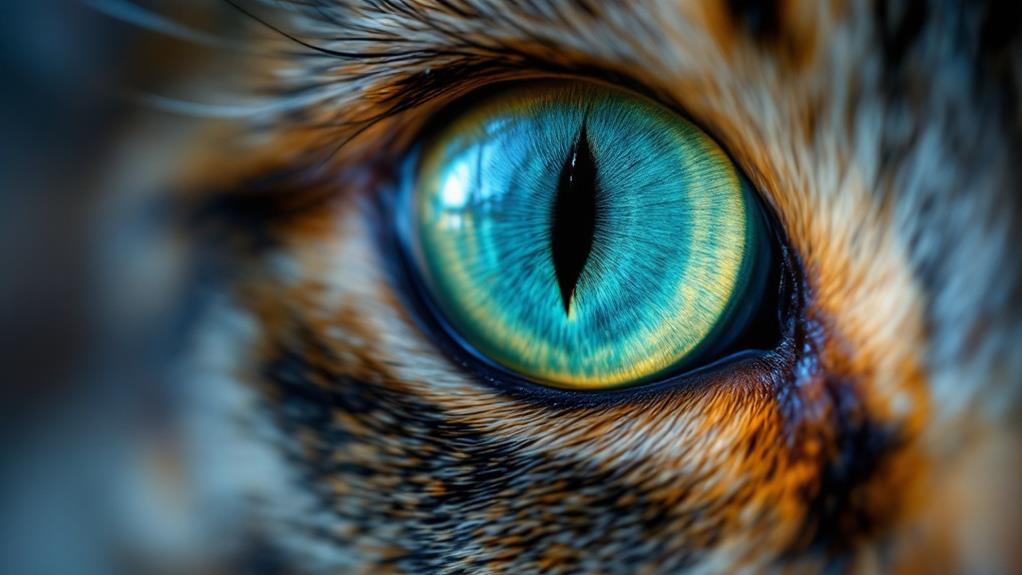
Eye color in cats is an enthralling subject, mainly shaped by the amount of melanin in the iris. The role of genetics is substantial, with multiple genes controlling pigmentation and ultimately influencing the final color of a cat's eyes. More melanin results in darker colors like amber, while less melanin gives rise to lighter hues such as green or blue eyes. Kittens start life with blue eyes due to the initial lack of melanin, and their final color usually sets between 2 to 4 months of maturity.
Genetic diversity means that even within a single litter, kittens can have different eye colors. Heterochromia, a rare condition where a cat has two different colored eyes, is another fascinating genetic trait. It's found in less than 1% of the cat population and is often associated with white or mainly white cats. Environmental factors and selective breeding practices also play roles in eye color variation. For instance, certain breeds like Siamese and Ragdoll are known for their striking blue eyes. Understanding the genetic influences behind a cat's eye color can improve your appreciation for the diverse and enthralling world of feline features.
Eye Color and Breeds
Certain cat breeds are renowned for their distinct and often enchanting eye colors. When you think of blue eyes, breeds like Siamese, Ragdoll, Balinese, Birman, and Tonkinese might come to mind. These breeds showcase striking blue eyes that fascinate many cat enthusiasts. On the other hand, if you're drawn to yellow eyes, you'll often find them in breeds such as Bombay, Burmese, American Shorthair, and Maine Coon, each presenting a deep, alluring hue.
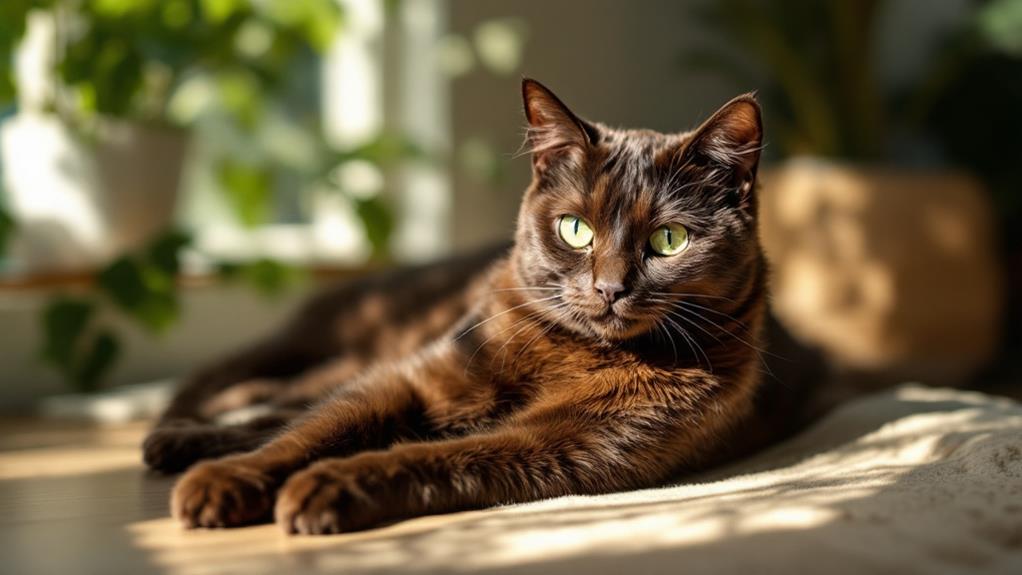
Green eyes are another intriguing feature, commonly seen in Russian Blue, Egyptian Mau, Somali, Bengal, and Norwegian Forest Cat. These breeds often have a lively green eye color that stands out beautifully against their coats. While purebred cats tend to display more intense and vivid eye colors, mixed breeds may exhibit paler shades, offering a unique charm of their own.
Heterochromia, or odd-colored eyes, is a rare trait found more frequently in purebred cats like the Turkish Angora and Khao Manee. These mainly white cats often showcase this striking feature, although it's still quite uncommon, with less than 1% of the cat population displaying heterochromia. Exploring these eye color variations can be an exciting expedition for any cat lover.
Understanding Cat Vision
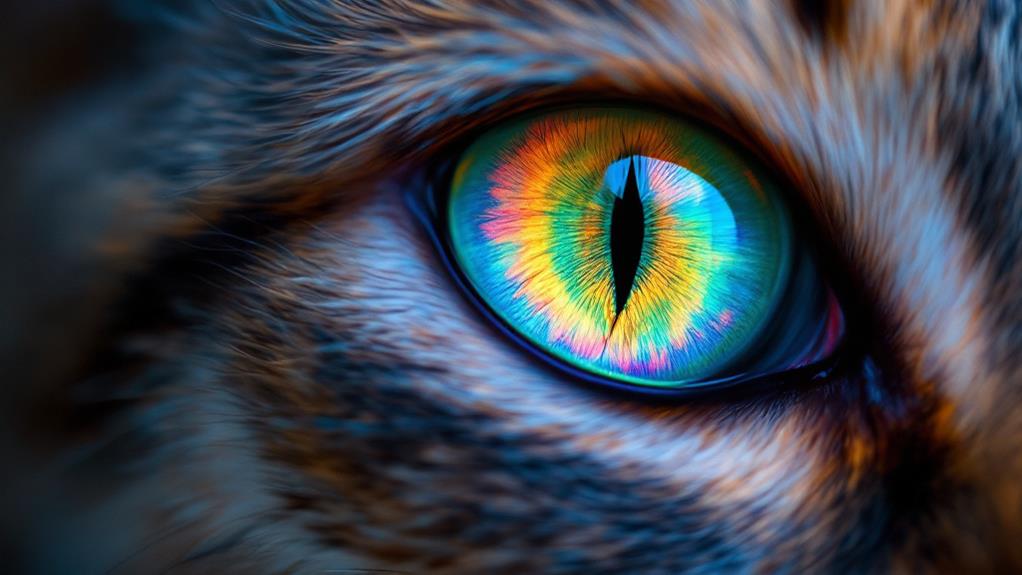
While the diversity of cat eye colors captivates many, understanding their vision offers a likewise fascinating perspective. Cats possess dichromatic vision, meaning they're adept at seeing shades of blue and green but struggle with reds and pinks, which appear grayish to them. This limited color palette doesn't hinder their impressive visual capabilities. Instead, it complements their unique adaptations for survival.
A cat's eyes are packed with rod cells, which excel in low-light conditions. This abundance of rod cells allows them to see at night, making them exceptional nocturnal hunters. Adding to this advantage is the tapetum lucidum, a reflective layer behind their retina that improves their night vision by reflecting light back through the retina. This adaptation turns even the faintest light into valuable visual information.
Moreover, cats have keen motion detection abilities, allowing them to spot even the slightest movements, which is crucial when hunting. The positioning of their eyes grants them superior depth perception and spatial awareness, providing a wide field of view. These features guarantee cats can navigate their environment with precision and agility, regardless of them stalking prey or exploring new territories.
Maintaining Eye Health
Taking care of your cat's eyes is fundamental for their general well-being. Regular veterinary check-ups play an important role in maintaining eye health by helping to detect common eye problems like conjunctivitis, cataracts, and glaucoma early on. These conditions can be treated more effectively when caught in their initial stages.
Monitor your cat closely for signs such as redness, discharge, squinting, or excessive tearing. These symptoms often indicate potential issues that require immediate attention to prevent further complications. Furthermore, providing a balanced diet rich in nutrients, particularly omega-3 fatty acids and antioxidants, is critical. These nutrients support comprehensive eye health and can improve your cat's vision quality.
A clean living environment also reduces the risk of infections and irritations that might affect your cat's eyes. Being aware of your cat's eye color variations can help you understand possible genetic predispositions to certain conditions. This knowledge emphasizes the significance of monitoring their eye health closely.