7 Surprising Facts About Horses You Didn’t Know
You're in for a treat with these surprising horse facts. Did you know their digestive tracts stretch about 70 feet, producing 9 to 11 gallons of saliva daily? Horses see almost 360 degrees but can't spot what's directly in front or behind. Their ears swivel 180 degrees, picking up sounds humans miss. Horses even stand while sleeping, thanks to their stay apparatus. They have exceptional memories, recalling faces for years, which aids in bonding. Their body language, like ear and tail positions, speaks volumes. Curious about how these majestic creatures communicate and live? There's definitely more to investigate.
Key Takeaways
- Horses produce 9 to 11 gallons of saliva daily to aid in digestion.
- They have a small stomach but a 70-foot-long digestive tract.
- Horses can hear sounds from up to four miles away.
- They have a 360-degree field of vision with two blind spots.
- The stay apparatus allows horses to sleep standing up.
Unique Digestive System
Boasting a unique digestive system, horses rely on continuous grazing to meet their nutritional needs. Unlike other animals, horses have a relatively small stomach capacity, holding only about 2-4 gallons. This small size necessitates frequent grazing throughout the day, guaranteeing that they can effectively digest fibrous food. As herbivorous creatures, their digestive tract stretches around 70 feet long, allowing for the fermentation and breakdown of plant material. This extensive tract is vital in processing their plant-based diet.
Horses produce an impressive 9 to 11 gallons of saliva daily, which plays a significant role in breaking down food during chewing. Their strong esophageal muscle prevents them from burping or vomiting, making the effective digestion of fibrous material paramount to avoiding digestive issues such as colic. This muscular structure also guarantees that food travels in only one direction—towards the stomach.
Additionally, horses are obligate nasal breathers, which means they can't breathe through their mouths. This unique respiratory feature helps prevent choking and supports their digestive processes by allowing them to graze continuously without the risk of blocking their airways. Understanding these aspects of their digestive system highlights the remarkable adaptations horses have developed.
Horses' Exceptional Memory
In the domain of equine intelligence, horses' exceptional memory stands out as a fascinating trait. They possess a remarkable ability to remember individuals for years, which plays a vital role in social bonding and successful training. Regardless of whether it's recognizing other horses or familiar humans, their memory helps them navigate and interact effectively within their social structures. You'll find that a horse can recall specific commands and routines, making them more responsive during training sessions.
Their strong memory retention means they remember past experiences, regardless of being positive or negative, which directly influences their behavior and trust towards humans. This is why consistent interaction is so significant when working with horses. Familiarity with their surroundings and handlers greatly improves their comfort level, contributing to their comprehensive well-being.
When you're around horses, understanding their memory capabilities can amplify your relationship with them. They recognize familiar environments and people, which can help them feel more secure and at ease. This recognition aids in creating a stable and trusting bond, as horses rely heavily on their past experiences to form current and future interactions. By acknowledging their memory, you can foster a more positive and effective connection with these intelligent creatures.
Almost Full-Circle Vision
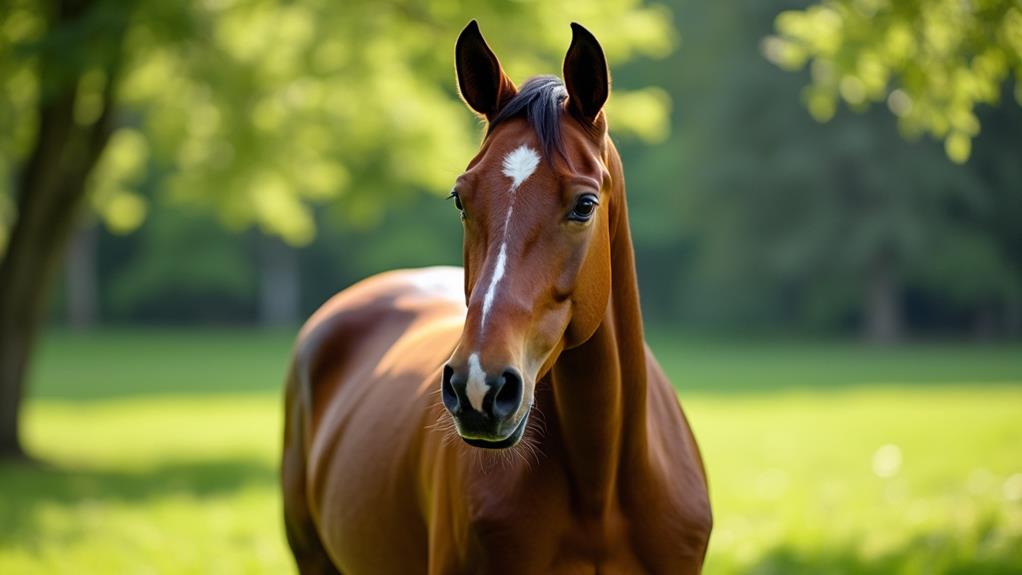
While horses have an impressive memory that helps them navigate their social structures, their almost full-circle vision plays an significant role in their ability to interact with the world around them. Horses have a nearly 360-degree field of vision, which means they can see almost all around them without the need to move their heads. This incredible ability is largely due to their large eyes, which are about eight times bigger than a human's. These large eyes provide exceptional peripheral vision, allowing horses to detect even the slightest movement.
However, horses do have two blind spots: one directly in front of their noses and another directly behind them. To see in these areas, they must turn their heads. This wide field of vision is critical for detecting predators, enhancing their survival instincts. In the wild, being able to spot potential threats from almost any direction is a important sense for these fascinating creatures.
Horses also rely heavily on their vision for navigation and social interactions. Regardless of whether they're moving through a field or interacting with other horses, their eyesight helps them make sense of their environment and communicate effectively. This makes their vision an irreplaceable tool in their daily lives.
Communication Through Body Language
Horses use their body language to communicate a wide range of emotions and intentions, making it essential to understand these signals for effective interaction. You'll find that horses express themselves most vividly through their ears. Forward-facing ears mean they're curious or interested, while pinned-back ears indicate fear or aggression. Paying attention to the tail position is similarly significant. A relaxed tail denotes calmness, whereas a high, swishing tail signals agitation or excitement.
When observing horses, notice how they use their ears to communicate alertness and attention. They can point their ears in different directions to focus on different stimuli, allowing them to assess their surroundings effectively. Their body posture is another vital aspect to watch. A relaxed stance usually suggests calmness, while a tense posture might reveal discomfort or anxiety.
Facial expressions and movements are another layer of their body language. Understanding these cues can help you anticipate reactions and adapt your approach accordingly. Recognizing these signals improves your ability to handle and train horses effectively. By honing your ability to read their body language, you can foster a deeper connection and guarantee a safer, more rewarding interaction with these magnificent creatures.
Standing Sleep Adaptation
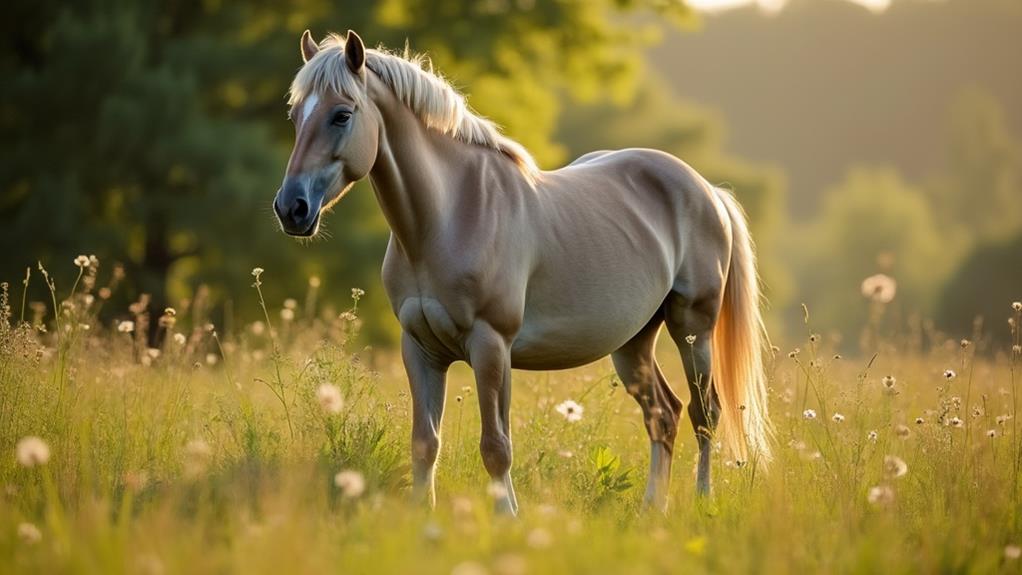
Imagine having the ability to rest without lying down. Horses possess this remarkable adaptation through a mechanism known as the stay apparatus. This special anatomical feature lets horses lock their leg joints, allowing them to sleep while standing. This adaptation enables horses to stay alert to potential predators while getting the rest they need. They can enter a light sleep state without collapsing, which is vital for their survival.
However, despite this adaptation, horses still require at least 30 minutes of deep sleep each day. This restorative rest can only be achieved when they lie down. The environment plays a significant role in a horse's willingness to lie down. Factors such as comfort and safety are important. Older horses or those with health issues might find lying down challenging, affecting their ability to get adequate sleep.
Insufficient sleep in horses can lead to numerous health problems, including fatigue and impaired cognitive function. Hence, it's important to provide a safe and comfortable environment for their rest. Understanding this standing sleep adaptation highlights the delicate balance horses maintain between vigilance and the need for restorative deep sleep.
Social Herd Dynamics
Understanding how horses rest naturally leads to an appreciation of their social herd dynamics. Horses are highly social creatures that thrive within a herd, which typically consists of 3 to 20 members. This social structure is essential for their survival, establishing hierarchies and ensuring the well-being of each member. Within these groups, horses engage in allogrooming, a behavior that strengthens social bonds and maintains harmony. You'll notice them nibbling each other's necks and backs, which not only feels good but also reinforces their connections.
In a herd, a dominant mare usually takes the lead. She makes important decisions about where to go for food, when to move, and how to stay safe from predators. It's fascinating to see how horses communicate using body language. For example, their ear positions convey their focus and emotions. Ears pinned back can indicate fear or aggression, a clear signal to other herd members.
Separation from their herd can cause significant anxiety and stress in horses, leading to behavioral issues. This anxiety can negatively impact their general well-being, emphasizing the importance of their social bonds. Understanding these dynamics helps you appreciate the intricate relationships horses maintain within their herds.
Advanced Hearing Abilities
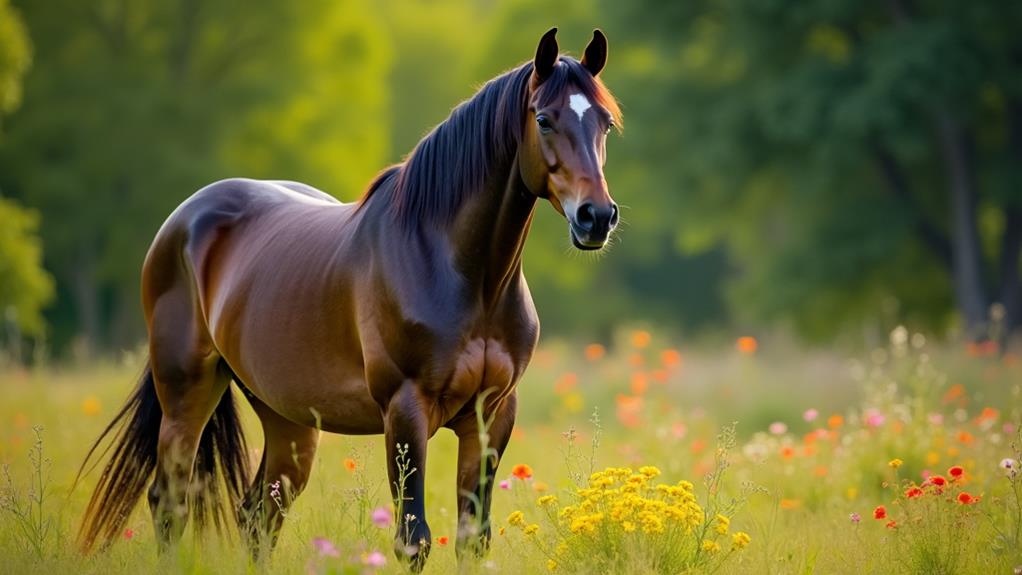
A remarkable aspect of equine physiology is their advanced hearing abilities, which play a significant role in their survival and communication. Horses have incredibly acute hearing, thanks to their unique ability to rotate their ears 180 degrees independently. This remarkable feature allows them to pinpoint the source of sounds with precision. Imagine being able to detect the slightest rustle in the distance; horses can do just that, making them highly aware of their surroundings. Their ears are not just for decoration; they're fundamental tools for survival.
Horses can hear higher frequency sounds than humans, which means they're more attuned to potential dangers. This acute hearing capability guarantees they can detect threats from a distance of about four miles. In the wild, being aware of approaching predators is a matter of life and death. Furthermore, their hearing is essential for communication. Horses recognize familiar sounds like the clatter of feed buckets or the comforting tone of their owner's voice. These sounds help them communicate and bond with their human companions and fellow herd members. Essentially, a horse's hearing is a finely-tuned instrument that keeps them safe and socially connected.