3 Natural Remedies to Help Treat Your Cat’s UTI at Home

To naturally help treat your cat's UTI at home, you can start by increasing their water intake. Offering wet food and enticing them with low-sodium broth in their water bowl works wonders. Next, make some dietary adjustments by switching to a high-protein, low-carb diet with moisture-rich foods like canned pumpkin or apple cider vinegar to help maintain urinary health. Herbal and natural supplements such as marshmallow root and D-mannose can ease inflammation and prevent bacteria from sticking. Exploring these options further may provide a more thorough approach to tackling your feline friend's urinary issues.
Key Takeaways
- Increase your cat's water intake by offering wet food and using pet water fountains.
- Use D-mannose supplements to prevent E. coli bacteria from adhering to urinary tract walls.
- Add low-sodium broth to your cat's water to enhance its appeal and encourage drinking.
- Incorporate marshmallow root for its anti-inflammatory and diuretic properties to provide urinary relief.
- Transition to a high-protein, low-carbohydrate diet to maintain ideal urinary pH levels.
Increase Water Intake
In regard to managing your cat's urinary tract infections, increasing their water intake plays an integral role. By doing so, you help dilute urine, reducing the concentration of harmful bacteria and minimizing discomfort for your feline friend. One effective way to improve hydration levels is by providing wet food instead of dry kibble. With canned food containing 70-80% moisture, it's a significant upgrade from the mere 10% found in dry food, guaranteeing your cat stays well-hydrated.
Encouraging your cat to drink more can also be achieved by incorporating a pet water fountain. Cats often prefer running water, which can entice them to drink more frequently than if water were left stagnant in a bowl. Furthermore, adding flavor boosters like low-sodium chicken or beef broth to your cat's water can make it more appealing, especially for picky drinkers.
It's vital to regularly monitor your cat's water consumption and make sure fresh water is always available. This simple step can have a profound impact, helping to prevent urinary tract issues in the future. By focusing on these strategies, you can support your cat's health and comfort effectively.
Dietary Adjustments
While increasing water intake is a vital step, adjusting your cat's diet further enhances their urinary health. Shifting from dry kibble to wet or raw cat food can greatly improve moisture intake, helping to dilute urine and reduce the risk of urinary tract infections. A high-protein diet, low in carbohydrates, is recommended to maintain ideal urinary pH levels, preventing the formation of urinary crystals and stones. It's important to incorporate moisture-rich foods like canned pumpkin or bone broth, which aid in hydration and provide nutrients beneficial for urinary health.
Adding apple cider vinegar to your cat's food or water might help acidify their urine, creating an environment less favorable for bacteria. However, consult with a veterinarian before doing so to confirm proper dosage and safety. Regularly monitoring and making dietary adjustments based on your cat's specific urinary health needs can prevent recurrent UTIs and promote comprehensive well-being. Remember, tailored cat food choices play a significant role in supporting your pet's health. By focusing on proper nutrition and hydration, you're setting your cat up for a healthier, happier life, free from the discomfort of urinary issues.
Herbal and Natural Supplements
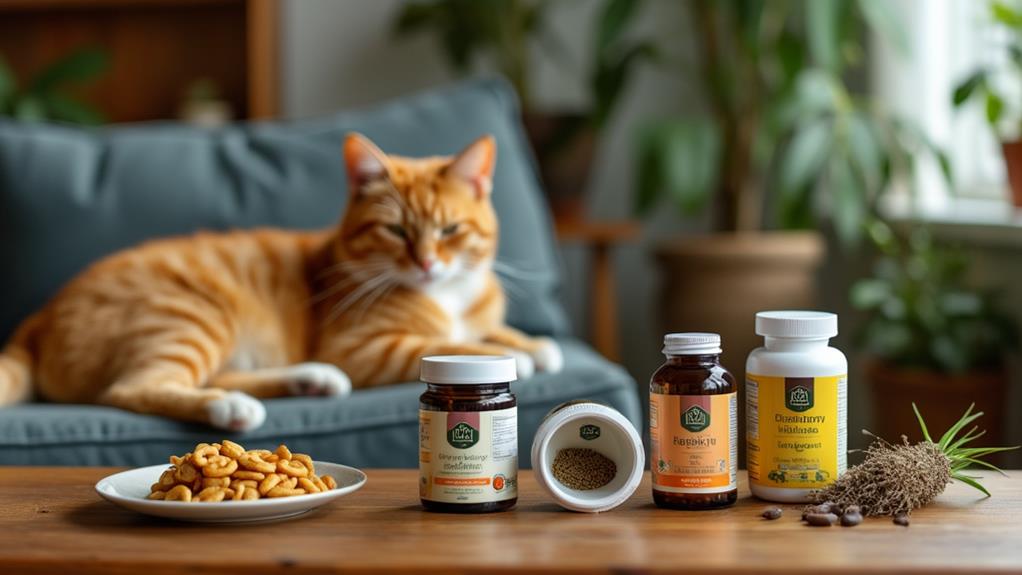
Natural supplements like marshmallow root can provide relief for cats dealing with urinary issues. This herbal remedy has anti-inflammatory and diuretic properties that soothe urinary tract irritation. If you're contemplating marshmallow root, it can be a gentle way to promote your cat's urinary health.
D-mannose is another option to take into account. It works by binding to E. coli bacteria in the bladder, possibly preventing these bacteria from sticking to the urinary tract walls. This can be a helpful strategy to keep harmful bacteria at bay.
Cranberry extract is often cited for its ability to lower urine pH and prevent bacteria from forming biofilms, but be cautious. While it can be advantageous, there's a risk of urinary stones, so it's crucial to monitor its effects.
Probiotics are also worth incorporating as they support a healthy balance of flora in the urinary tract. This can improve overall urinary health and potentially prevent infections from taking hold.
Lastly, think about vital oils like juniper berry, which might elevate kidney function and urine production. However, always use them with proper dilution to guarantee your cat's safety.