10 Fascinating Facts About Iguanas You Didn’t Know
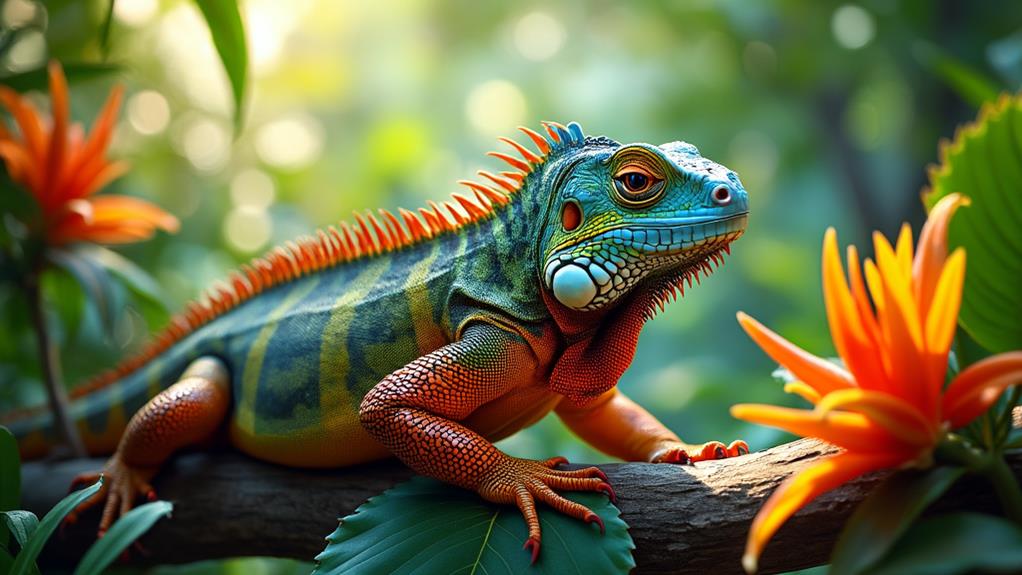
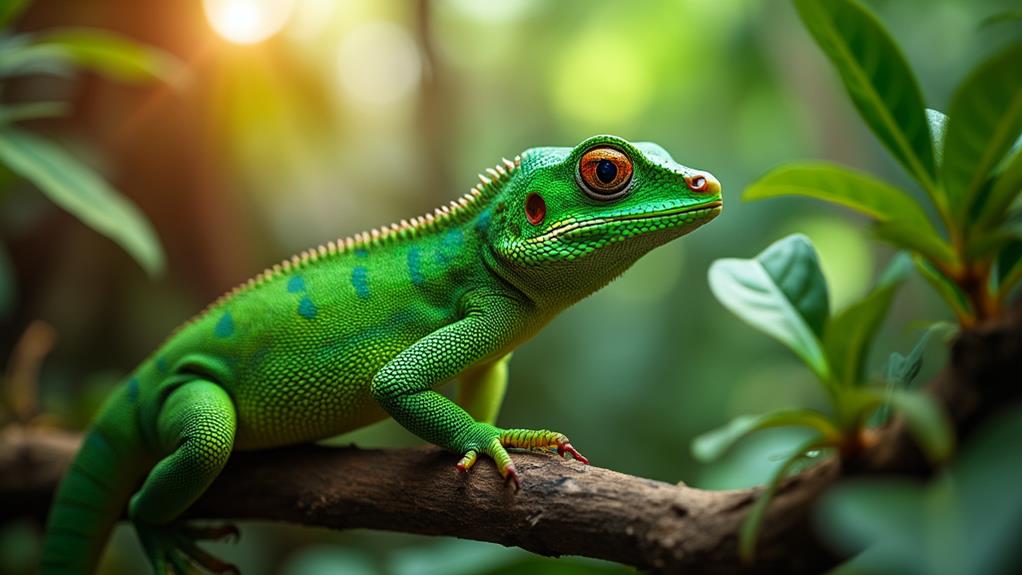
Iguanas have some incredible traits you might not know. They can live up to 70 years if cared for properly, with a diet rich in leafy greens. Iguanas possess a unique parietal eye that helps detect light and movement, enhancing predator awareness. Their swimming skills allow them to hold their breath underwater for up to 28 minutes. Fast runners like the black spiny-tailed iguana can reach speeds of 21 mph. Need a distraction for predators? They can shed and regenerate tails. Uncover how they use body inflation to float, UV light for bone health, silent communication, and manage Salmonella risks. There's more to investigate!
Key Takeaways
- Iguanas have a unique third eye on their heads to detect light and movement, enhancing predator awareness.
- They can hold their breath underwater for up to 28 minutes to evade predators.
- Iguanas can run at speeds of up to 21 mph, aiding in quick escapes from threats.
- Body inflation helps iguanas float during floods and assists in thermoregulation.
- They communicate silently through head bobbing, dewlap extension, and body posture adjustments.
Long Lifespan
While caring for iguanas, it's essential to understand their potential for a long lifespan. Most iguanas, like the well-known green iguanas, can live between 12 to 15 years on average. However, with proper care and attention to their specific needs, they can surpass 20 years. The key to reaching this long lifespan lies in replicating their native species' natural habitat conditions as closely as possible. This includes maintaining the right temperature, humidity, and providing a diet rich in leafy greens, fruits, and appropriate supplements.
Green iguanas, one of the most common pet iguanas, demonstrate just how significant proper care is. When you provide them with a well-maintained environment, they can thrive for two decades or more. It's fascinating that iguanas like the Grand Cayman blue iguana can live 20-40 years in the wild and up to 70 years in captivity with ideal care. Such variations among iguana species underline the importance of creating the right living conditions.
Unique Third Eye
Imagine having a hidden eye that improves your survival. Iguanas do, and it's called a unique third eye or parietal eye. Located on the top of their heads, this pale scale isn't for seeing like their other eyes. Instead, it's a photoreceptive organ that plays a significant role in detecting light and movement. This gives iguanas an edge in sensing predators approaching from above. Think of it as an alert system, directly linked to their brain, enabling quick reactions to potential threats.
But that's not all. The parietal eye is also important for thermoregulation. By detecting changes in light and temperature, it helps iguanas adjust to their environment efficiently. This ability is critical for their survival, as they rely on external heat sources to regulate their body temperature. The parietal eye improves their movement awareness, allowing them to stay alert and safe in their habitats.
Despite its name, the parietal eye doesn't form images like the other eyes do. Instead, it offers a unique advantage by boosting the iguana's awareness of its surroundings. This hidden eye is a fascinating feature that highlights the iguana's remarkable adaptation for survival.
UV Light Needs
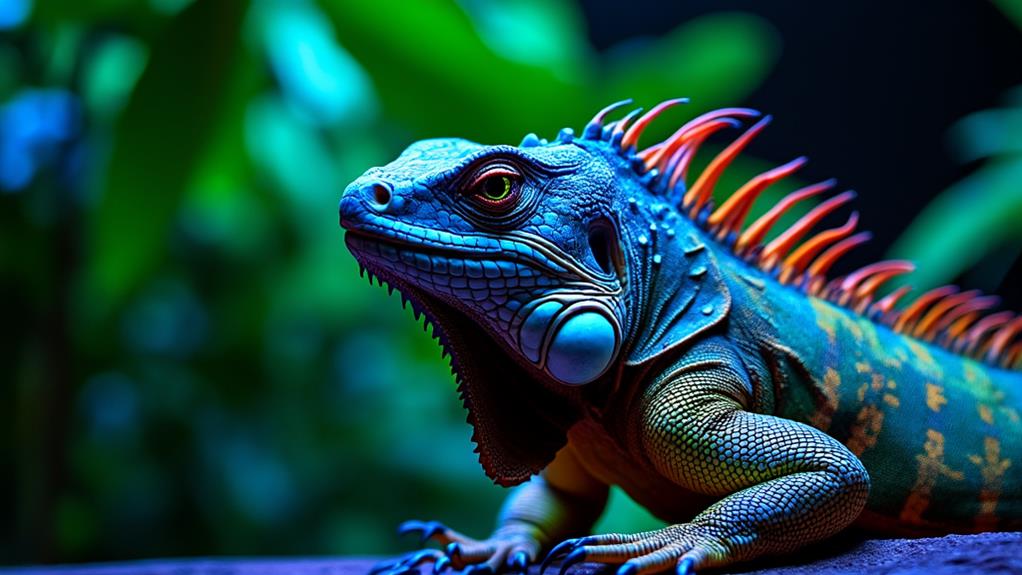
Iguanas need UV light to stay healthy, and it's vital for their calcium absorption. Without sufficient UV exposure, they can't properly metabolize calcium, putting them at risk of metabolic bone disease. This condition severely affects their bone health and general well-being. To prevent such issues, you must guarantee your iguana has adequate UV light in its habitat.
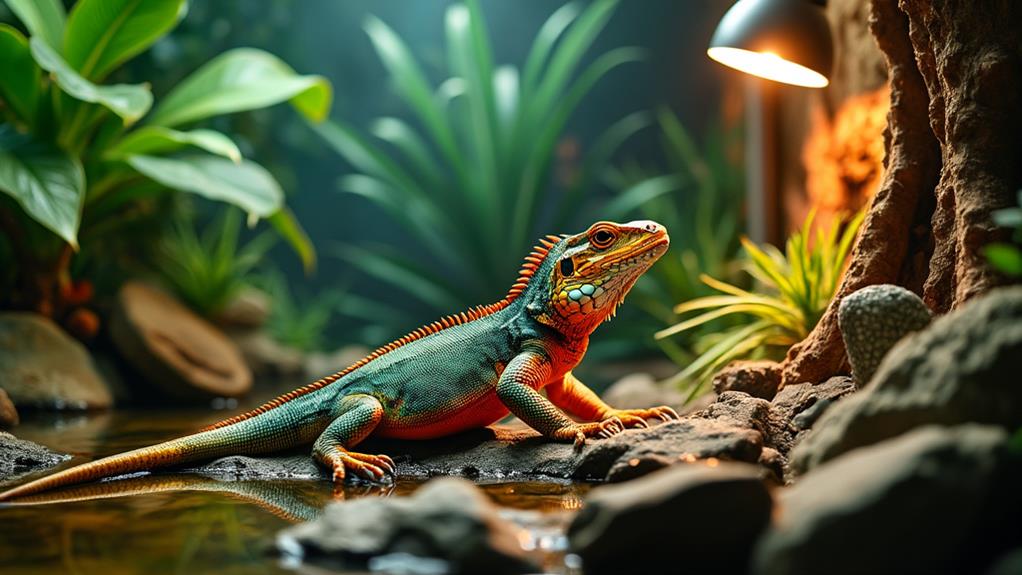
The basking zone temperature plays an important role in facilitating proper metabolic function. For iguanas, this temperature should reach up to 90°F. It helps them maintain healthy physiological processes and allows them to thrive in captivity. Remember, mimicking their natural environment as closely as possible is key to keeping them healthy.
To provide the necessary UV exposure, use UV bulbs specifically designed for reptiles. These bulbs should be replaced every six months to make certain they're emitting the right levels of light. Over time, the effectiveness of the bulbs decreases, which can compromise your iguana's health.
Swimming Skills
With their impressive swimming skills, iguanas expertly use their powerful tails to propel themselves through water. These reptiles are natural swimmers, and their tails act like strong oars, allowing them to navigate swiftly in aquatic environments. Iguanas' swimming capabilities are a remarkable adaptation that helps them investigate their surroundings and access food sources not easily reachable on land.
One fascinating aspect of iguanas is their ability to hold their breath underwater for up to 28 minutes. This skill is vital for evading predators and ensuring their survival in the wild. By staying submerged for extended periods, iguanas can hide effectively, making it difficult for threats to detect them. Their strong limbs further improve their swimming efficiency, enabling them to maneuver through different water conditions with ease.
Iguanas typically inhabit areas near water bodies, such as rivers, lakes, and coastal regions. These locations not only support their swimming skills but also provide necessary hydration sources. Access to water plays a significant role in their complete health and well-being. By understanding iguanas' affinity for water and their exceptional swimming skills, you gain insight into how these fascinating creatures thrive in their natural habitats.
Fast Runners
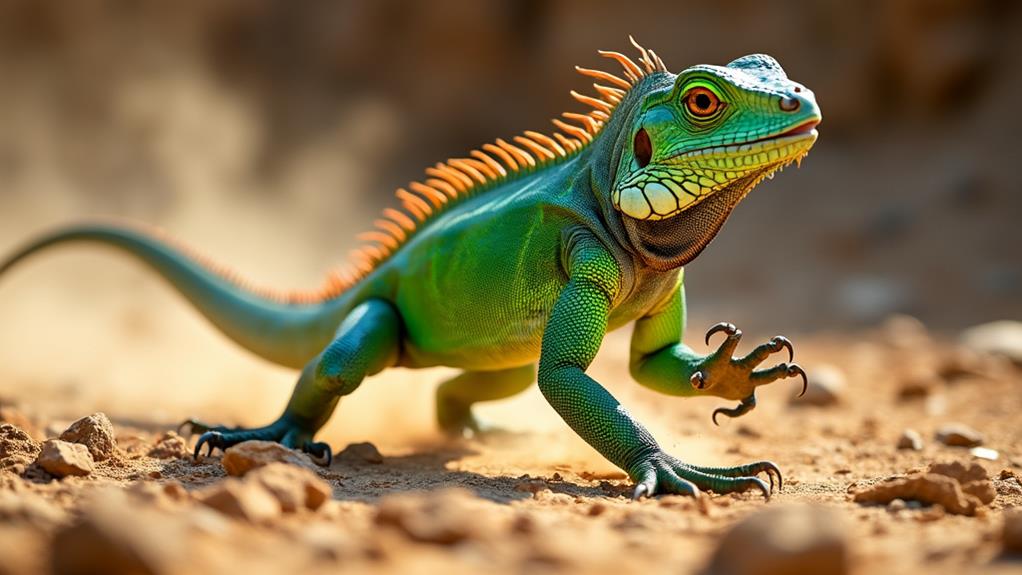
Over time, iguanas have evolved to become fast runners, a essential adaptation for their survival in the wild. Among them, the black spiny-tailed iguana stands out, reaching impressive speeds of up to 21 mph. This makes them one of the fastest iguana species. You might wonder how they do it with their short legs, but their agility and speed are remarkable. These traits are key defense mechanisms against predators.
Imagine an iguana in its natural habitat, surrounded by threats like snakes, hawks, and cats. Their ability to sprint away quickly is not just impressive but crucial for evasion. When danger looms, iguanas utilize bursts of speed and quick movements, allowing them to navigate complex environments with ease. Their evolutionary adaptations guarantee they can escape swiftly and efficiently, enhancing their chances of survival.
As a fast runner, the iguana's agility is not just about speed but also precision. They can dodge obstacles and predators alike, making them adept at surviving in the wild. Next time you see an iguana, appreciate the incredible speed and agility that nature has bestowed upon these fascinating creatures.
Herbivorous Diet
Dine like an iguana, and you'll uncover a world where lush leaves, lively fruits, and delicate flowers form the heart of a nutritious feast. As primarily herbivores, iguanas thrive on a diet rich in dark leafy greens, snap peas, carrots, and squash. These plant-based foods provide the necessary nutrients they need for peak health and well-being. Their digestive systems are marvelously adapted to break down tough plant fibers, extracting essential nutrition that guarantees their longevity.
In the wild, iguanas occasionally consume small insects or snails, but their bodies aren't designed to handle animal protein effectively. In fact, too much of it can harm their kidney health. So, it's important for those caring for iguanas in captivity to confirm their diet is well-balanced. This means focusing on leafy greens and vegetables, with small portions of fruit serving as delightful treats that add variety without compromising their health.
A poor diet can lead to serious health issues, so understanding their plant-based needs is fundamental. By providing a diet that mirrors their natural herbivorous tendencies, you'll support their overall health and improve their quality of life. Remember, good nutrition is key to a happy, healthy iguana.
Tail Defense
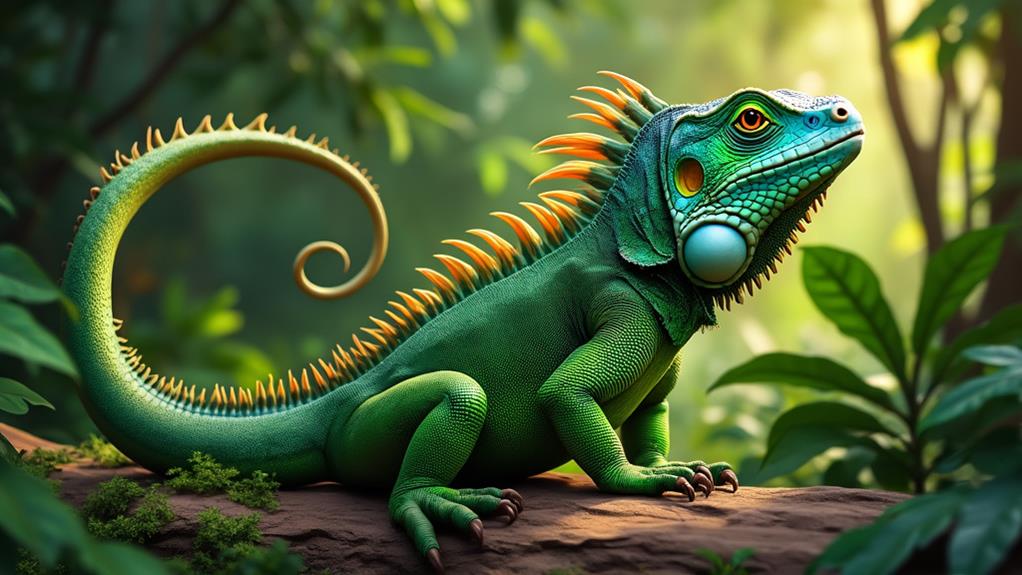
In regards to fending off predators, iguanas have a remarkable trick up their sleeves: they can shed their tails to make a quick getaway. This fascinating tail defense mechanism allows iguanas to detach their tails when threatened, a process known as autotomy. The detached tail continues to wiggle, drawing the attention of predators and providing the iguana with a critical window to escape. This ability to autotomize is a significant adaptation that greatly increases their chances of survival in the wild.
While losing a tail might seem drastic, iguanas have the incredible ability to regenerate them. Over time, typically about a year, a new tail grows back. However, this regenerated tail might differ slightly in length and appearance from the original. Despite these differences, the new tail remains functional, continuing to assist iguanas in their arboreal lifestyle.
The tail is not just useful for defense and escape; it's also indispensable for climbing. Iguanas use their tails to maintain balance as they navigate through trees, ensuring they can move effectively in their natural environments. Moreover, iguanas can wield their long, muscular tails to strike predators, delivering powerful blows when necessary.
Silent Communication
Iguanas master the art of silent communication, relying on a sophisticated repertoire of non-verbal cues to convey their messages. When watching iguanas, you'll notice their reliance on head bobbing, a primary method of communication. Fast head bobbing often indicates distress or upset, while slower, more deliberate movements suggest calmness or submission. These subtle gestures are vital in their social behavior, helping iguanas navigate complex social hierarchies and interactions without uttering a single sound.
Another fascinating aspect of iguana communication is the use of the dewlap, a flap of skin under the chin. Iguanas extend their dewlap to display dominance or during mating rituals, enhancing their interactions with other iguanas. This non-verbal communication is key in establishing social order, as it helps identify leaders and maintain peace within groups. As you observe iguanas, pay attention to how they adjust their body posture. Although not discussed here, other body movements complement these non-verbal cues.
Understanding these communication methods gives you insight into the intricate world of iguana social behavior. By mastering silent communication, iguanas guarantee smooth interactions and a well-organized social structure, proving that actions often speak louder than words.
Body Inflation
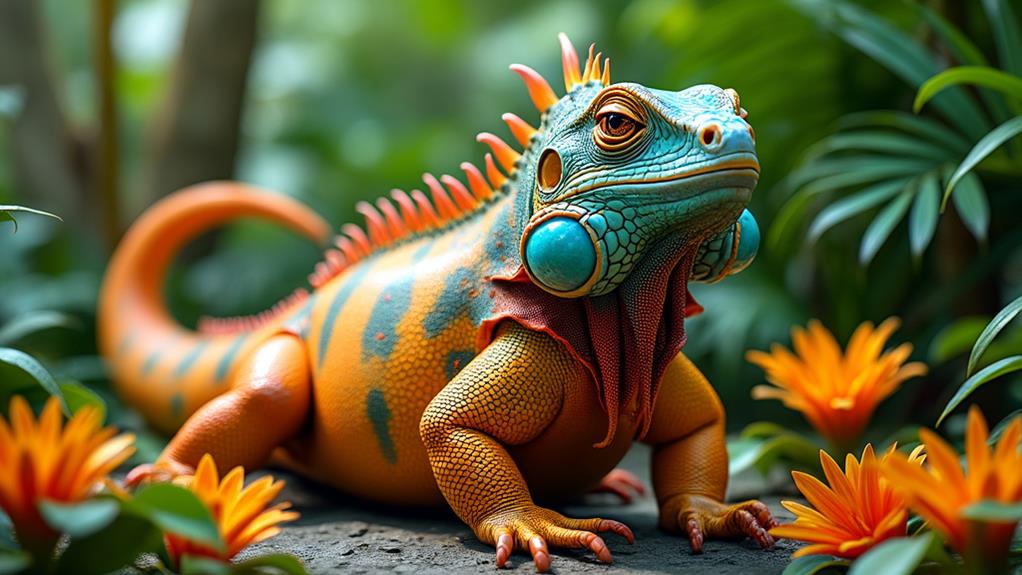
Imagine an iguana doubling its size in moments—this body inflation is a remarkable adaptation. Iguanas, particularly the Turk and Caicos rock iguanas, have developed this impressive skill to tackle numerous environmental challenges. By inflating their bodies, they improve buoyancy, allowing them to float during floods and evade predators. This unique survival mechanism involves using their lungs as air reserves, enabling them to stay submerged and out of sight for extended periods.
Body inflation is not just about floating; it also plays a significant role in thermoregulation. By altering their shape, iguanas can adjust how they absorb heat. A flattened body shape, achieved through inflation, allows them to soak up more warmth while basking in the sun. This adaptation guarantees they maintain the right body temperature, which is essential for their survival in fluctuating climates.
In the face of adversity, iguanas' ability to inflate their bodies showcases their resilience and adaptability. It's a fascinating glimpse into how these creatures navigate their habitats, using body inflation as a tool to survive and thrive, regardless of dealing with predators, floods, or temperature changes. Understanding this helps you appreciate the complexity of iguana life.
Salmonella Risk
Picture a lively green iguana basking in the sun, seemingly harmless, yet carrying a hidden risk. These fascinating reptiles can harbor Salmonella bacteria in their intestines. While iguanas remain unaffected, they pose significant health risks to humans, especially young children and those with weakened immune systems. You might not know it, but contact with iguanas or their environment, such as habitats and accessories, can transmit Salmonella.
If you're an iguana owner, proper hygiene is crucial to avoid infection. Always wash your hands thoroughly after handling your iguana or cleaning its habitat. Ignoring these precautions can lead to Salmonella infection, which manifests as diarrhea, fever, and abdominal cramps within 6 hours to 6 days after exposure.
Caretakers and iguana enthusiasts should be especially vigilant in households with kids or pets. Understanding the potential health risks and practicing safe interaction are key to enjoying your iguana without worry. Remember, being informed and cautious doesn't just protect you; it guarantees your entire household stays healthy. So, next time you admire your iguana, keep these precautions in mind to prevent any unwanted surprises from this charming reptile.